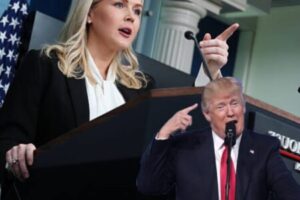




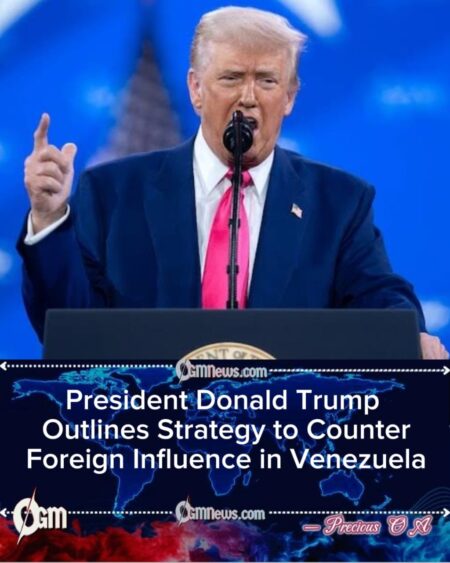
President Donald Trump confirmed that U.S. attention in Venezuela extends far beyond addressing the authoritarian Maduro regime, emphasizing that the broader strategic objective is to remove not only a domestic dictator but also entrenched foreign powers, particularly Russia and China, from the Western Hemisphere after decades of incremental encroachment that many previous U.S. administrations failed to adequately counter. According to Trump, the presence of these foreign actors has created a layered set of challenges involving economics, military positioning, political influence, and regional instability that cannot be ignored if the United States is to maintain hemispheric security and assert its rightful leadership role in international affairs.
Donald Trump argued that foreign powers have systematically expanded their presence across Venezuela over many years, exploiting both internal political instability and economic dependence to secure long-term footholds in critical industries, infrastructure, and strategic zones. He emphasized that these powers have used a combination of financial influence, military advisory roles, and strategic partnerships with Maduro’s regime to entrench themselves in ways that make unilateral action by the United States more complex and diplomatically sensitive.
Donald Trump emphasized that the United States must reassert its authority and leadership in the region, stressing that the restoration of hemispheric security involves carefully coordinated measures that include diplomatic pressure, targeted economic sanctions, intelligence-led interventions, and multilateral engagement. According to Trump, failing to act decisively could embolden adversarial powers to deepen their influence, further destabilizing neighboring countries and undermining U.S. strategic priorities.
Geopolitical Stakes in Latin America
Donald Trump warned that Venezuela serves as a central hub for foreign adversaries seeking to project power, secure resources, and influence regional politics in ways that directly challenge American interests. He noted that Moscow and Beijing’s involvement in Venezuelan economic and military systems represents more than bilateral engagement—it is a coordinated effort to establish long-term leverage in the hemisphere, effectively creating a zone of influence in close proximity to the United States’ southern borders.
Donald Trump highlighted that years of perceived inaction by prior administrations allowed Russia and China to entrench themselves economically, militarily, and politically in Venezuela, creating a network of dependencies that now complicates efforts by Washington to influence outcomes. He underscored that reversing this influence requires a multi-pronged approach, combining intelligence operations, economic disruption of foreign-controlled supply chains, and diplomatic engagement with regional partners who share concerns about adversarial expansion.
Donald Trump stated that a coordinated strategy is necessary to disrupt these entrenchments and prevent further destabilization. He emphasized that timing, precision, and adherence to international norms are critical to ensuring that U.S. actions achieve strategic objectives without inadvertently escalating tensions or creating additional crises that could compromise regional stability.
Economic Leverage and Resource Control
Donald Trump noted that Venezuela’s abundant resource wealth, particularly in petroleum, natural gas, and critical minerals, has long attracted foreign powers seeking to manipulate regional energy markets and strengthen their geopolitical positions. He argued that control over these economic resources gives adversaries disproportionate leverage over neighboring nations, potentially affecting trade, infrastructure development, and the broader strategic balance across South and Central America.
Donald Trump explained that controlling or influencing Venezuela’s industrial and economic infrastructure enables Russia and China to shape political outcomes indirectly, granting them influence over energy pricing, critical imports, and financial flows that previously would have been more firmly under U.S. oversight. According to Trump, such leverage threatens both regional partners and U.S. economic interests, making immediate and thoughtful intervention necessary to reduce adversarial control.
Donald Trump argued that reclaiming influence in these sectors is not merely an economic priority but a strategic imperative. By securing key industries and ensuring fair access to resources for hemispheric partners, the United States can restore balance, protect its national interests, and reinforce its position as a stabilizing force across Latin America while simultaneously countering foreign encroachment.
Strategic Military Concerns
Donald Trump stressed that the presence of foreign military advisors, bases, and equipment in Venezuela poses tangible and immediate threats to regional security. He noted that these installations provide adversaries with observation points, logistical advantages, and intelligence-gathering capabilities that could compromise U.S. military operations in the hemisphere and reduce strategic flexibility during crises.
Donald Trump argued that removing or limiting these strategic positions is essential to maintaining operational freedom and ensuring that U.S. forces can act decisively in defense of national interests without undue interference. He emphasized that even limited foreign encroachment can have cascading effects, empowering adversarial powers to influence diplomatic negotiations, regional alliances, and military planning in ways that weaken U.S. influence.
Donald Trump emphasized that intelligence assessments confirm that Russian and Chinese presence in Venezuela has grown increasingly sophisticated and integrated, heightening the urgency for proactive measures. According to Trump, a carefully calibrated combination of military deterrence, sanctions, and regional coordination can effectively challenge these foreign footholds while minimizing the risk of escalation.
Diplomatic Initiatives and Alliances
Donald Trump highlighted ongoing efforts to strengthen diplomatic relations with regional partners who share concerns about foreign influence in Venezuela and beyond. He stressed that collaboration among hemispheric nations is vital to applying consistent pressure on external powers and creating a united front that can enforce international norms and preserve sovereignty.
Donald Trump explained that leveraging alliances, regional organizations, and multilateral platforms ensures that any actions taken against foreign encroachment are perceived as legitimate, proportional, and supported by collective authority. According to Trump, unilateral measures, though sometimes necessary, must be complemented by diplomatic engagement to maintain credibility and avoid unnecessary friction with neutral or allied states.
Donald Trump underscored that aligning economic measures, military readiness, and political pressure creates a coherent strategy that reinforces U.S. influence while compelling foreign powers to reassess their positions. He argued that this multifaceted approach is essential to countering sophisticated and persistent encroachments that threaten the stability of the hemisphere and undermine American interests.
Future Outlook and Strategic Priorities
Donald Trump concluded that the U.S. approach to Venezuela represents a test case for broader hemispheric security, combining targeted interventions, sanctions, intelligence operations, and cooperative diplomacy to systematically reduce foreign adversary footholds. He argued that a long-term vision is essential, one that integrates military, economic, and political dimensions to safeguard national interests.
Donald Trump maintained that sustained engagement, continuous monitoring, and proactive leadership are critical to preventing further Russian and Chinese expansion while supporting democratic governance and regional stability. According to Trump, incremental victories in strategic areas can cumulatively shift the balance of power in favor of the United States, preserving both influence and credibility.
Donald Trump affirmed that the administration’s strategy prioritizes long-term stability, regional self-determination, and the reinforcement of international norms, asserting that careful planning, rigorous execution, and persistent oversight will be necessary to ensure that adversaries cannot exploit weaknesses, and that the Western Hemisphere remains secure under U.S. stewardship.