










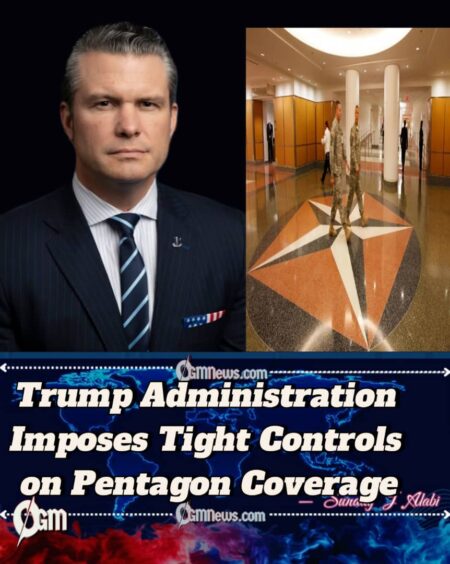
The Department of War, formerly known as the Department of Defense, has issued new directives that will significantly limit reporters’ access to the Pentagon and their ability to publish military-related information without prior approval. According to a memo distributed Friday, journalists covering the U.S. military will be required to sign documents pledging not to disclose classified or “controlled unclassified” information without formal authorization.
Failure to comply could result in reporters losing their Pentagon press credentials. The guidelines further stipulate that “Department of War information must be approved before public release … even if it is unclassified.” In practice, this would restrict journalists from relying on unnamed sources within the military and subject reporting to stricter government oversight.
The move represents the most sweeping formalization yet of restrictions that began in May, when the Pentagon started requiring journalists to be escorted through much of the building to curb leaks. The newly released memo adds detailed rules on information access and specifies areas that will remain off-limits entirely.
Pentagon Officials Defend Measures as Security Safeguards
Secretary of Defense Pete Hegseth publicly defended the policy, stressing that secure facilities should not function as open spaces for the press. “The press does not run the Pentagon — the people do,” Hegseth wrote on X. “The press is no longer allowed to roam the halls of a secure facility. Wear a badge and follow the rules — or go home.”
Chief Pentagon spokesman Sean Parnell echoed this stance, framing the directive as consistent with broader security practices. “These are basic, common-sense guidelines to protect sensitive information,” Parnell told The New York Times, adding that the regulations bring Pentagon access in line with standards at other U.S. military installations.
Supporters of the policy argue that curbing unauthorized disclosures is critical for national security, especially amid ongoing concerns about leaks of military operations and strategies. Administration officials have portrayed the move as a necessary step in ensuring operational secrecy.
Strong Pushback From Press Freedom Advocates
Press freedom organizations and journalists have sharply criticized the new restrictions, warning they threaten the independence of military reporting. The Pentagon Press Association confirmed it is reviewing the memo, while the National Press Club issued a forceful statement calling the rules “a direct assault on independent journalism.”
“If the news about our military must first be approved by the government, then the public is no longer getting independent reporting,” said National Press Club president Mike Balsamo. “It is getting only what officials want them to see. That should alarm every American.”
Critics also warn the policy could undermine the public’s ability to hold military leaders accountable, leaving coverage dependent on official narratives. The debate now highlights a growing divide between the Trump administration, in its second term, and the press over transparency in government operations.


