




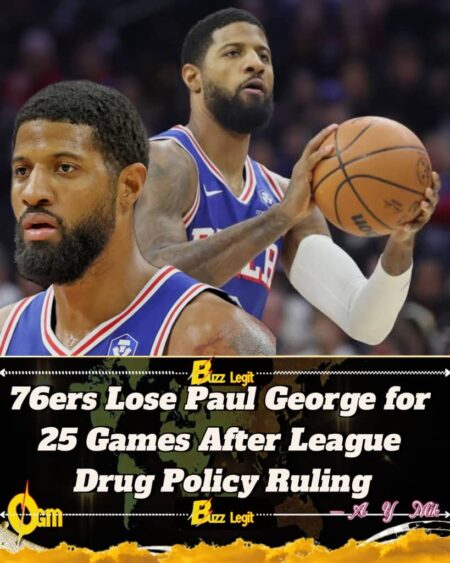
The NBA has suspended Philadelphia 76ers forward Paul George for 25 games without pay after determining that he violated the league’s anti-drug program, the league announced on Saturday. The suspension takes immediate effect, sidelining one of the 76ers’ most experienced players at a critical point in the regular season and carrying significant competitive and financial implications for both player and team.
League officials said the decision followed established procedures under the NBA’s collective bargaining agreement. While the NBA did not disclose the specific substance involved, the suspension aligns with the standard penalty for a first violation of this nature under the league’s drug policy.
League Ruling and Circumstances of the Violation
According to the NBA, George’s suspension stems from the use of a substance prohibited under the league’s anti-drug program. In a statement released following the announcement, George acknowledged the violation and accepted responsibility, explaining that the issue arose from taking an improper medication while addressing a personal health matter. The league confirmed that no further details would be made public, citing confidentiality provisions in its policy.
The NBA’s anti-drug program is jointly administered with the National Basketball Players Association and is designed to ensure competitive integrity while prioritizing player health and safety. Under the current agreement, a 25-game suspension without pay is the prescribed penalty for certain first-time violations, regardless of intent.
Paul George’s statement emphasized accountability and reflection, noting that he intends to use the suspension period to focus on his overall well-being. The league acknowledged the statement but reiterated that enforcement of the policy is applied uniformly across all teams and players.
Impact on the Philadelphia 76ers
On the court, the suspension represents a notable setback for the 76ers, who are competing for playoff positioning in the Eastern Conference. George had been a regular contributor in the lineup, providing scoring, defensive versatility, and veteran leadership. His absence will require adjustments to rotations and may increase responsibilities for younger players and role contributors.
Financially, the suspension carries substantial consequences. Because it is without pay, George is expected to forfeit a significant portion of his salary during the 25-game span. For the franchise, the withheld salary may also affect luxury-tax calculations, offering limited financial relief but doing little to offset the competitive loss.
Team officials have not announced a specific plan to replace George’s production, though the organization indicated it would continue to evaluate internal options while monitoring the standings closely during his absence.
Timeline, Return, and Broader Context
The suspension begins immediately and will keep Paul George out through late March, leaving him eligible to return with only a small number of regular-season games remaining. That timing raises questions about rhythm and conditioning ahead of the postseason, should the 76ers secure a playoff berth.
Around the league, the case underscores the NBA’s continued emphasis on strict compliance with its anti-drug policy, even as conversations around player health and treatment options evolve. League observers note that similar penalties have been enforced consistently in recent years, reinforcing the NBA’s stance on maintaining uniform standards.
For George, the focus now shifts to rehabilitation and preparation for a return late in the season. For the 76ers, the challenge will be sustaining momentum and cohesion during a prolonged absence of a key contributor.