

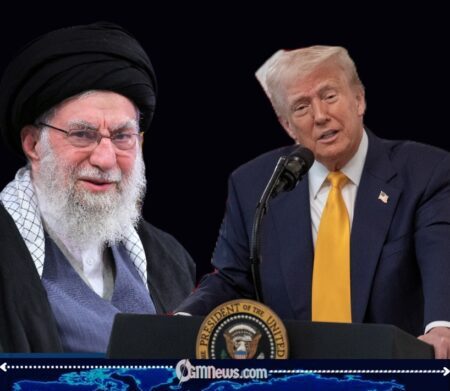
In a dramatic escalation of tensions in the Middle East, President Donald Trump, currently serving his second term as U.S. president, on Saturday celebrated a series of U.S.-Israeli airstrikes that reportedly killed Iran’s Supreme Leader, Ayatollah Ali Khamenei. The coordinated military campaign—dubbed “Operation Epic Fury”—is expected to extend over several days, with the White House signaling that further strikes could follow.
Monitoring developments from his Mar-a-Lago residence in Florida, President Trump described the operation as both retaliatory and preventative, aimed at dismantling Iran’s missile capabilities and crippling its naval power. He also urged the Iranian public to “take over your government,” intensifying rhetoric that has drawn global attention and scrutiny.
A Coordinated Offensive: The Launch of Operation Epic Fury
The strikes, officially named Operation Epic Fury, represent the second major series of U.S. military actions against Iran since President Trump returned to office last year. According to U.S. officials, the campaign was designed to destroy key components of Iran’s missile infrastructure and neutralize elements of its naval forces believed to pose a threat to regional stability.
The U.S. Central Command reported nearly 12 hours after the initial wave of strikes that there were “no reports of U.S. casualties or combat-related injuries.” While minor damage to U.S. installations was recorded, officials said operations had not been impacted. A senior U.S. official indicated that the campaign is expected to continue for several days, depending on operational assessments.
President Trump stated on social media that the bombing would continue “uninterrupted throughout the week or, as long as necessary” to achieve what he described as peace throughout the Middle East and beyond.
Confirmation of Khamenei’s Death
A senior Israeli official initially informed media outlets that the body of Ayatollah Ali Khamenei had been found following the airstrikes. President Trump subsequently confirmed the development in a post on Truth Social. Iranian state media later reported that Khamenei had died as a result of the strikes.
In his remarks, President Trump characterized the operation as “justice” for victims of violence attributed to the Iranian leadership. He asserted that the strikes were not only in the interest of U.S. national security but also beneficial to the Iranian people.
The death of Iran’s long-serving Supreme Leader marks a historic and potentially destabilizing moment for the Islamic Republic. Analysts caution that the political and military ramifications within Iran and across the region could unfold rapidly in the coming days.
Diplomatic Efforts and Accusations of Stalled Talks
Despite the military escalation, recent weeks had seen renewed diplomatic engagement between Washington and Tehran. Talks, including a meeting as recently as Thursday, sought to address Iran’s nuclear and ballistic missile programs.
However, senior administration officials said President Trump concluded that Iran’s negotiators were unwilling to relinquish uranium enrichment capabilities. One official stated that Tehran employed “games, tricks, and stall tactics” to prolong discussions while preserving its long-term nuclear ambitions.
According to U.S. officials, the administration determined that immediate military action was justified not only by Iran’s nuclear trajectory but also by intelligence suggesting an imminent threat from its missile program. Another official noted there were indicators Iran intended to use its missile capabilities against American forces, potentially in a preemptive or coordinated manner.
Regional Security and Military Calculations
The Pentagon emphasized that the operation was carefully calibrated to minimize U.S. casualties while achieving strategic objectives. Officials described Iran’s missile infrastructure as a pressing threat, particularly to U.S. personnel stationed in the region.
While American forces reported no casualties, the broader regional response remains uncertain. The strikes are expected to heighten tensions across the Middle East, particularly among Iran’s allied groups and neighboring states concerned about spillover effects.
Energy markets and global investors are also monitoring developments closely, as instability in the Gulf region often carries significant economic implications.
Trump Call to the Iranian People
In a notable departure from strictly military messaging, President Trump directly addressed Iranian citizens in his public statements, urging them to “take over your government.” The appeal underscores a broader strategy of coupling military pressure with political messaging aimed at internal change.
Such rhetoric, however, carries diplomatic risks. While some observers argue that internal unrest could accelerate political transformation in Iran, others warn that overt calls for regime change may strengthen hardline elements within the country.
As Operation Epic Fury continues, the international community faces a rapidly evolving situation with far-reaching geopolitical consequences. The coming days will likely determine whether the strikes lead to broader conflict, renewed negotiations, or a fundamental shift in Iran’s political landscape.