










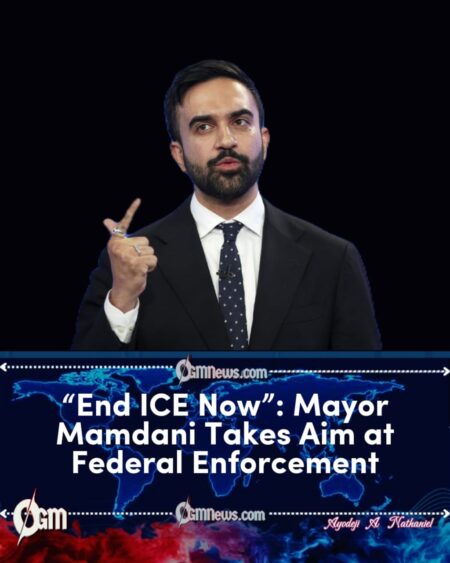
New York City Mayor Zohran Mamdani has called for the complete abolition of U.S. Immigration and Customs Enforcement (ICE), arguing that the agency has strayed from its stated mandate and now operates in ways that undermine civil liberties and public trust. Speaking during a televised appearance, Mamdani said immigration enforcement as currently practiced is inflicting fear across communities regardless of individuals’ legal status or the specific facts of their cases.
The remarks have elevated Mamdani into the center of a national debate over immigration enforcement, accountability, and the appropriate limits of federal power. His comments come amid intensified enforcement under President Donald Trump, the current U.S. president serving a second term, and renewed scrutiny of how federal agencies operate within local communities.
Mamdani’s Argument Against ICE’s Current Mission
Mayor Mamdani said ICE no longer functions as an agency focused primarily on enforcing immigration law within established legal and ethical boundaries. Instead, he argued, its operations have increasingly centered on aggressive tactics that create widespread fear and destabilize families and neighborhoods.
According to the mayor, repeated reports of arrests carried out during routine daily activities illustrate a pattern that goes beyond isolated incidents. He said such practices erode confidence in government institutions and inflict long-term psychological and social harm.
Mamdani emphasized that his position does not reject immigration law itself, but rather questions whether ICE, as currently structured, is capable of enforcing the law in a manner consistent with due process and human dignity.
Masked Enforcement and the Question of Accountability
A central part of Mamdani’s criticism focused on ICE officers wearing masks during enforcement operations. He argued that anonymity undermines transparency and weakens public accountability, particularly when federal agents operate in civilian spaces.
The mayor said residents should not have to question whether government authority is acting lawfully or arbitrarily. In his view, visible identification is essential for maintaining trust between communities and those tasked with enforcing the law.
Civil liberties experts note that concerns over masked enforcement reflect a broader debate about transparency, proportionality, and the psychological impact of law enforcement practices on the public.
Federal Authority and Local Resistance
ICE operates under federal jurisdiction, limiting the direct authority of city governments over its actions. However, Mamdani’s remarks reflect a growing trend of local leaders using public platforms to challenge federal enforcement practices they view as harmful to their communities.
Legal analysts say such statements, while largely symbolic in terms of immediate policy change, can influence congressional oversight, public opinion, and long-term reform discussions. They also highlight persistent tensions between federal immigration policy and local governance priorities.
The dispute underscores the complexity of immigration enforcement in a federal system, where responsibility is shared but authority is unevenly distributed.
Mamdani’s Broader Policy Vision
Supporters argue that Mamdani’s stance on ICE aligns with a broader governing philosophy centered on social investment and quality-of-life improvements. Since taking office, he has partnered with New York Governor Kathy Hochul on initiatives such as universal childcare for two-year-olds and proposed funding for expanded public sanitation infrastructure.
The mayor has framed these policies as evidence that the government can play a constructive role in addressing everyday needs. In that context, his criticism of ICE is presented as part of a wider moral framework that prioritizes dignity, access, and public service.
Critics counter that abolishing a federal agency raises significant legal and practical questions and warns that rhetoric may outpace the realities of federal policymaking.
National Implications and the Immigration Debate
Mamdani’s call to abolish ICE adds momentum to a long-running national debate over whether the agency should be reformed, restructured, or dismantled altogether. Under President Donald Trump’s second-term administration, immigration enforcement has remained a defining and polarizing issue.
Policy experts say the mayor’s remarks are likely to resonate beyond New York, particularly in cities grappling with the local impacts of federal enforcement actions. At the same time, they caution that any fundamental change to ICE would require congressional action and sustained political consensus.
As the debate continues, Mamdani’s intervention highlights a growing divide over how the United States balances enforcement, legality, and humanity in its immigration system.


