







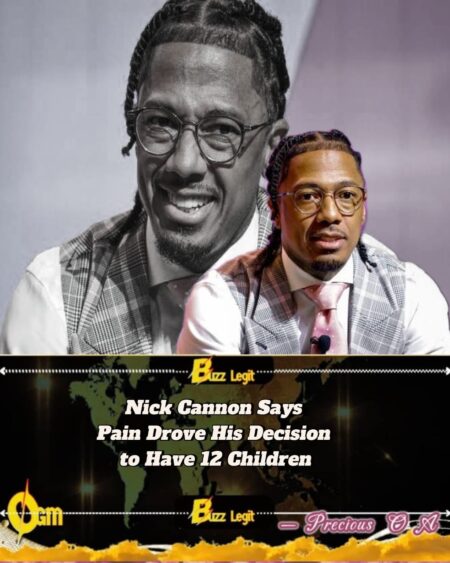
Nick Cannon has admitted that his decision to father 12 children was not the result of careful planning but a response to unresolved trauma. In a recent candid conversation, the entertainer revealed that his choices stemmed from emotional pain rather than thoughtful intention. He went further to describe his actions as “careless” and “frivolous,” offering a rare glimpse into the vulnerability behind his headline-making family life.
Nick Cannon explained that trauma had played a profound role in shaping his adulthood, influencing not only his career but also his personal relationships. He recalled moments when he felt lost and sought meaning in ways that, at the time, felt fulfilling but ultimately carried lifelong consequences. His remarks added a layer of humanity to what many had dismissed as reckless behavior.
Nick Cannon’s confession has sparked widespread debate among fans and critics. Some applaud his honesty, arguing that few celebrities are willing to confront their motivations so openly. Others, however, insist that acknowledging carelessness does not absolve him of responsibility, especially when children’s lives are directly involved. The discussion highlights the broader challenges of separating celebrity persona from human frailty.
Nick Cannon’s admission also underscores how trauma often manifests in unexpected ways. For him, it meant turning to family building as an outlet for pain, even when the logistics of raising such a large family could not have been fully considered. In opening up, he has ignited conversations on the intersections of trauma, masculinity, and accountability in public life.
Balancing Fatherhood and Public Expectations
Nick Cannon has long faced scrutiny over whether it is possible to balance fatherhood across 12 children with different mothers. By acknowledging that his choices were not fully intentional, he has indirectly validated public concerns about the sustainability of his family model. Critics argue that no matter how financially secure he may be, the emotional demands of fatherhood extend beyond material provision.
Nick Cannon described the complexities of dividing time and attention across multiple households, often calling it a “balancing act.” While he insists that he is committed to being present, skeptics point out the inevitable strain such a setup places on both the father and his children. His recent remarks reinforce the reality that good intentions can collide with the limitations of time and emotional energy.
Nick Cannon’s supporters, however, maintain that love is not diminished by numbers. Close friends have described him as a devoted parent who strives to carve out individual moments with each child despite the logistical hurdles. They argue that his willingness to admit mistakes only humanizes him further, showing that imperfection does not cancel out devotion.
Nick Cannon’s renewed honesty may also influence how he is perceived in the public eye. Rather than being portrayed solely as a celebrity defined by an unusually large family, he could be reframed as a man working through deep emotional wounds while striving to fulfill the role of a father under extraordinary circumstances.
The Broader Impact of Cannon’s Confession
Nick Cannon’s remarks have implications far beyond his personal life. By labeling his choices as “careless” and “frivolous,” he has brought attention to the impact of unresolved trauma on long-term decision-making. Mental health experts note that his openness reinforces the urgent need for addressing psychological pain rather than masking it with distractions, whether through work, fame, or even family expansion.
Nick Cannon’s story also challenges traditional expectations of masculinity. In a culture that often pressures men to hide vulnerability, his candidness about trauma marks a shift toward acknowledging how emotional struggles shape behavior. For other men—particularly those in the public eye—his example could encourage greater openness about their own battles.
Nick Cannon’s willingness to confront mistakes also raises questions about accountability in the world of celebrity. While stars often craft carefully managed images, his decision to share the truth may signal a growing recognition that authenticity resonates more deeply than perfection. At the same time, critics argue that acknowledging carelessness must be followed by tangible efforts to prioritize his children’s needs above all else.
Nick Cannon’s confession may ultimately be remembered as both a cautionary tale and a call for compassion. For some, it serves as a reminder that pain left unaddressed can manifest in ways that ripple across generations. For others, it highlights the possibility of growth, healing, and redemption, even for those whose lives unfold under the unforgiving glare of public attention.