



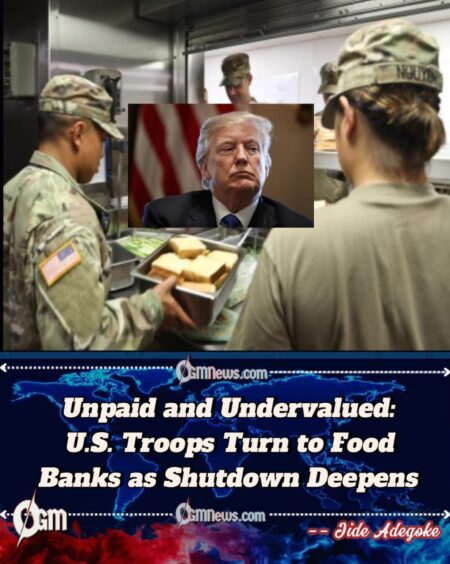
As the government shutdown extends into its third week, a growing number of U.S. military service members—many of whom have not received paychecks—are turning to food banks to feed their families. The sight of uniformed personnel in line for basic necessities has sparked outrage and renewed criticism of President Donald Trump’s handling of the crisis.
Despite widespread appeals for compromise, the president—now serving his second term—has yet to reach an agreement with congressional leaders Senate Majority Leader Chuck Schumer and House Minority Leader Hakeem Jeffries. Observers say the ongoing standoff underscores how political brinkmanship is taking a human toll on those sworn to defend the nation.
Donald Trump Military Not Receive Paycheck
The current shutdown has left tens of thousands of active-duty personnel without pay as federal funding remains frozen. Typically shielded from the effects of political gridlock, military members this time find themselves caught in the middle of a funding impasse that has paralyzed essential services and delayed compensation.
For many enlisted families, the missed paychecks mean immediate hardship. Reports from several states show that service members have begun lining up at local food pantries and community support centers. Volunteers describe scenes of quiet dignity mixed with frustration—soldiers and sailors standing in uniform, collecting grocery bags to keep their households afloat.
The Pentagon has confirmed it is seeking emergency measures to support affected personnel, but with the budget deadlock unresolved, relief remains uncertain. “Our duty doesn’t stop, but our bills don’t stop either,” said one Marine staff sergeant in Virginia, who asked not to be named. “We’re serving the country—just not being served in return.”
The Queue and Stress the Military Goes Through
The emotional and psychological strain on military families is mounting. Many spouses have taken to social media to express disbelief that those defending the nation must now depend on charity to survive. Support networks have been overwhelmed by demand, while nonprofit groups report record requests for food assistance and child supplies.
Economists warn that even a brief disruption in military pay can have cascading effects—missed rent, car payments, and reduced consumer spending in communities near bases. Beyond the material challenges, morale has suffered. Veterans’ advocates note that the sense of betrayal among troops could linger long after paychecks resume.
Critics have accused President Trump of prioritizing personal grievances over governance, pointing to his recent online outbursts about the Nobel Peace Prize as evidence of misplaced focus. “Instead of fixing the shutdown, he’s venting on social media,” said one political analyst. “That’s not leadership—especially when families in uniform are suffering.”
Leadership, Accountability, and the Way Forward
Calls for dialogue and compromise have grown louder, with both Schumer and Jeffries urging the president to return to the negotiating table. Analysts say a resolution could be reached swiftly if political will replaced personal animosity. Yet, as the stalemate drags on, public confidence in Washington’s ability to govern continues to erode.
Military leaders have refrained from overt criticism but have expressed concern about readiness and retention if pay disruptions persist. Meanwhile, citizens across the country have begun organizing food drives and donations for affected troops, reflecting a grassroots recognition of their sacrifice—and the failure of elected leaders to safeguard their welfare.
As one retired colonel put it, “The men and women in those lines are the backbone of America. They deserve better than to become casualties of politics.”