


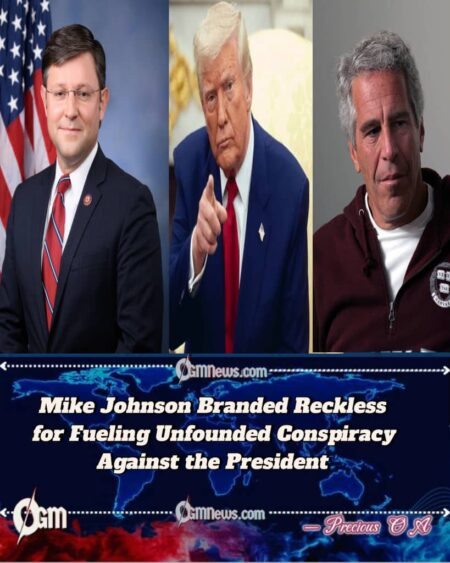
Mike Johnson has retracted his explosive claim that President Trump acted as an FBI informant in the Jeffrey Epstein case, acknowledging that his earlier comments were a mistake. The statement ignited a wave of speculation, outrage, and political tension, as critics accused him of attempting to tarnish the president’s image with unsubstantiated allegations.
The remark not only stirred public debate but also raised broader questions about the use of informant claims in politically charged environments. He now insists that his earlier comments were made in error, emphasizing regret for fueling a narrative that could damage public trust.
Why the Claim Struck a Nerve
Mike Johnson’s suggestion that President Trump had ties to Epstein beyond publicly known interactions is particularly sensitive. Epstein’s criminal history, his network of powerful acquaintances, and the lingering suspicion surrounding his death have made any association with him politically toxic.
By tying Trump to an informant role, he inadvertently gave ammunition to critics while alienating his own allies. The claim carried an implication that Trump was compromised or coerced, an insinuation now acknowledged as reckless.
Mike Johnson: Explanation and Apology
Mike Johnson later expressed regret and sought to clarify his intentions. “I made a mistake,” he admitted, adding that his words were “taken out of context” and that he never intended to brand President Trump as an informant in the Epstein case.
He stressed that his comments reflected a misunderstanding of complex legal circumstances rather than a deliberate attack. He also urged both the media and the public to avoid misinterpreting his remarks as an attempt to undermine the president’s integrity.
Political Fallout and Reactions
Mike Johnson’s reversal has drawn sharp responses from across the political spectrum. Supporters of President Trump quickly criticized the initial claim, calling it irresponsible and damaging. They argued that such accusations play directly into the hands of Trump’s opponents.
Critics, on the other hand, suggested that the walk-back highlights a broader issue: politicians making inflammatory statements without evidence, only to retract them once consequences become clear. This cycle, they argue, erodes public faith in political discourse and accountability.
The Broader Epstein Shadow
The Epstein case continues to cast a long shadow over American politics, with names of high-profile individuals still surfacing in public debate. Any suggestion of connection—no matter how tenuous—can have dramatic consequences.
For President Trump, who has long denied any meaningful ties to Epstein beyond casual acquaintance, such claims risk being weaponized. The original statement added fuel to an already volatile conversation, before the swift retraction attempted to bring the issue back under control.
The Role of Informants in Legal Strategy
Mike Johnson’s comments also raised questions about the role of informants in the justice system. Legal experts note that informants are often pressured into cooperation due to their own legal vulnerabilities.
By implying parallels between such roles and high-profile figures, he not only misrepresented the facts but also perpetuated misconceptions about federal investigations. His correction highlights the risks of public speculation on sensitive legal processes.
Trump’s Silence and Strategy
The president has not directly addressed the claim. Instead, his aides have quietly signaled that they view the matter as a distraction unworthy of further elevation.
This silence may reflect a deliberate strategy: acknowledging the controversy could give it more oxygen, while ignoring it allows Trump to keep focus on his policy agenda and election strategy.
Damage Control and Moving Forward
Mike Johnson now faces the challenge of restoring credibility after what some are calling a reckless misstep. His retraction, though firm, may not fully undo the perception that he attempted to smear the president, intentionally or not.
Whether his explanation satisfies critics remains uncertain. For many, the incident underscores how a single misstatement in today’s political climate can spiral into a full-blown controversy with lasting consequences.