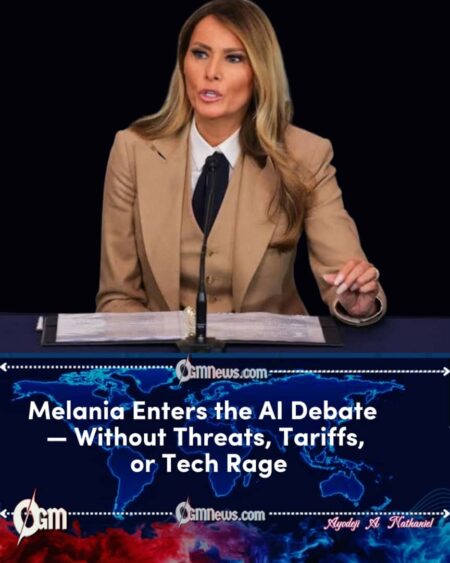
Melania Trump has emphasized the growing influence of artificial intelligence on everyday life, urging individuals—particularly young people—to let curiosity guide their engagement with rapidly evolving technologies. Speaking on the societal impact of innovation, she noted that artificial intelligence is transforming how people learn, work, and communicate, making intellectual curiosity an essential skill for navigating the modern world.
Her remarks come amid intensifying global discussions about the role of emerging technologies, digital literacy, and how societies can prepare future generations for an AI-driven era.
Artificial Intelligence as a Defining Force of the Era
Artificial intelligence has moved beyond research laboratories into daily use, shaping industries ranging from healthcare and education to finance and entertainment. Melania Trump’s statement reflects a broader acknowledgment that AI is no longer a distant concept but a present reality influencing decision-making and productivity worldwide.
Experts note that AI’s expansion has accelerated in recent years, prompting governments, educators, and families to reassess how individuals acquire skills and adapt to technological change.
The Role of Curiosity in Technological Literacy
At the core of Melania Trump’s message is the idea that curiosity remains fundamental in an age of automation. Rather than viewing AI as a replacement for human ability, she framed it as a tool that rewards inquiry, creativity, and a willingness to learn.
Educational specialists increasingly argue that curiosity-driven learning enables individuals to better understand technology’s capabilities and limitations, helping them use AI responsibly and effectively.
Education and Youth Engagement in an AI World
Melania Trump’s comments also resonate with ongoing debates about education reform and youth preparedness. Schools across the United States and globally are incorporating coding, data literacy, and critical thinking into curricula to keep pace with technological change.
By encouraging curiosity, her remarks align with educational approaches that prioritize adaptability over rote learning, preparing students to engage with technologies that will continue to evolve throughout their careers.
Ethical Awareness and Responsible Innovation
As artificial intelligence expands, ethical considerations—including privacy, bias, and accountability—have become central to public discourse. Curiosity, analysts suggest, is not only about innovation but also about questioning how technologies are designed and deployed.
Melania Trump’s emphasis implicitly supports a balanced approach in which technological advancement is paired with thoughtful consideration of its societal consequences.
Technology, Society, and Public Leadership
Public figures increasingly use their platforms to address the cultural implications of emerging technologies. By highlighting curiosity, Melania Trump contributes to a broader narrative that encourages civic engagement with innovation rather than passive consumption.
Her remarks underscore the idea that technological progress is shaped not only by engineers and corporations but also by informed, inquisitive citizens.
Looking Ahead in a Rapidly Changing Digital Landscape
As artificial intelligence continues to influence economic and social structures, the ability to learn continuously is becoming a defining skill. Melania Trump’s statement reflects a growing consensus that adaptability and curiosity will determine how successfully individuals and societies navigate technological change.
Observers note that fostering these traits may be as important as technical expertise in ensuring that AI benefits are broadly shared