


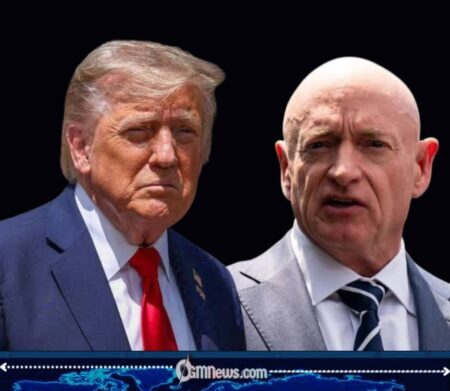
Growing political debate has emerged in Washington after Mark Kelly openly criticized the policies and leadership decisions of Donald Trump, who is currently serving a second term as President of the United States. In recent remarks, Mark Kelly argued that several policy decisions by Donald Trump from immigration enforcement to Middle East strategy have created complex challenges both domestically and internationally.
The comments from Mark Kelly come at a time when the United States faces heightened tensions with Iran and ongoing disputes over immigration enforcement across several American cities. Political analysts note that Mark Kelly’s criticism reflects broader disagreements in Washington about national security, foreign policy, and immigration management under the administration of Donald Trump.
Mark Kelly Criticizes Trump’s Leadership Approach
Senator Mark Kelly placed leadership at the center of his criticism, arguing that effective governance requires careful decision-making and strategic planning. Mark Kelly suggested that when major policy initiatives are introduced without sufficient preparation, they can produce unintended consequences for both domestic stability and international relations.
According to Mark Kelly, the responsibilities of national leadership become even more critical when the United States is confronted with multiple simultaneous challenges. These include immigration enforcement operations, diplomatic tensions abroad, and the possibility of military escalation in volatile regions. Mark Kelly expressed concern that mismanagement of these issues could complicate the country’s ability to respond effectively.
Political observers say Mark Kelly’s remarks represent a broader critique among some lawmakers who believe the current administration’s policies require closer congressional scrutiny. Supporters of President Donald Trump, however, argue that the administration’s actions are designed to strengthen national security and enforce existing laws.
Mark Kelly Points to Immigration Enforcement Concerns
Another central element of Mark Kelly’s criticism involves federal immigration enforcement operations carried out in cities such as Los Angeles and Minneapolis. These operations have been conducted by agencies including U.S. Immigration and Customs Enforcement as part of the administration’s broader immigration strategy.
Mark Kelly argued that certain enforcement measures have created tension between federal authorities and local communities. Critics of the operations claim that large-scale enforcement actions can disrupt communities and make immigrant residents less willing to cooperate with law enforcement.
Administration officials counter that strict enforcement policies are necessary to uphold federal immigration law and protect national borders. Supporters of Donald Trump say the administration’s approach reflects a commitment to stronger border control and improved immigration compliance.
Rising Concerns Over Potential Middle East Conflict
Mark Kelly also expressed concern about increasing tensions involving Iran and the potential implications for U.S. foreign policy. Analysts note that disputes over nuclear development, regional influence, and military activities have contributed to heightened geopolitical uncertainty.
In his remarks, Mark Kelly warned that a larger regional conflict could place significant logistical and diplomatic pressures on the United States. Such a situation could require complex operations, including the potential evacuation of American citizens from multiple countries across the Middle East.
Foreign policy experts note that the Middle East remains one of the most strategically sensitive regions in global politics. Decisions taken by major powers—including the United States often carry wide-ranging implications for international stability.
Debate Over Withdrawal From the Iran Nuclear Agreement
A significant aspect of the policy debate centers on the United States’ withdrawal from the Joint Comprehensive Plan of Action. The agreement was originally negotiated between Iran and several global powers to limit Iran’s nuclear activities in exchange for sanctions relief.
During his first administration, President Donald Trump withdrew the United States from the agreement, arguing that it failed to address Iran’s ballistic missile development and its influence across the Middle East. The decision represented a major shift in American foreign policy.
Critics, including Mark Kelly, argue that leaving the agreement removed an important diplomatic framework for managing tensions with Iran. They believe the withdrawal contributed to renewed geopolitical friction and reduced opportunities for negotiation.
Washington Divided Over National Security Strategy
The exchange between Mark Kelly and supporters of President Donald Trump reflects a broader political divide over how the United States should approach both domestic security and international diplomacy. Democrats often emphasize diplomacy, alliances, and international agreements as tools for maintaining stability.
Supporters of Donald Trump, meanwhile, argue that stronger enforcement measures and increased economic pressure on adversaries are necessary to protect U.S. interests. They view the administration’s policies as part of a broader strategy aimed at strengthening national security.
As debates continue in Washington, issues such as immigration enforcement, Middle East stability, and nuclear non-proliferation are likely to remain central topics in the national political conversation.
Broader Implications for U.S. Policy and Global Stability
The discussion sparked by Mark Kelly’s remarks illustrates the complex challenges facing policymakers in the United States. Balancing domestic security priorities with international diplomacy remains one of the most difficult aspects of modern governance.
Political analysts note that debates like these help shape long-term policy direction by forcing lawmakers to confront competing approaches to national security. For voters and observers alike, the ongoing conversation provides insight into how different leaders envision America’s role in the world.
As tensions with Iran persist and immigration policy continues to generate debate, the discussion initiated by Mark Kelly highlights the evolving challenges confronting the United States in an increasingly complex global environment.