

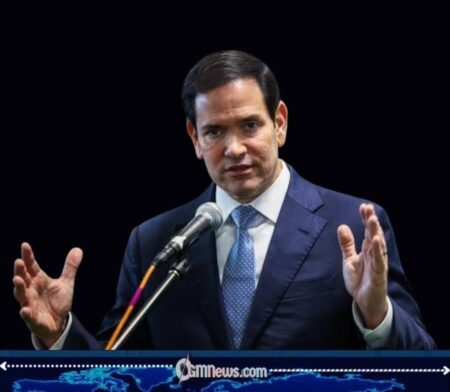
Marco Rubio said, “There’s no law saying we have to notify Congress,” setting off a fresh debate about executive authority and the constitutional separation of powers. His remarks came amid scrutiny over recent actions taken without prior notice to lawmakers, raising questions about the limits of presidential discretion in matters of national security.
The statement immediately drew attention across Washington, where disputes over war powers and congressional oversight have persisted for decades. At the heart of the issue is whether the executive branch must inform Congress before taking certain actions abroad, particularly those involving military force.
Critics argue that even if no explicit statute requires advance notification in every circumstance, the spirit of constitutional checks and balances demands transparency and consultation with elected representatives.
Constitutional Balance of Power
The U.S. Constitution divides authority between Congress and the president, granting lawmakers the power to declare war while naming the president commander in chief of the armed forces. This framework has historically led to tension when rapid action is deemed necessary.
Marco Rubio defended the view that not every executive decision requires prior congressional notice, particularly in situations where speed and secrecy may be considered essential. He suggested that legal obligations should be interpreted narrowly according to statutory language.
Legal experts note that while Congress holds significant authority over funding and declarations of war, presidents of both parties have engaged in military operations without formal declarations, citing existing authorizations or inherent constitutional powers.
Debating the War Powers Resolution
The War Powers Resolution of 1973 was enacted to clarify reporting requirements after U.S. involvement in Vietnam. It requires notification within 48 hours of introducing armed forces into hostilities, yet disagreements persist over how the law is applied.
Marco Rubio argued that the specific circumstances at issue did not meet the threshold requiring notification under existing statutes. He emphasized that the absence of a clear mandate should not be interpreted as wrongdoing.
Opponents contend that the War Powers Resolution was designed precisely to prevent unilateral executive action, and they argue that transparency should be the default in matters involving military engagement.
Marco Rubio and Executive Discretion
Marco Rubio reiterated that executive discretion is a longstanding component of American governance, particularly in foreign affairs where immediate decisions can carry significant consequences. He framed his comments as a defense of constitutional authority rather than a rejection of congressional oversight.
Supporters of this view argue that flexibility allows the president to respond swiftly to emerging threats without being constrained by procedural delays. They maintain that consultation can follow action when national security is at stake.
At the same time, critics caution that broad interpretations of executive power risk undermining democratic accountability and diminishing Congress’s constitutional role.
Political and Public Reaction
Reactions from lawmakers were divided, with some echoing the need for decisive leadership and others expressing concern about executive overreach. The issue reflects a broader partisan divide over the proper scope of presidential authority.
Marco Rubio maintained that legal clarity is essential to prevent confusion over responsibilities between branches of government. He suggested that if Congress wishes to impose stricter notification requirements, it has the authority to legislate accordingly.
Advocacy groups focused on constitutional governance argue that strengthening reporting requirements would reinforce public trust and institutional balance.
Looking Ahead
The controversy surrounding notification requirements is likely to fuel further debate on Capitol Hill, particularly if additional actions are taken without advance consultation. Lawmakers may revisit proposals to amend or strengthen existing statutes.
Marco Rubio concluded that adherence to the Constitution must guide any discussion of executive authority, emphasizing that interpretations should be grounded in the text of the law rather than political pressure.
As discussions continue, the balance between swift executive action and congressional oversight remains a central question in American governance, shaping how future administrations navigate issues of war, diplomacy, and national security.