









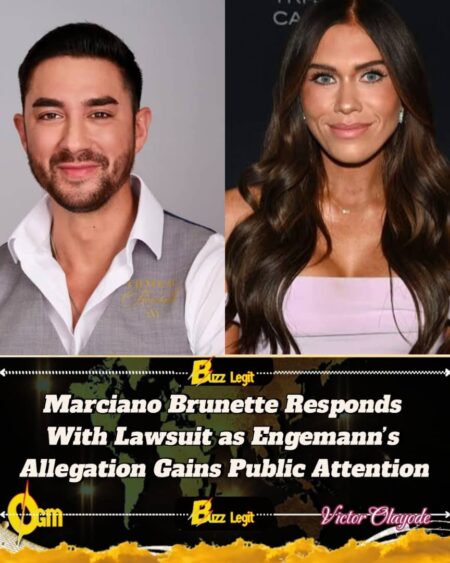
Marciano Brunette has initiated a defamation lawsuit against Demi Engemann after she publicly labeled him a “sexual predator,” a characterization he argues is both false and deeply damaging to his career, reputation, and personal life. Marciano Brunette asserts that Engemann’s claims spread rapidly across social media, resulting in widespread scrutiny and significant personal distress. Marciano Brunette maintains that the allegation was made recklessly, without evidence, and in a manner that exposed him to undue stigma, prompting him to pursue legal action as a means of restoring his name.
Marciano Brunette emphasizes that his decision to proceed legally was not taken lightly, noting that the public nature of the accusation had immediate professional consequences. Marciano Brunette also underscores that the lawsuit is intended not only to address personal harm but to combat what he describes as a growing trend of unverified public accusations made through social platforms. Marciano Brunette believes that the legal system remains a critical avenue for individuals who feel unfairly targeted in online spaces where allegations—true or not—can become viral within minutes.
Marciano Brunette’s case has drawn substantial public attention, with many observers noting how quickly reputational harm can spread in the digital age. The situation has ignited discussions about accountability—on the part of both the accused and accusers—reflecting broader national conversations about online responsibility. Marciano Brunette’s decision to pursue a formal legal response positions his case as a notable example of how social media allegations can escalate into full-scale litigation.
Demi Engemann’s Accusation and Its Rapid Online Impact
Demi Engemann made the allegation publicly, using social media to describe Brunette as a “sexual predator,” a term that carries severe legal, social, and emotional implications. Demi Engemann’s statement circulated widely, prompting reactions from both supporters and critics who questioned the appropriateness of leveling such an accusation without official reports or corroboration. Demi Engemann’s language also played a significant role in shaping early public opinion, as the phrase is one of the most severe labels that can be applied to an individual.
Demi Engemann’s decision to go public rather than pursue formal channels has been widely debated, with some arguing that social media empowers victims to speak freely while others contend that it can lead to irreversible reputational harm when accusations remain unverified. Demi Engemann’s post, according to legal observers, may serve as a cautionary example of how statements made in anger or frustration can escalate beyond their intended audience and transform into matters of civil liability. Demi Engemann has not yet issued a formal response to the lawsuit, leaving unanswered questions about whether she will amend or defend her initial claim.
The public’s reaction has been divided, with some expressing sympathy for Engemann and others supporting Brunette’s pursuit of legal redress. Demi Engemann’s accusation has underscored the complexities of balancing the right to speak openly about harmful experiences with the legal and ethical responsibility to avoid false or unsubstantiated claims. Demi Engemann continues to face growing scrutiny as the case develops, particularly as legal filings detail the seriousness of her statements and their implications.
Marciano Brunette’s Legal Argument and Pursuit of Accountability
Marciano Brunette argues that Engemann’s accusation constitutes defamation per se, a category that includes statements so harmful that damages are presumed under the law. Marciano Brunette’s legal team asserts that the term “sexual predator” is not a matter of opinion but an alleged factual claim that directly implies criminal behavior. Marciano Brunette therefore seeks damages for reputational harm, emotional distress, and professional losses, all of which he says stem from Engemann’s public post.
Marciano Brunette is also requesting injunctive relief, which may include the removal of the statement and a prohibition on future similar claims. Marciano Brunette’s lawyers argue that such relief is necessary due to the permanence and reach of digital communication, where harmful content can be shared, re-uploaded, or archived indefinitely. Marciano Brunette additionally maintains that the lawsuit is intended to deter future defamatory actions, especially in environments where the boundaries between truth, belief, and public accusation are frequently blurred.
Marciano Brunette’s filing outlines the specific harms he has endured, including lost work opportunities, strained personal relationships, and the emotional toll associated with being publicly labeled in such a severe manner. Marciano Brunette further notes that the accusation has created lasting complications in both his private and professional spheres, even among individuals who know him personally and do not believe the claim. Brunette’s legal team argues that these effects illustrate exactly why defamation laws exist—and why the court must intervene.
Public Response and Broader Implications for Digital Accountability
Marciano Brunette’s lawsuit has become part of a larger public conversation about the tension between supporting alleged victims and preventing false accusations. Marciano Brunette’s case highlights the increasingly common pattern of personal disputes unfolding on highly visible social platforms, where statements—true or false—can dramatically alter someone’s public identity. Marciano Brunette’s experience reinforces the need for caution when making accusations that carry serious legal or moral weight.
Marciano Brunette’s supporters argue that reputational fairness is crucial, noting that accusations of sexual misconduct are among the most damaging a person can face. Marciano Brunette’s defenders believe that the legal process is the appropriate mechanism for determining truth, rather than online debate or public speculation. Marciano Brunette’s critics, however, express concern about whether legal actions might discourage legitimate victims from speaking out, a point that advocacy groups continue to discuss as the case evolves.
Observers note that the case may set a modern precedent, given the role of social platforms in shaping narratives. Brunette’s lawsuit places renewed emphasis on personal responsibility in digital communication, reminding users that public accusations carry consequences. Brunette’s situation underscores the delicate balance between empowering victims and ensuring that individuals are not unjustly harmed by unverified statements.