









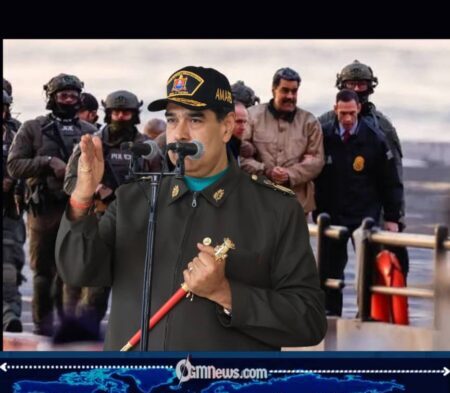
Nicolás Maduro has accused the United States of violating his constitutional rights following a dramatic military operation that resulted in his capture and transfer to U.S. custody in January 2026. The Venezuelan leader’s legal team argues that the operation amounted to an unlawful abduction and breached both Venezuelan sovereignty and international law.
The allegations surfaced in court filings and diplomatic communications, intensifying an already volatile geopolitical dispute. While U.S. officials maintained the operation was lawful and tied to criminal charges, Maduro’s claims have drawn scrutiny from international observers and prompted renewed debate over extraterritorial enforcement actions.
Nicolás Maduro’s Account of the Operation
According to court documents cited by international media, Nicolás Maduro claims he was forcibly removed during a pre-dawn raid and transported out of Venezuela without due process. His legal representatives argue that he was denied access to Venezuelan courts and protections guaranteed under the country’s constitution.
Reports indicate that the operation involved U.S. special forces entering Caracas and extracting Maduro from a fortified government compound. Analysts note that such actions are extremely rare against a sitting head of state and raise complex legal questions about jurisdiction and sovereignty.
Maduro’s allies have described the operation as a “kidnapping,” while Venezuelan officials demanded proof of his condition and location immediately after his disappearance.
U.S. Government Position and Legal Justification
U.S. authorities have stated that Donald Trump authorized the operation as part of a law enforcement effort tied to criminal indictments in the United States. Officials said Maduro would face charges in a U.S. court, framing the action as an enforcement measure rather than a military invasion.
Secretary of State Marco Rubio and other officials indicated that the operation aimed to prevent instability and bring Maduro to trial on allegations including narcotics trafficking and corruption.
Supporters of the operation argue that Maduro’s government had lost legitimacy and that international enforcement was necessary. Critics, however, contend that bypassing extradition procedures undermines global legal norms.
Casualties and Humanitarian Concerns
Venezuelan authorities reported significant casualties resulting from the operation, including security personnel and civilians. Estimates cited by major outlets suggest dozens of deaths, with Venezuelan officials calling for investigations into potential war crimes.
The reported fatalities included members of Venezuela’s security forces and foreign personnel stationed in the country. The human toll has intensified international criticism and prompted calls for independent investigations into the conduct of the operation.
Human rights organizations have emphasized the need for transparency regarding targeting decisions and civilian protections, noting that cross-border enforcement actions must comply with international humanitarian law.
International Reactions and Diplomatic Fallout
The capture of Nicolás Maduro triggered strong reactions from global powers. Russia and China condemned the operation as a violation of sovereignty, while regional allies expressed concern about precedent and stability in Latin America.
Some Western governments adopted a more cautious stance, calling for adherence to international law and due process. Analysts warn that the operation could reshape diplomatic norms regarding regime change and extraterritorial arrests.
The incident has also deepened geopolitical divisions, with Venezuela’s allies framing the operation as aggression and the United States presenting it as a lawful enforcement action.
Legal Debate: Sovereignty vs. Extraterritorial Enforcement
Legal scholars remain divided over whether the operation violated international law. Critics argue that seizing a sitting head of state without host-nation consent breaches the United Nations Charter and customary norms of sovereignty.
Supporters counter that universal jurisdiction and existing indictments may justify such actions under certain circumstances. However, experts note that bypassing extradition treaties risks undermining established legal frameworks.
The case is likely to become a landmark reference in debates over cross-border enforcement, state immunity, and the limits of unilateral action.
What Comes Next for Venezuela and the Region
The removal of Nicolás Maduro has created uncertainty about Venezuela’s political future, including questions about succession, governance, and international recognition. Analysts warn of potential instability if competing factions vie for power.
Regional governments are monitoring developments closely, particularly regarding migration flows, oil markets, and security cooperation. Venezuela’s vast energy reserves and strategic location make its stability a matter of global economic interest.
As legal proceedings unfold in the United States, the broader implications of the operation legal, diplomatic, and humanitarianare likely to shape international relations for years to come.


