










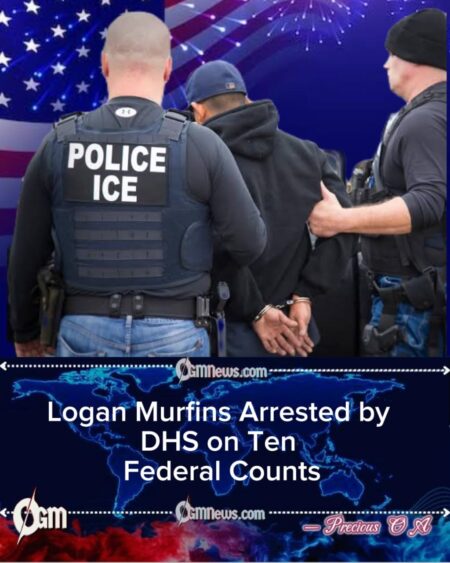
Leftist Logan Murfin of Tulsa is now at the center of a rapidly escalating national controversy after DHS officials confirmed his arrest on ten serious criminal counts tied to violent threats he posted online, threatening that federal agents should be “gunned down, SH0T and executed,” language that immediately prompted federal intervention due to its severity and dangerous implications.
Logan Murfin has been described by investigators as an individual whose online footprint became increasingly erratic in the weeks leading up to the arrest, showing a pattern of inflammatory rhetoric that federal authorities flagged as posing a potential public safety risk.
Logan Murfin has reportedly provided DHS officials with statements during early processing, though investigators say the contents of those interviews will not be released until the formal charging documents are finalized, prompting intense public speculation about his motives and mental state.
SECURITY RESPONSE AND FEDERAL ACTION
Logan Murfin has triggered widespread discussion among security officials who emphasize that threats against federal agents, regardless of political affiliation or motive, are treated as an immediate national security matter requiring rapid and decisive action from DHS.
Federal officials note that the response to the threats posted online was not merely routine but escalated due to the explicit calls for execution, a level of seriousness that activated specialized investigative teams and cross-agency communication channels.
Authorities stress that even as political tensions rise nationwide, the federal government maintains ironclad protocols for identifying, tracking, and neutralizing threats that may escalate into violence against public officials.
LEGAL CONSEQUENCES UNFOLDING
Logan Murfin faces ten counts that include federal threat statutes, interstate communication of violent intent, and potential enhancement charges tied to the specific targeting of federal employees, each carrying penalties that could accumulate into a significant prison sentence if convicted.
Legal experts observing the case say that the explicit wording of the threats, combined with the public nature of the posts, places prosecutors in a strong position to pursue maximum penalties, especially given the heightened national focus on threats to federal officers.
Attorneys familiar with similar cases state that defendants who make violent threats online often underestimate the federal response, but DHS and the Department of Justice have increasingly prioritized these cases due to rising online radicalization.
PUBLIC AND POLITICAL REACTION
Community members in Logan Murfin of Tulsa have expressed shock at the severity of the charges and the intense national attention now centered on the city, with many residents saying they were unaware of any local activity that suggested someone was making such extreme online threats.
Some local leaders have expressed concern about the growing trend of politically motivated online aggression, warning that rhetoric—regardless of which side it comes from—can escalate into incidents that attract federal law enforcement and undermine community stability.
Political commentators across the country have seized on the story, framing it within broader debates about extremism, free speech, public safety, and the online environments that allow violent threats to proliferate.
DIGITAL FOOTPRINT AND RADICALIZATION
Logan Murfin has prompted cybersecurity analysts to examine how online spaces may have contributed to the escalation of his rhetoric, with some experts arguing that certain platforms allow users to spiral deeper into echo chambers where violence becomes normalized.
Analytical teams reviewing the content tied to his accounts report that his online activity intensified dramatically in the days leading up to his arrest, raising questions about whether specific triggers or influences accelerated his behavior.
Researchers say the case highlights the ongoing challenge of balancing digital freedom with public safety, especially when threats cross the line from heated political commentary into explicit calls for violence.
NEXT STEPS IN THE CASE
Logan Murfin is expected to appear in federal court once the initial procedural filings are completed, with prosecutors preparing to outline the full scope of the charges and argue for appropriate detention measures based on the severity of the alleged threats.
Federal officials say additional investigative work is underway to determine whether any individuals encouraged or assisted in Murfin’s escalating online threats, though early assessments suggest he acted alone.
Legal proceedings will continue to unfold over the coming weeks, with DHS emphasizing that the case remains a top priority because of its implications for agent safety and the broader national conversation about violent online extremism.


