










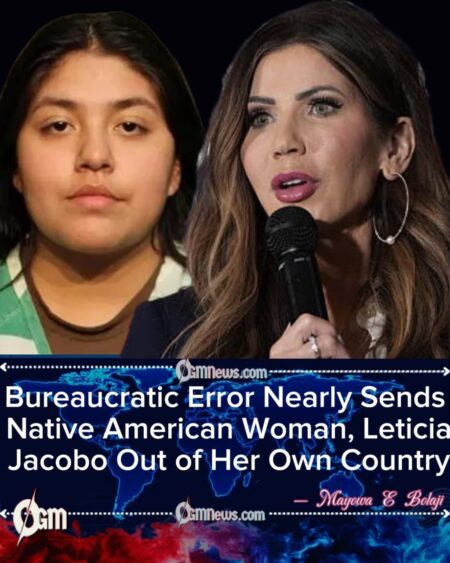
Leticia Jacobo, a 24-year-old member of Arizona’s Salt River Pima-Maricopa Indian Community, was nearly deported by Immigration and Customs Enforcement (ICE) despite being a U.S. citizen and Indigenous to the land. Born in Phoenix, Jacobo’s ancestry and birthright should have made her exempt from any immigration enforcement.
Her ordeal began after being booked in Polk County, Iowa, on a minor traffic charge for allegedly driving with a suspended license. As her mother, Ericka Burns, prepared to pick her up, jail officials informed them that ICE had placed a detainer and intended to deport her — a shocking and unprecedented action against a Native American citizen.
Leticia Jacobo’s Family Scrambles to Protect Her Rights
Leticia Jacobo’s family acted immediately to prevent a grave injustice. They contacted tribal leaders, lawyers, and local officials, and even presented her birth certificate to prove her citizenship. Social media pleas amplified the urgency, highlighting the absurdity of the federal agency targeting someone whose ancestors have lived in the U.S. for thousands of years.
Hours passed while ICE prepared to take her into custody, with no clear explanation from jail officials. The family described the waiting period as agonizing, fearing that one bureaucratic error could permanently separate Jacobo from her home and community.
Leticia Jacobo Is Finally Released After All-Night Standoff
Leticia Jacobo was released around 4:30 a.m. after an all-night standoff, narrowly avoiding deportation. ICE and the Polk County Sheriff’s Office attributed the incident to a “clerical error” or “human error,” claiming that the detainer had been intended for someone else.
Lt. Mark Chance of the sheriff’s office called it “silly,” a remark that drew sharp criticism from tribal leaders and civil rights advocates. Many viewed the incident not as a trivial mistake but as a reflection of systemic failings within ICE, highlighting the dangers of unchecked bureaucratic power.
Leticia Jacobo’s Case Highlights Systemic Issues with ICE
Leticia Jacobo’s near-deportation underscores persistent concerns over ICE procedures, oversight, and racial profiling. Experts say that such mistakes are symptomatic of a broader lack of accountability, where even American citizens — particularly Indigenous people — can be treated as undocumented immigrants.
The case has prompted renewed calls for legislative reforms, stricter verification processes, and increased scrutiny of detainer procedures to prevent similar incidents in the future. Civil rights organizations argue that no one should be at risk of losing their liberty due to database errors or misapplied policies.
Leticia Jacobo’s Experience Spurs Tribal and Legal Advocacy
Tribal leaders and advocates have condemned the attempted deportation, emphasizing the violation of Indigenous sovereignty and human dignity. Jacobo’s family has indicated plans to pursue legal action and seek reforms that prevent ICE from mistakenly targeting citizens in tribal communities.
This incident has become a rallying point for activists demanding systemic change within immigration enforcement, highlighting the risks posed by bureaucratic negligence and racial insensitivity.
Leticia Jacobo’s Case Raises Awareness Nationwide
Jacobo’s ordeal has sparked national attention, with social media campaigns highlighting the dangers of ICE misidentifying U.S. citizens. Advocates stress that if such an error could happen to a Native American woman, it could happen to anyone — underscoring the need for reform and accountability.
Her story serves as both a cautionary tale and a call to action, urging lawmakers and federal agencies to implement stronger protections for American citizens and Indigenous communities against wrongful detainment and deportation.


