










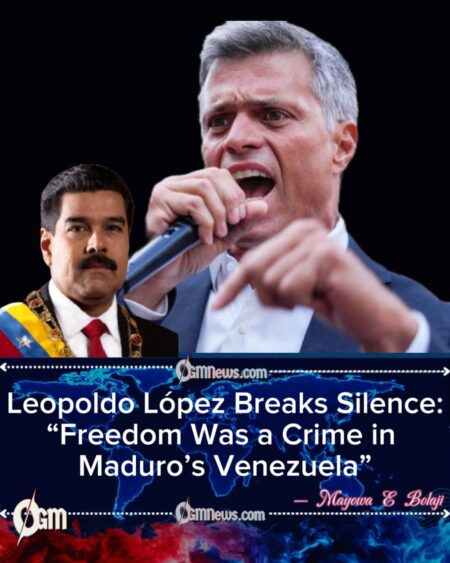
Leopoldo López, Venezuelan opposition leader offered a stark and personal account this week of his imprisonment under the government of Nicolás Maduro, warning that deep-rooted repression and strict censorship continue to undermine democratic prospects in the country. In a wide-ranging interview on The Record with Greta Van Susteren, López outlined the challenges Venezuela still faces and what he believes the nation needs to secure a full transition to democracy.
A Voice from Captivity: Years Behind Bars
Leopoldo López, one of Venezuela’s most prominent opposition figures and founder of the Popular Will party, recounted the years he spent as a political prisoner under the Maduro regime, describing harsh confinement and systematic efforts to silence dissent.
López’s imprisonment has been internationally documented and condemned by human rights organizations, which argue it reflects broader efforts to stifle political opposition across Venezuela’s institutions.
He emphasized that his incarceration — and that of hundreds of others — was not an isolated incident but part of an entrenched pattern of political persecution that he says persists today.
Persistent Repression and Censorship
Despite his release, López warned that Venezuela remains deeply repressive. He pointed to ongoing restrictions on freedom of speech and political activity, asserting that censorship of independent media and punitive actions against critics deter open political engagement.
Human rights groups continue to document arbitrary detentions, selective crackdowns, and limitations on civil liberties in the post-Maduro environment — even as some prisoners have been released. López argued that until these systemic constraints are addressed, meaningful democratic reform will be elusive.
Voices Still Behind Bars
Leopoldo López’s testimony highlights a broader reality: although some political prisoners have been freed in recent weeks, advocacy groups estimate hundreds remain incarcerated on politically motivated charges.
Families of detainees continue to advocate publicly for transparency and accountability, with many still in limbo about the fate of their loved ones. The slow pace of releases and lack of official disclosure has sown frustration and fear among civil society organizations.
What Venezuela Needs Next
Looking to the future, Leopoldo López outlined what he believes are essential steps for Venezuela’s democratic transition. At the core of his recommendations were institutional reform, unfettered free expression, and fair political competition.
He insisted that structural change cannot happen through isolated gestures or goodwill alone — it requires reshaping legal frameworks, protecting human rights, and restoring public trust in national institutions.
International Attention and Local Realities
Leopoldo López also spoke about the role of the international community, urging sustained pressure on Venezuelan authorities to uphold democratic norms and human rights.
While recent developments — including international negotiations and prisoner releases — have generated global attention, López cautioned that superficial progress must not replace substantive systemic reform.
A Nation at a Crossroads
As Venezuela grapples with its political future, Leopoldo López’s narrative underscores the complexity of transitioning from decades of autocratic governance to a democratic framework. His message blended personal testimony with a blueprint for national renewal — one that centers justice, accountability, and collective resilience within Venezuela’s diverse communities. Leopoldo López’s account of imprisonment and his assessment of Venezuela’s political landscape offer a poignant reminder of the continued struggles for democratic governance and human rights in the country. While steps have been taken toward prisoner releases and political dialogue, deep systemic challenges remain before Venezuela can realize a fully inclusive democratic transition.


