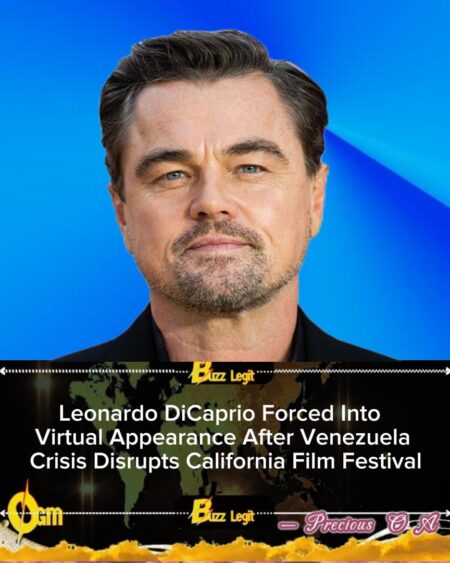
Leonardo DiCaprio was forced to skip a major California film festival this week after sudden geopolitical developments disrupted travel schedules across multiple international hubs. The actor, who had been scheduled to appear in person to accept a prestigious acting honor, instead appeared via live video as organizers cited unexpected security advisories linked to U.S. military operations in Venezuela.
The festival’s opening night had been expected to draw global attention, with DiCaprio positioned as the central guest of honor. However, heightened airspace monitoring, tightened airport security, and rapidly evolving diplomatic alerts created logistical barriers that made long-distance travel unpredictable for several high-profile attendees.
Industry insiders described the change as a visible reminder that global politics can instantly ripple through the entertainment world. While no direct threats were made toward the event itself, officials said that travel advisories affecting transcontinental flights prompted caution and contingency planning.
EMERGENCY ADJUSTMENTS BY ORGANIZERS
Festival coordinators moved quickly to redesign the evening’s program once it became clear that international arrivals could face unpredictable delays. Temporary security corridors were created, and several live segments were converted into remote broadcasts to preserve the continuity of the ceremony.
Leonardo DiCaprio recorded a message from a private location, thanking the festival and acknowledging the unusual circumstances that prevented his attendance. His brief but emotional address was met with extended applause from the audience, who remained seated for the duration of the remote acceptance.
Several other guests also opted for remote appearances, prompting a broader discussion about how international festivals may need to modernize their contingency plans in an increasingly volatile geopolitical climate.
DIPLOMATIC TENSIONS SHAPE TRAVEL ROUTES
Airline carriers confirmed that multiple long-haul routes were rerouted or delayed following new security advisories tied to escalating U.S.–Venezuela tensions. These adjustments affected both commercial and chartered flights, including those booked by entertainment industry figures.
Leonardo DiCaprio was reportedly advised by his travel security team to postpone physical appearances until regional flight corridors stabilized. Sources close to the actor said the decision prioritized personal safety and operational predictability rather than immediate convenience.
The situation highlighted how rapidly political flashpoints can reshape international mobility, particularly for individuals who require carefully coordinated travel arrangements.
INDUSTRY REACTION AND MEDIA RESPONSE
Film studios and talent agencies quietly monitored the developments, assessing whether additional promotional tours might face similar disruptions. Several executives expressed concern that future red-carpet appearances could increasingly rely on hybrid formats.
Leonardo DiCaprio became the symbolic face of this transition, as his high-profile absence dominated headlines across entertainment and political media alike. Commentators described the moment as a fusion of Hollywood glamour and global power politics.
Observers also noted that the shift did not diminish public interest in the ceremony, as live streams attracted unusually high viewership numbers.
LEONARDO DICAPRIO AND THE VIRTUAL MOMENT
Leonardo DiCaprio appeared on large screens inside the theater, delivering a composed and reflective acceptance speech. He thanked fellow nominees, praised independent filmmakers, and acknowledged the unusual global conditions shaping the evening.
Audience members later described the moment as “historic,” noting that the digital appearance felt simultaneously intimate and surreal. The actor’s calm presence contrasted sharply with the international tensions unfolding outside the entertainment sphere.
Critics praised the festival for seamlessly integrating the remote segment, arguing that it demonstrated resilience and adaptability in the face of unpredictable global events.
A NEW ERA FOR GLOBAL ENTERTAINMENT
Entertainment analysts believe that the evening may mark a broader shift in how global film events operate. Hybrid participation, remote acceptance speeches, and flexible scheduling could become permanent features rather than temporary solutions.
Leonardo DiCaprio was cited repeatedly in post-event commentary as a case study for how major stars may navigate geopolitical instability without halting professional commitments.
Festival organizers concluded that while physical presence remains valuable, virtual participation can preserve continuity, audience engagement, and international collaboration even when the world’s political climate becomes uncertain.
Future festivals are already drafting contingency frameworks based on what occurred in California this week. These plans include remote-first award delivery systems, expanded digital production teams, and real-time coordination with international travel authorities.
Leonardo DiCaprio is expected to resume in-person appearances once travel advisories stabilize, according to sources close to his team. Until then, his virtual presence may become a model for other high-profile figures navigating similar conditions.
The event ultimately demonstrated that even amid global tension, the film industry continues to find ways to connect artists with audiences — proving that creativity and adaptability remain central to modern entertainment.