










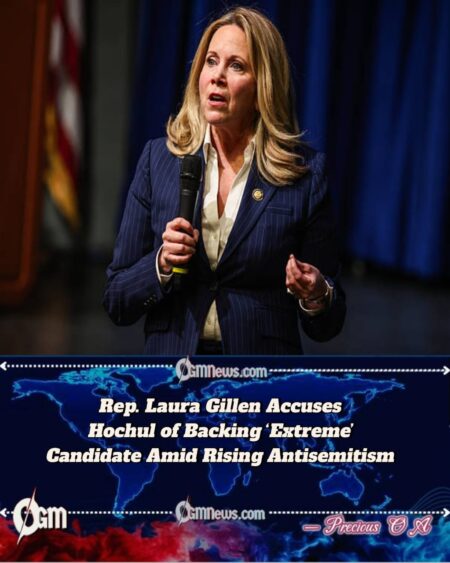
Laura Gillen has raised sharp concerns over Governor Kathy Hochul’s recent endorsement of Assemblymember Zohran Mamdani in the New York mayoral race. Speaking against what she described as a potentially damaging move, she warned that the endorsement could embolden antisemitic sentiments already on the rise across the state.
Laura Gillen began her remarks by pointing out the sensitive climate in New York, where Jewish communities have reported a troubling uptick in harassment, threats, and incidents of hate speech. In her view, aligning with Mamdani at this particular moment sends a dangerous signal that might unintentionally validate extremist rhetoric.
Laura Gillen stressed that her stance was not about partisan competition but about safeguarding vulnerable communities. She emphasized that when government officials elevate figures whose past statements or associations are seen as polarizing, it can deepen divides rather than foster unity.
Hochul’s Endorsement and Its Implications
Governor Hochul’s decision to back Mamdani was seen by many as a calculated move to appeal to progressive voters who share Mamdani’s stance on housing, healthcare, and foreign policy. While her endorsement gained praise from progressive circles, it also triggered criticism from moderates who fear that such a choice could alienate other constituencies.
Laura Gillen described the endorsement as tone-deaf to the broader concerns of Jewish New Yorkers, particularly at a time when tensions are heightened. She argued that political leaders should consider the broader social impact of their endorsements, especially when issues of safety and prejudice are intertwined.
Political analysts note that Hochul’s move could have ripple effects beyond the mayoral race. It signals an effort to solidify ties with the progressive wing of the Democratic Party, but it also risks fueling divisions within her base. Critics believe that Gillen’s intervention underscores a larger struggle within the party over how to balance inclusivity with caution in sensitive matters.
The Broader Debate on Hate and Representation
Laura Gillen insisted that her objections are rooted in principle rather than politics. She explained that while Mamdani has strong support among younger and more progressive voters, his outspoken views have been criticized by some as fueling division, particularly around the Israeli-Palestinian conflict. Such associations, Gillen warned, could inadvertently contribute to antisemitic attitudes.
Laura Gillen acknowledged the importance of diversity in political representation but argued that inclusivity should not come at the cost of safety. She urged leaders to weigh the consequences of their decisions more carefully, highlighting how symbolic gestures can carry unintended consequences for minority communities.
Laura Gillen’s statements have already ignited significant discussion across political and civic spaces. While some commend her for speaking out, others see her remarks as an unnecessary escalation. The tension highlights how sensitive issues of race, religion, and identity continue to challenge New York’s political fabric.
Looking Ahead
Laura Gillen emphasized that her remarks should be seen as a call to action rather than a partisan attack. By raising awareness, she hopes to encourage a more thoughtful approach to endorsements and political alignments in the future.
Laura Gillen concluded her remarks by reiterating that political decisions must account for their real-world consequences. She expressed concern that overlooking these implications risks normalizing harmful narratives and deepening mistrust among communities that deserve protection.
Laura Gillen’s intervention has ensured that Hochul’s endorsement will not fade quietly into the political backdrop. Instead, it has become a flashpoint in ongoing debates about leadership, responsibility, and the urgent need to confront hate in all its forms.


