









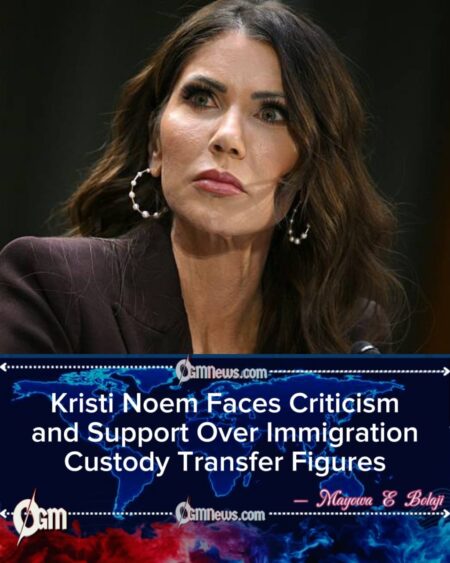
Kristi Noem told lawmakers that 17,864 individuals in local police custody were not transferred to federal immigration authorities in 2025 by jurisdictions operating under sanctuary policies. The disclosure highlights continuing disagreements between local governments that limit cooperation with immigration enforcement and the United States Department of Homeland Security, which oversees national immigration enforcement. Supporters of sanctuary policies argue that such approaches encourage community engagement with law enforcement, while critics contend that limited cooperation may complicate efforts to address immigration violations.
Kristi Noem emphasized during the hearing that federal immigration authorities routinely request custody transfers for individuals identified as being in the country without legal authorization, particularly in cases involving criminal allegations. Sanctuary jurisdictions often decline these requests, citing concerns that aggressive enforcement could deter immigrant communities from reporting crimes or cooperating with investigations. The data presented reflects the complexity of balancing federal enforcement objectives with local governance priorities.
Kristi Noem’s testimony is expected to influence ongoing legislative discussions about immigration reform and enforcement strategies. Policymakers continue to debate whether increased coordination between local and federal authorities would enhance public safety or undermine community trust. The issue remains a significant point of contention in broader immigration policy debates.
Kristi Noem Explains Sanctuary Policy Dynamics
Kristi Noem described sanctuary policies as local measures that limit law enforcement’s involvement in federal immigration matters, often restricting information sharing or compliance with detention requests. Advocates of these policies argue that they foster trust between immigrant communities and local authorities, enabling residents to report crimes without fear of immigration consequences. They maintain that effective policing depends on community cooperation and engagement.
Kristi Noem noted that critics of sanctuary policies express concerns about potential enforcement gaps and challenges in addressing immigration violations. They argue that coordinated approaches between local and federal agencies are necessary to uphold legal standards and ensure comprehensive enforcement. The debate reflects broader disagreements about the distribution of authority in immigration governance.
Local jurisdictions retain discretion over policing priorities and resource allocation, resulting in varied approaches to immigration enforcement across states and municipalities. Kristi Noem highlighted that this diversity of policies contributes to ongoing discussions about the appropriate balance between federal oversight and local autonomy. Policymakers continue to explore frameworks that address enforcement objectives while respecting governance principles.
Kristi Noem Data and Transparency in Immigration Enforcement
Kristi Noem emphasized the importance of transparency and data-driven analysis in evaluating immigration policies. Accurate information about custody transfers and enforcement practices enables policymakers to assess outcomes and identify areas for improvement. Advocates for transparency argue that public access to data promotes accountability and informed decision-making.
Kristi Noem acknowledged that quantitative figures alone may not fully capture the complexities of immigration enforcement. Factors such as resource constraints, legal considerations, and community dynamics can influence local policy decisions. Comprehensive evaluations of immigration strategies require contextual analysis alongside statistical metrics.
Lawmakers from both political parties have called for additional information to better understand the implications of sanctuary policies. Kristi Noem indicated that proposals under consideration include enhanced reporting requirements and studies examining the relationship between local cooperation and public safety outcomes. Such measures aim to inform evidence-based policymaking and address concerns from diverse stakeholders.
Kristi Noem Political and Legislative Implications
Kristi Noem stated that the custody transfer data is likely to shape legislative discussions surrounding immigration reform and enforcement priorities. Proponents of stricter policies advocate for increased cooperation between local and federal authorities to strengthen immigration enforcement. They argue that enhanced coordination is essential for maintaining the integrity of immigration laws.
Kristi Noem noted that opponents of restrictive approaches caution against punitive measures that could undermine community trust and discourage individuals from reporting crimes. Supporters of sanctuary policies emphasize the importance of balanced strategies that address immigration concerns without compromising public safety objectives. The divergence of views reflects broader political divisions on immigration governance.
Congress is expected to consider proposals aimed at improving collaboration and transparency in immigration enforcement. Noem indicated that potential measures include funding incentives, reporting standards, and frameworks for cooperative agreements between jurisdictions. The legislative response will influence the future direction of immigration policy.
Kristi Noem Path Toward Policy Solutions
Kristi Noem concluded that policymakers face the challenge of identifying solutions that address enforcement concerns while preserving community trust and governance autonomy. Potential approaches include enhanced collaboration frameworks, data transparency initiatives, and reforms aimed at improving coordination between local and federal authorities. Advocates for compromise argue that constructive dialogue is essential for resolving longstanding disagreements.
Kristi Noem emphasized that immigration policy requires consideration of economic, social, and security factors. No single approach can fully address the complexities of immigration governance, and comprehensive strategies must incorporate diverse perspectives and evidence-based analysis. The goal remains to balance enforcement objectives with community interests.
The data disclosed by Noem serves as a catalyst for ongoing discussions about policy reform. By engaging stakeholders and evaluating evidence, lawmakers can work toward solutions that address immigration challenges while respecting local governance principles. The debate over sanctuary policies is likely to remain a defining issue in American political discourse.