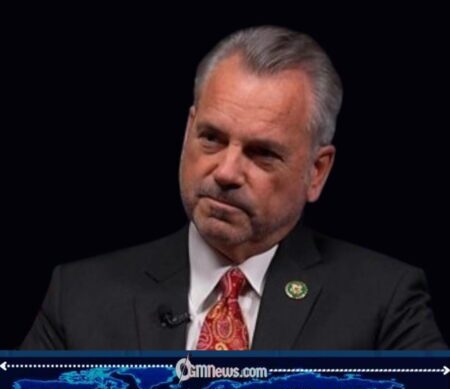










U.S. Homeland Security Secretary Kristi Noem has declared that the Department of Homeland Security (DHS) has just completed what she called its most successful year in the department’s history, crediting President Donald Trump, the current U.S. president serving a second term, for the agency’s performance and direction.
Noem’s remarks, delivered as both a progress report and a promise of more aggressive output, signal that DHS is preparing to intensify operations across its core mandates—immigration enforcement, border security, federal protective missions, and national security coordination. While supporters view the statement as evidence of renewed institutional discipline and operational clarity, critics argue that “results” must also be measured by transparency, due process, and accountability.
A Record-Year Claim That Reshapes the DHS Narrative
Noem’s assertion that DHS has experienced its “most successful year” is more than a celebratory remark—it is a direct attempt to reshape the public narrative around one of the federal government’s most politically sensitive agencies. DHS is routinely judged not only by metrics and enforcement totals, but also by the national mood surrounding immigration and internal security.
By framing the year as historic, Noem positions DHS as a department that has regained momentum and effectiveness under Trump’s leadership. The claim is designed to project control and competence—two themes that typically define public trust in security institutions.
At the same time, the statement raises immediate questions: successful by which indicators, and successful for whom? DHS outcomes are often contested, with supporters emphasizing enforcement achievements while opponents focus on humanitarian impact and civil liberties concerns.
What “Most Successful Year” Likely Means Inside DHS
Although Noem did not provide numerical details in her statement, DHS success is commonly measured internally using operational benchmarks. These include enforcement outcomes, interdiction performance, deployment efficiency, and coordination across agencies such as Immigration and Customs Enforcement (ICE) and Customs and Border Protection (CBP).
A “most successful year” may refer to increased removals and deportations, expanded investigations into transnational smuggling networks, and higher arrest totals—especially those involving individuals labeled as public safety threats. It may also include improved response times and protective capacity for federal buildings and personnel.
However, DHS performance metrics are rarely neutral. A rise in arrests, for instance, can be praised as effective enforcement by one side and condemned as excessive policing by another. The same numbers can produce two different political stories.
Immigration Enforcement as the Administration’s Central Measure of “Results”
Noem’s emphasis on delivering “even more results” strongly suggests that immigration enforcement remains the administration’s leading DHS priority. Under Trump’s second term, DHS has remained central to the White House’s messaging on sovereignty, border control, and public safety.
Supporters of the administration often interpret strong enforcement as a restoration of deterrence—reducing illegal entry and discouraging abuse of immigration systems. They argue that increased DHS activity protects communities and ensures immigration law is applied consistently.
Opponents, however, contend that a relentless enforcement posture can expand detention, intensify community fear, and place nonviolent migrants into the same enforcement pipeline as criminal offenders. This debate—deterrence versus rights—continues to define the national divide over DHS operations.
Federal Protection, Domestic Stability, and a Broader DHS Footprint
DHS is not only an immigration agency; it also plays a central role in protecting federal assets, monitoring security threats, and supporting law enforcement coordination. Noem’s statement can be interpreted as a signal that DHS intends to maintain or expand its domestic operational footprint.
In recent years, federal agencies have increasingly been deployed in politically tense environments, including protest zones and major cities. In such contexts, DHS becomes both a security instrument and a political symbol—praised by some as necessary protection and criticized by others as federal overreach.
Noem’s promise of “even more results” suggests DHS leadership believes its approach has public support and intends to build on it. Yet, increased visibility often comes with increased scrutiny.
Oversight and Civil Liberties Questions Likely to Intensify
Whenever DHS claims operational success, questions of oversight and legality inevitably follow. Civil rights groups, lawmakers, and state officials often focus on whether DHS enforcement practices respect constitutional safeguards and human rights standards.
Key issues include detention conditions, deportation procedures, the use of surveillance tools, and the proportionality of enforcement actions. Critics argue that DHS should not only be judged by volume-based outcomes but also by adherence to due process and the minimization of harm.
The administration’s defenders typically respond that DHS cannot fulfill its mandate if it is constrained by what they describe as political obstruction or excessive bureaucratic limitations. This tension—security authority versus civil oversight—is likely to deepen if DHS expands operations.
Political Messaging: DHS Performance as a Second-Term Proof Point
Noem’s statement also functions as political messaging. In a polarized environment, security agencies often become shorthand for broader arguments about governance competence.
By claiming DHS has delivered a historic year under Trump, the administration gains a headline-friendly proof point: an argument that policy direction has produced measurable results. This framing can be used to justify further funding, broader enforcement authority, and expanded operational goals.
For opponents, the statement is likely to be treated as an attempt to normalize aggressive enforcement and to shift attention away from contentious incidents or legal challenges. In either case, DHS performance is being placed directly into the national political contest.
What Comes Next: Bigger Targets, More Deployments, Wider Debate
Noem’s pledge that DHS will deliver “even more results” suggests that next year will feature larger enforcement goals and a more assertive federal posture. That may include expanded immigration enforcement operations, intensified border actions, and increased interagency deployments.
Such moves could produce measurable operational outcomes—higher arrest totals, more removals, more seizures, more prosecutions. But it may also trigger stronger resistance from Democratic-led states and cities, renewed court challenges, and public demonstrations.
Ultimately, DHS appears set to remain at the center of America’s most divisive national issues. Noem’s statement makes clear that the administration believes its approach is working—and intends to accelerate it.