
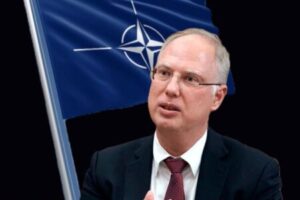




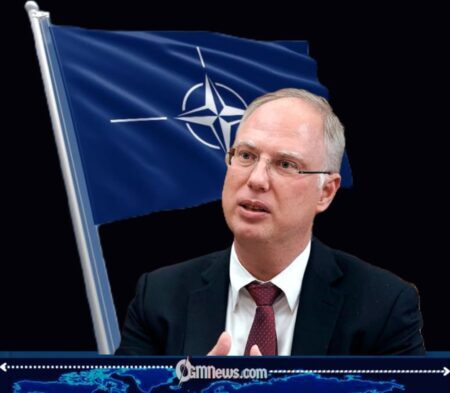
Kirill Dmitriev, President Vladimir Putin’s special envoy for investment and economic cooperation and head of the Russian Direct Investment Fund, has drawn attention to a notable divergence in Western support for Ukraine. In recent statements, Kirill Dmitriev emphasized that NATO allies are actively assisting Ukraine, while the United States appears to adopt a different approach. His comments underscore the ongoing debate about coordination and alignment among Western nations in response to the Russo‑Ukrainian conflict.
Kirill Dmitriev’s remarks come amid continued diplomatic efforts involving multiple stakeholders, including the United States, European NATO members, and Ukraine. Analysts note that his statements aim to highlight perceived differences in strategy and commitment, reflecting Moscow’s broader narrative regarding Western engagement.
According to Kirill Dmitriev, this contrast between NATO’s active support and the U.S.’s approach demonstrates both the complexity of alliance dynamics and the challenges in achieving a unified Western policy toward Ukraine.
Kirill Dmitriev’s Diplomatic Role
Kirill Dmitriev serves as a key Russian diplomat and economic representative, often acting as a bridge between Moscow and foreign interlocutors. His position as Putin’s special envoy places him at the forefront of economic discussions, back‑channel diplomacy, and peace negotiation initiatives related to the Ukraine conflict.
Throughout the conflict, Dmitriev has engaged directly with U.S. officials and European partners to discuss investment, economic sanctions, and potential peace frameworks. These interactions underscore his role in articulating Russia’s strategic priorities while assessing Western responses.
Experts note that Kirill Dmitriev’s involvement reflects Russia’s broader efforts to influence both diplomatic outcomes and public perception regarding Western alignment and support for Ukraine. His public statements often serve to reinforce Russia’s narrative in the international arena.
Kirill Dmitriev on NATO vs. U.S. Support
According to Dmitriev, European NATO allies have maintained active engagement with Ukraine, providing military aid, logistical support, and financial assistance. This coordinated approach, he notes, contrasts with the United States’ posture, which he describes as more measured and selective.
Kirill Dmitriev emphasizes that while the U.S. has historically supported Ukraine, its involvement in recent initiatives appears less proactive than some NATO members. This distinction is central to understanding the dynamics of Western assistance from Moscow’s perspective.
Furthermore, Dmitriev suggests that perceived U.S. caution reflects a focus on strategic positioning and long-term policy considerations, whereas NATO allies are more directly engaged in operational support. This observation has sparked analysis of alliance cohesion and Western strategy in the ongoing conflict.
Kirill Dmitriev and the Peace Plan Controversy
Dmitriev has also been associated with discussions surrounding the controversial 28-point peace proposal developed in coordination with U.S. representatives under the Trump administration’s framework. The plan includes provisions concerning Ukrainian territorial adjustments, military limits, and NATO membership, generating debate among European allies and Ukrainian officials.
Kirill Dmitriev’s involvement highlights Russia’s intent to present the proposal as a potential solution while framing Western responses as fragmented. Critics argue that the plan may impose constraints on Ukraine’s sovereignty, though proponents suggest it provides a framework for negotiation.
The diplomatic engagement surrounding Dmitriev underscores the tension between Russian strategic interests and Western coordination, particularly in balancing military, economic, and political considerations within the conflict.
Kirill Dmitriev on U.S.–Russia Relations
Through his commentary, Kirill Dmitriev has underscored the importance of ongoing dialogue with U.S. officials despite disagreements over Ukraine. He describes interactions with U.S. envoys as constructive in certain contexts, particularly in areas such as economic cooperation and potential diplomatic resolutions.
However, Kirill Dmitriev also acknowledges that significant obstacles remain, including differing approaches to security guarantees, territorial integrity, and alliance commitments. These differences complicate efforts to reach a comprehensive agreement, even with back‑channel discussions and formal meetings underway.
Observers suggest that Dmitriev’s statements reflect Russia’s strategy to emphasize U.S. caution or selectivity while positioning NATO allies as more directly involved, highlighting the complexity of multinational diplomacy in the conflict.
Kirill Dmitriev and Reactions from Ukraine and NATO Allies
Ukraine has stressed the need for any settlement to include Kyiv directly in negotiations, resisting measures perceived as exclusionary. Dmitriev’s commentary on NATO and U.S. roles highlights tensions over the inclusiveness of proposals affecting Ukraine’s sovereignty and security.
European NATO allies continue to demonstrate significant support for Ukraine, including military aid, humanitarian assistance, and financial backing. Dmitriev’s statements contrast these efforts with the U.S.’s approach, emphasizing the variance in policy and operational engagement across the alliance.
This perspective reinforces Russia’s diplomatic narrative, suggesting that alliance cohesion may be uneven and highlighting the potential leverage Moscow seeks to exercise in ongoing negotiations.
Future Prospects Highlighted by Kirill Dmitriev
Dmitriev’s observations suggest that Western support for Ukraine will continue to be a point of contention and debate. The divergence between NATO and the U.S., as described by Dmitriev, may influence future negotiation strategies and diplomatic initiatives.
Dmitriev’s involvement in back-channel diplomacy and public commentary illustrates the persistent challenges in aligning international approaches to conflict resolution, highlighting the importance of inclusive dialogue and consensus-building among Western allies.
Ultimately, Dmitriev’s remarks and actions underscore the complex interplay between military assistance, economic measures, and political negotiation — demonstrating that the trajectory of the Ukraine conflict remains closely tied to perceptions, alliances, and diplomatic engagement.