




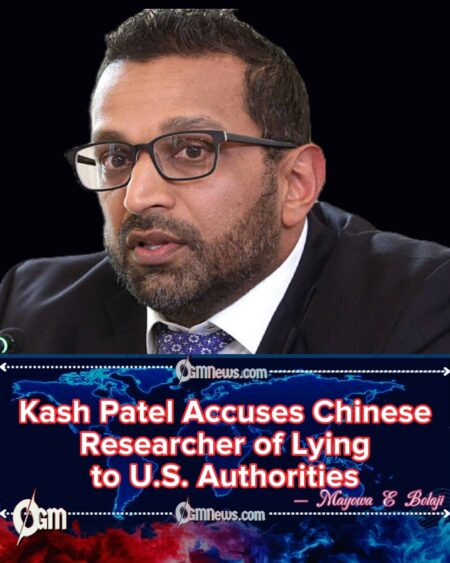
Kash Patel, FBI Director, revealed that a Chinese national has been formally charged with attempting to smuggle Escherichia coli (E. coli) bacteria into the United States. The individual, identified as Youhuang Xiang, is also accused of making false statements regarding the material when questioned by federal authorities.
Patel emphasized that this case highlights ongoing risks associated with the illegal importation of biological organisms.
Authorities believe Xiang attempted to bypass standard biosecurity and customs protocols while working at a U.S. research institution, raising alarms over public safety and national security.
Kash Patel Highlights National Security and Biosecurity Risks
Patel warned that the attempted importation of E. coli represents a serious biosecurity concern. Some strains of the bacteria can be harmless, while others pose threats to human health, agriculture, and the wider economy if misused or accidentally released.
Patel further explained that unauthorized biological imports could cause disease outbreaks or economic disruptions, and stressed that federal authorities are treating these violations as potential national security threats, not just simple regulatory breaches.
Kash Patel Details False Statements and Legal Violations
Patel outlined that Xiang is facing charges for making false statements to law enforcement and customs officials about the origin and nature of the E. coli bacteria. Such conduct violates federal law, which criminalizes intentional deception in the handling of controlled biological materials.
Kash Patel warned that these charges carry significant penalties, including prison time, fines, and possible deportation. The FBI director noted that the deliberate concealment of the material indicates a calculated attempt to evade U.S. biosecurity regulations.
Kash Patel Notes Similar Cases in Recent Months
Kash Patel drew attention to a broader trend of federal enforcement against individuals smuggling biological materials into the U.S. He cited prior cases involving other Chinese researchers charged with illegally transporting biological samples and making false statements to authorities.
Patel explained that these earlier cases, which involved roundworm samples and other pathogens, reflect a heightened focus on biosecurity enforcement. The new E. coli case fits this pattern, signaling that authorities are monitoring academic and research imports more closely than ever.
Kash Patel Urges Universities and Researchers to Comply With Federal Rules
Patel commended the work of field offices in Indianapolis and Chicago, as well as U.S. Customs and Border Protection, for uncovering the smuggling attempt. He stressed that academic institutions must educate researchers on federal requirements for importing and handling biological materials.
Patel concluded that only strict adherence to legal import and export procedures can prevent incidents like this in the future. He urged universities and laboratories to establish internal compliance systems to avoid potential criminal liability and ensure national safety.