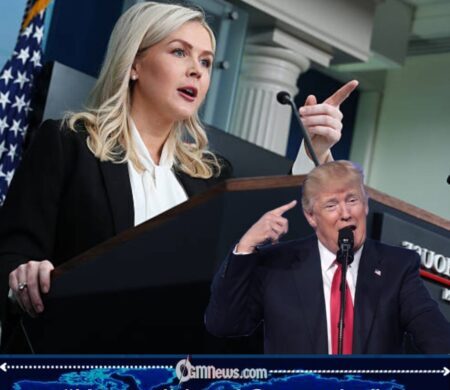
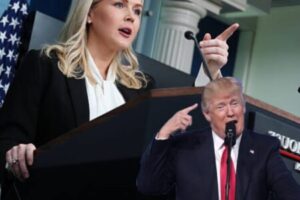


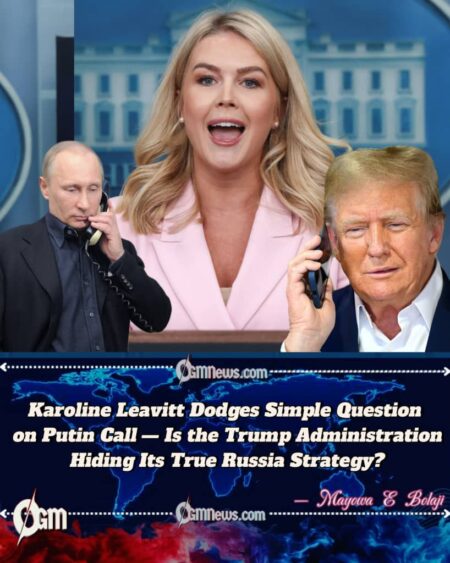
Karoline Leavitt, the White House Press Secretary, ignited controversy during a tense press briefing when she launched a personal attack against a reporter who questioned President Donald Trump’s decision to refuse a call from Russian President Vladimir Putin in the presence of other world leaders. The fiery exchange has fueled widespread debate over the administration’s handling of foreign diplomacy and the press’s role in holding government officials accountable.
The Question That Sparked Controversy
Karoline Leavitt faced the question during a press briefing when a correspondent asked why President Trump declined to take Putin’s call in front of fellow global leaders. The inquiry, widely viewed as reasonable, sought clarity on whether the refusal was a diplomatic maneuver or a signal of strained relations with Moscow.
Karoline Leavitt immediately turned defensive, branding the question “a deliberate attempt to manufacture drama” rather than offering a straightforward explanation. Her reaction drew audible murmurs from the press corps and quickly became the focal point of the briefing.
Leavitt’s Personal Attack
Karoline Leavitt escalated the exchange by questioning the reporter’s credibility and accusing them of “peddling lies.” Instead of addressing U.S. diplomatic strategy, she veered into personal criticism, a move many journalists regarded as unprofessional and hostile.
Karoline Leavitt’s remarks were praised by some administration allies who see her as fearless, yet condemned by press freedom advocates as an attempt to intimidate journalists. The clash highlighted the administration’s increasingly combative relationship with the media.
Diplomatic Sensitivities at Play
Karoline Leavitt’s refusal to clarify the president’s motives left analysts speculating about the geopolitical meaning of Trump’s action. Some believe his rejection of Putin’s call was a calculated show of independence before other leaders.
Karoline Leavitt’s evasiveness, however, risks creating ambiguity about U.S. foreign policy. Without a clear explanation, critics warn the administration may inadvertently signal uncertainty or inconsistency in its Russia strategy.
Media Backlash and Freedom of the Press
Karoline Leavitt’s sharp response drew immediate pushback from media organizations. Journalists accused her of using intimidation tactics instead of engaging with legitimate questions, warning that such behavior undermines the credibility of White House briefings.
Karoline Leavitt was also criticized by press freedom groups, which reminded the administration that holding leaders accountable is a democratic necessity. Her words sparked debate about whether the White House views media scrutiny as an enemy rather than an essential institution.
White House’s Defense of Leavitt
Karoline Leavitt received public backing from White House officials, who portrayed her as a “tough advocate” standing firm against hostile media. They argued that she faces an unusually adversarial press corps and defended her combative tone as a sign of strength.
Karoline Leavitt, however, is said to have caused unease among some insiders who worry that her aggressive approach could alienate neutral journalists. Privately, officials admit the situation could have been handled with more diplomatic finesse.
Trump’s Silence on the Incident
Karoline Leavitt has not been directly addressed by President Trump regarding the confrontation, as he has focused his remarks on economic and diplomatic progress. His silence leaves speculation about whether he approved of her handling of the exchange.
Karoline Leavitt’s clash with the reporter nonetheless reflects Trump’s broader approach toward the press, where critical questions are often reframed as hostile attacks rather than legitimate inquiries.
Reactions from Political Opponents and Allies
Karoline Leavitt’s remarks were condemned by Democratic lawmakers, who demanded an apology and accused the White House of undermining freedom of the press. They warned that her language could embolden future attempts to silence journalists.
Karoline Leavitt was simultaneously hailed by Republican allies, who claimed the reporter’s question was a deliberate “trap.” For them, her pushback demonstrated loyalty and resolve, though critics argue it deepened partisan polarization.
What This Means for U.S. Foreign Policy
Karoline Leavitt’s handling of the exchange has implications beyond the press room, raising questions about the transparency of U.S. foreign policy. Experts argue that clarity on Trump’s Russia strategy is essential, and dismissing questions only fuels uncertainty.
Karoline Leavitt’s confrontation illustrates how a single heated moment in Washington can resonate globally—shaping perceptions of American diplomacy, media freedom, and the tone of political discourse at home and abroad.