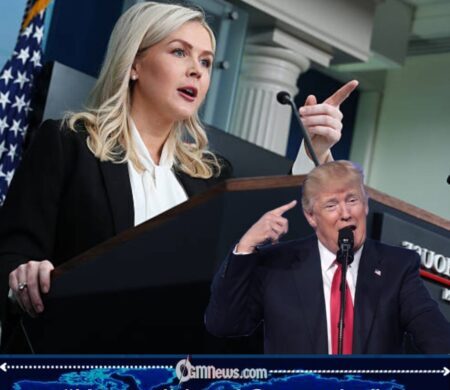







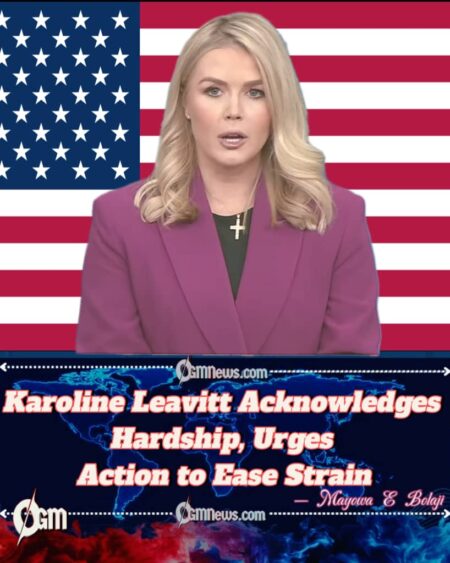
Karoline Leavitt has openly acknowledged that American citizens are already enduring economic and social hardship as the nation navigates its current set of challenges. Speaking with a tone of concern, she emphasized that the difficulties facing households are not abstract policy issues but real-life struggles that affect families daily. Her remarks reflect an admission that, despite ongoing efforts by policymakers, the lived experiences of Americans reveal growing frustration with rising costs, uncertainty, and instability.
Karoline Leavitt stressed that acknowledging the pain is a necessary step toward addressing it, even if the solutions are not immediately clear. She noted that while government officials often prefer to project optimism, it is important for leaders to be candid about the obstacles ordinary people face. By doing so, she suggested, there is a better chance of shaping public policies that resonate with the public’s reality rather than appearing detached from it.
Karoline Leavitt’s comments illustrate a broader political recognition that public patience may be wearing thin. Economic data, social pressures, and political divisions have combined to create an environment where citizens are struggling to make sense of the direction the nation is heading. In acknowledging this pain, she positioned herself as a voice willing to face uncomfortable truths rather than sidestep them.
Karoline Leavitt Highlights Strain on Households and Communities
Karoline Leavitt pointed to the burden on households as one of the most visible signs of the current strain. Rising living costs, inflationary pressures, and uncertainty in employment markets have combined to make financial planning more difficult for many families. For those already living paycheck to paycheck, even modest shifts in prices for essentials such as food, housing, and energy have become sources of significant stress.
Karoline Leavitt also stressed that communities are not insulated from these challenges. The ripple effects extend beyond households into local economies, schools, and healthcare systems. When families face prolonged hardship, local institutions often bear the weight of added strain, forcing leaders at all levels to grapple with resource shortfalls and public dissatisfaction.
Karoline Leavitt described this dynamic as a cycle where national policy decisions, economic fluctuations, and local realities are intertwined. In her view, unless there is decisive action to break the cycle, the pain felt by Americans will continue to deepen. Her message suggested a call for urgency in policymaking to provide meaningful relief before the frustration grows into wider discontent.
Karoline Leavitt Urges Leaders to Confront Hard Realities
Karoline Leavitt underscored the importance of leaders being forthright about the challenges ahead. She noted that while it may be politically tempting to downplay the difficulties or frame them as temporary, citizens deserve a realistic assessment of the situation. Leaders, she argued, must demonstrate both empathy and honesty, balancing hope with recognition of the genuine struggles people face.
Karoline Leavitt argued that confronting these realities does not mean abandoning optimism. Instead, it means pairing candor with credible solutions that can inspire confidence while addressing pressing needs. She emphasized that credibility is earned not through rhetoric alone but by demonstrating a willingness to engage with the hard truths shaping daily life for millions of Americans.
Karoline Leavitt concluded that the role of leadership in moments of difficulty is not merely to acknowledge pain but to actively work to ease it. Her remarks suggest that while hardship is evident, there remains an opportunity for collective resilience—provided policymakers act decisively to address the structural and economic issues at the heart of the strain.