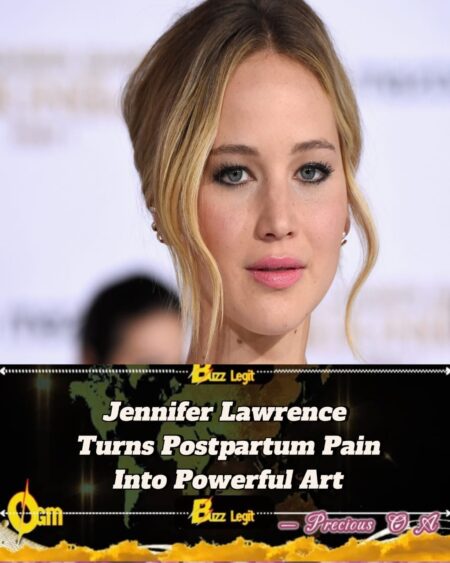
Jennifer Lawrence, the Oscar-winning actress celebrated for her roles in Silver Linings Playbook and The Hunger Games franchise, is opening up about one of the most personal and challenging periods of her life. The Hollywood star revealed that her “bad postpartum” experience following the birth of her second child profoundly shaped her emotional approach to her latest movie role. Speaking in a recent interview with Variety, Jennifer Lawrence shared that the emotional turbulence she faced after giving birth became a turning point that deepened her connection to her craft and reshaped her understanding of strength, vulnerability, and womanhood itself. Her words reflected not only her personal reality but also a universal truth about the hidden struggles many mothers face behind closed doors.
Jennifer Lawrence described the months following childbirth as some of the hardest she has ever faced, revealing that she battled exhaustion, anxiety, and emotional detachment in ways that felt unfamiliar and frightening. “It wasn’t just sadness or fatigue,” she explained thoughtfully. “It was a loss of control over my own emotions and a sense of being disconnected from who I was.” Her reflections painted a picture of a woman at the height of her career grappling with the very human experience of feeling fragile, uncertain, and overwhelmed. For many women, her words provided comfort and solidarity—proof that even those who seem strong, beautiful, and successful can face profound emotional struggles after childbirth.
Her openness has inspired widespread praise for shedding light on an often overlooked subject—postpartum mental health. Many mothers, both within and outside Hollywood, have lauded her honesty as a necessary conversation starter about the emotional and psychological complexities of motherhood. Her story quickly sparked online discussions about the pressure on women to “bounce back” after giving birth, and the unrealistic expectations often placed on mothers by society. Experts and mental health advocates noted that such candidness from public figures can play a vital role in breaking stigmas and encouraging women to seek help without shame or guilt.
Jennifer Lawrence admitted that the process of acknowledging her struggles made her stronger, both personally and professionally. “I had to stop pretending I was fine,” she said in a reflective tone. “Once I faced what I was feeling, I found a deeper kind of strength.” Her statement resonated widely with fans, symbolizing a woman who turned her pain into power and her self-doubt into self-awareness. The actress’s transformation has been widely interpreted as evidence of her growth—not only as an artist but as a woman who has learned to embrace her imperfections and transform vulnerability into empowerment.
Channeling Pain into Art: How Her Postpartum Period Shaped Her Latest Role
Jennifer Lawrence revealed that her postpartum experience unexpectedly became the emotional foundation of her newest film, a deeply moving drama exploring themes of loss, identity, and rebirth. She explained that revisiting those raw emotions helped her deliver one of the most authentic and emotionally layered performances of her career. “Every day on set felt like therapy,” she confessed. “I wasn’t performing; I was reliving and releasing.” Her words echoed a sense of catharsis—a merging of personal healing and professional expression that blurred the line between acting and living.
Mark Foster, the film’s director, described her performance as “achingly real,” noting that her connection to the material elevated the entire production. “Jennifer Lawrence brought a rare emotional truth to every scene,” he said admiringly. “She didn’t just play the character—she became her.” Crew members reportedly noticed that her intensity on set carried a quiet power; moments between takes often lingered with silence, as if everyone present understood that they were witnessing something deeply personal unfold before the camera.
Jennifer Lawrence emphasized that her goal was not to dramatize her pain but to transform it into something meaningful. “When you go through postpartum, you can feel isolated and voiceless,” she said. “This role gave me a chance to turn that silence into something that might speak to others.” Her performance, by all accounts, captures the fragility and resilience of a woman rediscovering herself, and early reviews have described it as “raw,” “unfiltered,” and “emotionally fearless.” Critics have suggested that it could become one of the most defining roles of her career, one that will remind audiences of her extraordinary depth and range as an actress.
Jennifer Lawrence’s ability to weave personal struggle into artistic expression marks a significant evolution in her acting journey. Her latest performance has not only impressed industry observers but also reignited discussions about how art can serve as a mirror to the human condition. For Lawrence, the role represented more than just professional success—it was an act of emotional survival. Her experience underscores how creativity can become a refuge for those dealing with pain, offering a way to process emotions that words alone cannot express. In her case, it was both a personal triumph and a powerful contribution to the growing cultural recognition of postpartum realities.
Advocacy, Awareness, and the Broader Message to Mothers Everywhere
Jennifer Lawrence’s candid confession has gone beyond the entertainment world, resonating deeply with mothers, mental health professionals, and advocates across the globe. Her decision to publicly discuss her postpartum challenges has reignited vital conversations about maternal well-being, emotional recovery, and the often invisible toll of childbirth. Many have hailed her bravery, saying that her openness helps dismantle the myth that motherhood must always appear effortless or joyful. By sharing her story, Jennifer Lawrence has reminded society that even moments of despair can be transformed into messages of hope and understanding.
Her advocacy has since expanded beyond interviews and red carpets, with close sources revealing that she’s in discussions to collaborate with organizations focused on maternal mental health awareness. “If my story can make even one woman feel less alone, then it’s worth every word,” she shared. That simple yet profound statement has since become a rallying message for countless women who have found comfort in her honesty and relatability. In an industry often criticized for its superficiality, her words stand as a reminder that authenticity still matters—and that true influence lies in vulnerability, not perfection.
Jennifer Lawrence’s transparency has earned commendation from medical experts and advocacy groups, who note that public figures speaking openly about mental health can help bridge the gap between stigma and support. “Jennifer Lawrence’s voice matters because she normalizes what millions of women go through,” said Dr. Emily Rogers, a maternal health expert. “She reminds us that recovery is not weakness—it’s part of the journey.” Experts add that her story may encourage more women to speak up, seek professional help, and reject the harmful silence surrounding postpartum mental health.
Jennifer Lawrence’s story continues to inspire a wider cultural shift—one that encourages empathy, understanding, and open dialogue around postpartum recovery. As her film prepares for its global release, her journey stands as a powerful testament to the strength found in vulnerability and the beauty of transforming personal pain into purpose. Through her words and her work, she has become more than a performer—she has become a symbol of resilience, a voice for countless women, and a beacon of hope for mothers learning to heal, create, and rise again.