




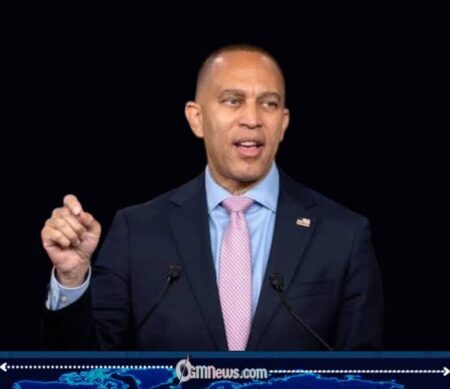
House Democratic Leader Hakeem Jeffries has asserted that American voters are prepared to move beyond MAGA-aligned politics, claiming that recent polling trends and electoral signals show growing support for Democratic leadership. His remarks, delivered in the wake of a major national address, framed the current political climate as a decisive moment in which voters are reassessing their priorities.
Jeffries argued that the address did little to strengthen the standing of Donald Trump, who is serving a second term as U.S. president, and contended that shifting public sentiment reflects dissatisfaction with what he described as extremist positions. His comments have intensified partisan debate as both parties seek to define the national mood ahead of upcoming elections.
Jeffries’ message and Democratic campaign strategy
Hakeem Jeffries’ remarks align with a broader Democratic strategy to frame the political contest as a choice between moderation and extremism. Party leaders have increasingly emphasized themes of stability, governance, and institutional norms in contrast to what they characterize as disruptive political rhetoric.
Strategists say this messaging is designed to mobilize suburban voters, younger demographics, and independents—groups that have proven decisive in recent elections. By portraying the moment as a turning point, Jeffries aims to build momentum and unify Democratic constituencies.
Polling data reveals a complex electoral landscape
Despite Jeffries’ claims of collapsing support for Donald Trump, national polling data presents a mixed picture. Surveys from major research organizations continue to show a deeply polarized electorate, with approval ratings largely divided along partisan lines.
While some polls indicate fluctuations in the president’s approval ratings, analysts caution that national averages often obscure regional variations. Battleground states remain highly competitive, suggesting that voter sentiment is more nuanced than sweeping political rhetoric might suggest.
Recent election results and their interpretation
Democrats have pointed to overperformance in several special elections and local contests as evidence of shifting voter preferences. In some suburban districts, Democratic candidates have exceeded expectations, fueling optimism within the party.
Election experts, however, warn against drawing broad conclusions from isolated races. Special elections often feature lower turnout and unique local dynamics that may not reflect national trends. Nonetheless, both parties are using these results to reinforce their respective narratives.
Republican response and defense of MAGA movement
Republican leaders and conservative commentators have rejected Jeffries’ assertions, arguing that economic concerns, immigration, and public safety remain dominant issues for voters. They contend that support for Donald Trump and MAGA-aligned policies remains strong among the party’s base.
GOP strategists also point to high turnout at rallies and strong primary participation as indicators of sustained grassroots enthusiasm. They argue that Democratic claims of a decisive shift are premature and politically motivated.
Role of rhetoric and political framing
Political communication experts note that Jeffries’ characterization of polling trends as an “extinction-level event” reflects campaign rhetoric rather than empirical consensus. Such language is commonly used to energize supporters and shape media narratives.
Both major parties employ similar framing strategies, presenting selective data to bolster their arguments. Analysts emphasize that while messaging can influence perceptions, measurable shifts in voter behavior typically emerge over time rather than through isolated statements.
Implications for upcoming elections
Jeffries’ comments highlight the central role of narrative in shaping voter expectations ahead of upcoming electoral contests. Democrats are seeking to position themselves as the party of stability and governance, while Republicans emphasize economic performance and border security.
Ultimately, experts say that factors such as inflation, employment, immigration policy, and candidate appeal will play a greater role in determining election outcomes than rhetorical claims. The coming months are expected to test whether the electorate is indeed shifting or remains firmly divided.