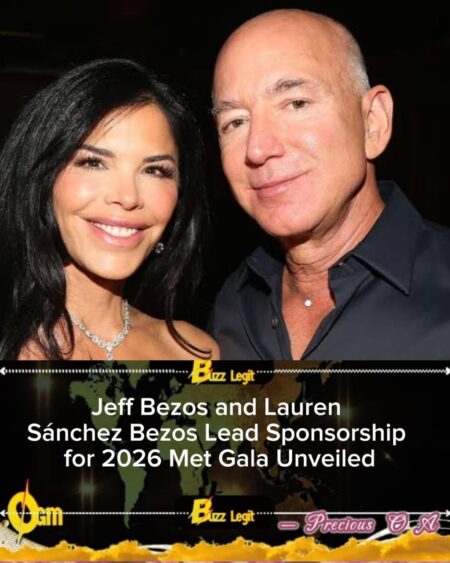
Jeff Bezos and Lauren Sánchez Bezos have officially been named the lead financial sponsors for the 2026 Met Gala, a role that elevates them from high-profile attendees to critical contributors behind the scenes. Their financial backing ensures that both the gala event and the Costume Institute’s related exhibition have the resources necessary to achieve their high artistic and cultural ambitions. Analysts suggest that their contribution could reach into the millions, a sum that underlines their commitment to supporting high culture.
Their sponsorship is multifaceted. Beyond simply funding the gala, it provides the museum with operational flexibility, ensuring that exhibition curation, event logistics, and public programming are well-supported. The couple’s generosity also guarantees that the event maintains its global prestige, attracting top designers, celebrities, and philanthropists whose presence further amplifies the gala’s cultural and social impact.
Despite their financial prominence, Bezos and Sánchez will not assume the traditional role of gala co-chairs or formal hosts. Instead, their involvement centers on ensuring that the gala has the backing necessary to succeed. Their position highlights a shift in the nature of elite sponsorships, where influence is exerted through strategic funding rather than direct public leadership of events.
A Themed Return: “Costume Art”
The theme for the 2026 Met Gala has been announced as “Costume Art,” emphasizing fashion as a form of high artistic expression rather than mere adornment. The exhibition is slated to open shortly after the gala, providing visitors with an immersive experience exploring fashion’s intersection with art, history, and personal expression.
Curators at the Met explain that the exhibition will highlight garments from historical periods alongside contemporary designer creations, illustrating how clothing transcends utility to become a powerful form of visual storytelling. The theme encourages attendees to consider costumes as art pieces, emphasizing craftsmanship, conceptual depth, and cultural significance.
By backing the gala, Bezos and Sánchez align themselves with the promotion of this creative vision. Their involvement underscores a philosophy that celebrates not only the spectacle of the gala itself but also the long-term mission of the Costume Institute to highlight fashion as a serious and evolving artistic medium.
Not Just Money: Influence on Guest List
Bezos and Sánchez reportedly have some input on the guest list, allowing them to suggest high-profile figures who reflect the gala’s artistic and social vision. While their influence is not absolute, it reinforces the couple’s role as strategic contributors to the event’s success.
Although not co-chairs, their involvement in guest selection ensures that key celebrities, designers, and philanthropists are included, strengthening the gala’s fundraising potential and its media visibility. This balance of financial support and social influence exemplifies modern patronage, where monetary contribution is coupled with a say in cultural curation.
Observers note that such influence highlights a broader trend among ultra-wealthy patrons: integrating financial resources with strategic oversight to enhance the overall impact of major cultural events. The Bezos couple exemplifies this model, ensuring their support translates into tangible influence on both content and audience engagement.
A High-Profile Couple with History at the Gala
Bezos and Sánchez first attended the Met Gala as a couple in 2024, capturing public attention for their style and celebrity presence. Their appearance at the “Sleeping Beauties: Reawakening Fashion” gala was widely covered and cemented their status as a socially and culturally significant couple.
Their 2026 involvement as lead donors represents a notable evolution, marking their transition from glamorous attendees to central benefactors whose financial contribution underpins the gala’s operations. Their role indicates an increased commitment to influencing the institution’s success beyond mere participation.
The couple’s continuing presence illustrates how wealthy patrons can shift the cultural landscape by combining visibility, philanthropy, and influence. Their role signals the importance of strategic contributions in sustaining major cultural institutions while ensuring they remain relevant and high-profile on the global stage.
Philanthropy Meets Fashion
Lauren Sánchez Bezos is recognized for her environmental advocacy, serving as vice-chair of the Bezos Earth Fund, and her sponsorship of the gala extends her philanthropic reach into arts and culture. By investing in the Met Gala, she demonstrates a broader vision that links social influence with cultural support.
Bezos and Sánchez’s funding enables the Costume Institute to maintain exhibitions, support emerging designers, and provide public access to groundbreaking artistic presentations. Their contributions help ensure that the institute can continue to innovate, curate, and educate audiences in meaningful ways.
Their patronage also reflects a trend where ultra-wealthy individuals are moving beyond traditional philanthropy toward integrated cultural investment. By combining financial support with active engagement, they shape not only the success of events but also the narratives and artistic legacies of the institutions they support.
A New Era for Vogue Leadership
The 2026 Met Gala will be the first under Vogue’s new editor-in-chief, Chloë Malle, following Anna Wintour’s historic 37-year tenure. This leadership change represents both a challenge and an opportunity for the gala’s presentation and positioning in the fashion world.
Bezos and Sánchez’s sponsorship coincides with this transitional period, reinforcing the gala’s stability and ensuring that major financial backing remains robust during the shift in leadership. Their role guarantees that the event can continue to attract top designers, celebrities, and media attention, despite organizational changes.
Experts suggest that their involvement may also influence future philanthropic patterns, encouraging other donors to engage deeply with both financial support and strategic input, creating a model of participatory patronage that could define the next generation of cultural sponsorships.
Personal Style, Public Influence
Lauren Sánchez Bezos is celebrated for her fashion sensibility, having attended high-profile events such as Paris Fashion Week. Her personal style, combined with her philanthropic activities, positions her as both an influencer and a patron within the fashion world.
Jeff Bezos, known for his leadership in business and philanthropy, complements his partner’s style and social presence, enabling the couple to navigate cultural spaces effectively while maintaining a cohesive public image. Their partnership exemplifies the merging of aesthetic sensibility with strategic influence.
Together, Bezos and Sánchez illustrate how modern patrons of culture blend visibility, taste, and financial power to make lasting impacts on institutions. Their involvement in the Met Gala underscores how wealth and influence can shape not only the event itself but also broader cultural narratives.
What This Means for the Gala & the Met
Their lead-donor status ensures significant media attention and attracts high-profile attendees, enhancing the gala’s reputation and reinforcing its role as a premier cultural event.
The couple’s involvement also exemplifies the strategic merging of philanthropy and influence, demonstrating how wealthy patrons can shape both the operational and artistic success of major cultural institutions.
Ultimately, Bezos and Sánchez’s participation represents a long-term commitment to the Costume Institute, positioning them as ongoing contributors whose influence will extend well beyond the 2026 gala, helping to secure the Met’s prominence in fashion, art, and cultural leadership.