





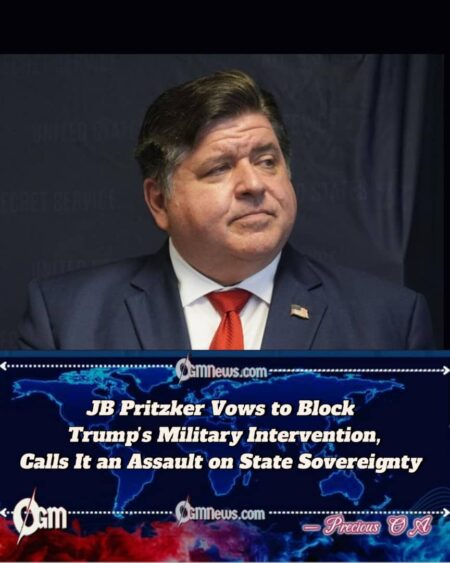
JB Pritzker, Governor of Illinois, issued a strongly worded statement on August 23, 2025, responding to reports that President Trump is preparing to deploy federal military forces—including National Guard troops and potentially active-duty soldiers—to Chicago. Pritzker made clear that Illinois has not requested such intervention and warned that unilateral action by Washington would represent a grave overstep into state sovereignty.
No Federal Outreach, No State Request
JB Pritzker emphasized that Illinois has not received any outreach from the federal government regarding military assistance and has made no request for federal deployment. He noted that his administration is fully capable of safeguarding the people of Illinois without federal intrusion.
Pritzker declared that there is no justification for federalizing the Illinois National Guard, stressing: “There is no emergency that warrants such a move.” He underscored that the safety of residents remains his administration’s highest priority and will continue to be addressed by state-led measures.
Accusations of Political Theater
JB Pritzker accused President Trump of “attempting to manufacture a crisis, politicize Americans who serve in uniform, and continue abusing his power to distract from the pain he is causing working families.”
Pritzker insisted that the plan has little to do with public safety and everything to do with political posturing. By framing the issue as an act of political theater, the Governor made clear that he views the deployment as an unnecessary show of force rather than a genuine response to security concerns.
Federal Plans Take Shape
JB Pritzker reacted to media reports revealing that the Pentagon is drawing up plans to send several thousand National Guard troops to Chicago as early as September 2025. These plans, he warned, were being developed without consultation with Illinois leaders.
Pritzker tied the reports to a broader agenda from President Trump aimed at imposing federal authority over Democratic-led states and cities. He cautioned that the move would not address root causes of crime and homelessness but instead heighten tensions in communities already working toward recovery.
Chicago Leadership Voices Alarm
JB Pritzker joined Chicago Mayor Brandon Johnson in condemning what they described as an “unlawful and reckless” proposal. He argued that the deployment would shatter the progress city officials have made on public safety initiatives.
Pritzker further emphasized that Illinois leaders—including Lt. Governor Juliana Stratton—agree that Trump’s strategy prioritizes political optics over real solutions. He highlighted Chicago’s ongoing crime reduction and community reforms as evidence that the city does not require federal militarization.
Legal Hurdles and Constitutional Concerns
JB Pritzker pointed to the Posse Comitatus Act, which restricts the domestic use of federal troops, as a key legal safeguard Illinois will defend. He warned that any attempt to override state authority by federalizing the Illinois National Guard would face immediate legal challenge.
Pritzker stressed that past justifications used for deployments in other cities do not apply to Illinois. He promised that his administration will exhaust every legal avenue to prevent what he called “a misuse of military power and an assault on constitutional balance.”
Context: Trend of Militarized Municipal Interventions
JB Pritzker linked the reported plan to a larger trend of militarized federal interventions in Democratic-led urban centers. He described the move as part of a troubling national strategy that prioritizes force over collaboration.
Pritzker underscored that Illinois rejects this precedent, warning that it could normalize federal overreach in other states. He argued that the pattern undermines democracy, weakens trust between citizens and government, and erodes the principle of local control.
State Sovereignty and Political Fallout
JB Pritzker framed the issue as a direct assault on Illinois’ sovereignty. He pledged that the state would continue to follow the law, uphold constitutional principles, and protect residents without ceding authority to Washington.
Pritzker insisted that Illinois leaders are united against the plan, describing it as politically motivated, unnecessary, and harmful to the progress his administration has made in strengthening public safety and community well-being.
Perspectives from Capitol Hill
JB Pritzker’s opposition resonated with Illinois’ federal representatives, including Senators Dick Durbin and Tammy Duckworth. He noted that they, too, have condemned the proposal as “political theater” and demanded that federal resources be redirected toward education, housing, and healthcare.
Pritzker welcomed the support of Democratic leaders in Washington, stressing that Illinois does not need military boots on the ground but rather long-term investments that address the root causes of social challenges.
Looking Ahead: What’s Next?
JB Pritzker warned that Illinois is prepared for a legal and political showdown should the Pentagon proceed. He affirmed that litigation and public opposition would follow any attempt to deploy troops without state consent.
Pritzker urged instead for cooperative strategies—partnerships that respect state authority, community-led safety programs, and investments in social services. He concluded that militarization is not a path forward, but a step backward for Illinois and the nation.