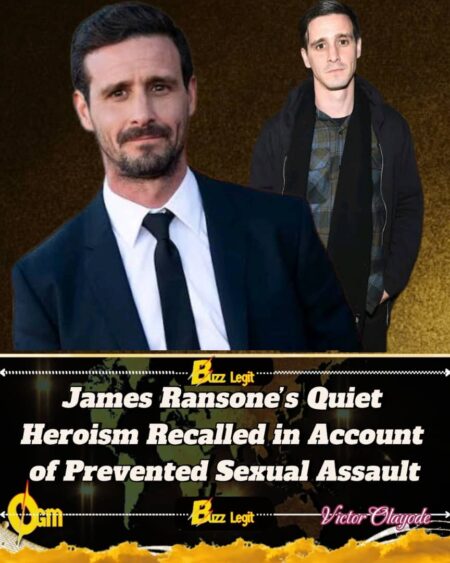
James Ransone is being remembered for a deeply consequential act of bravery after a woman came forward to share how the late actor intervened during an attempted sexual assault, an intervention she says altered the course of her life. The account, shared publicly years after the incident, describes a moment of extreme vulnerability that was abruptly interrupted by Ransone’s swift and instinctive response. While Ransone was widely respected for his work on screen, the testimony has reframed public understanding of his legacy, placing personal courage alongside professional achievement.
James Ransone reportedly acted without hesitation after hearing distress calls outside his Manhattan apartment building, responding in a manner that the woman has described as lifesaving. According to her account, the incident occurred during the early hours of the morning, when isolation and fear compounded the danger of the situation. Ransone’s intervention, she said, not only stopped the attack but restored her belief that help can arrive even in moments of profound despair.
James Ransone’s actions were later characterized by the woman as a defining turning point, one that allowed her to move forward with her life rather than remain anchored to trauma. In sharing her experience publicly, she emphasized that her intention was not to elevate a narrative of violence, but to acknowledge the gravity of decisive human intervention. Her words have since resonated widely, prompting renewed reflection on the quiet acts of courage that often go unseen.
James Ransone and the Immediate Aftermath of Intervention
James Ransone’s involvement extended beyond stopping the immediate threat, according to the woman’s recollection, as his actions contributed to the eventual identification of the attacker. She stated that Ransone pursued the assailant long enough to create a chain of accountability that ultimately aided law enforcement. This aspect of the encounter underscored the broader implications of intervention, illustrating how individual actions can have lasting public impact.
James Ransone was later open about the incident in interviews, speaking candidly about what compelled him to act and the moral urgency he felt in that moment. His reflections revealed a person deeply aware of risk yet unwilling to remain passive when confronted with someone else’s danger. Those comments have since taken on renewed significance, offering insight into his character beyond the roles for which he was known.
James Ransone’s intervention, as described, did not frame him as a hero in his own telling, but rather as someone responding instinctively to an unacceptable situation. That humility has become a recurring theme in how colleagues and acquaintances remember him, reinforcing the idea that courage often manifests without ceremony or calculation. The woman’s account aligns with that portrayal, emphasizing action over recognition.
James Ransone, Personal Struggles, and Human Complexity
James Ransone’s life was marked by artistic success alongside deeply personal challenges, a duality that has shaped public conversation following his death. He spoke openly during his lifetime about struggles with mental health and trauma, topics that have since become central to understanding the fullness of his experience. The resurfacing of this rescue story has added further dimension to discussions about empathy, resilience, and internal conflict.
James Ransone’s willingness to confront danger on behalf of another has been viewed by some observers as reflective of a broader sensitivity to suffering. Those familiar with his career have noted that his performances often carried emotional intensity rooted in lived experience. The account of his intervention has reinforced the idea that his understanding of pain extended beyond artistic expression into tangible action.
James Ransone’s story complicates simplistic narratives of heroism, presenting instead a portrait of a person who navigated vulnerability while remaining capable of decisive compassion. The woman who shared her experience acknowledged this complexity, noting that his act did not erase his struggles but existed alongside them. Her perspective has encouraged a more nuanced conversation about how courage and fragility can coexist.
James Ransone and the Legacy of Quiet Courage
James Ransone is now being remembered not only through his filmography but through the lives he directly affected. The woman who credited him with saving her life expressed regret that she never fully conveyed her gratitude while he was alive, a sentiment that has resonated with many reflecting on unspoken appreciation. Her message emphasized the importance of acknowledging impact before it becomes memory.
James Ransone’s legacy, as shaped by this account, extends into broader discussions about intervention, responsibility, and community awareness. Advocates have pointed to the story as an example of how bystander action can disrupt cycles of violence and prevent further harm. The narrative has been cited in conversations about public safety, underscoring the value of attentiveness and moral clarity.
James Ransone ultimately leaves behind a multifaceted legacy that resists easy categorization. His life encompassed artistic achievement, personal struggle, and moments of profound human connection. The woman’s testimony has ensured that one such moment remains part of the public record, serving as a reminder that the most enduring legacies are often built in unplanned, unobserved acts of courage.