








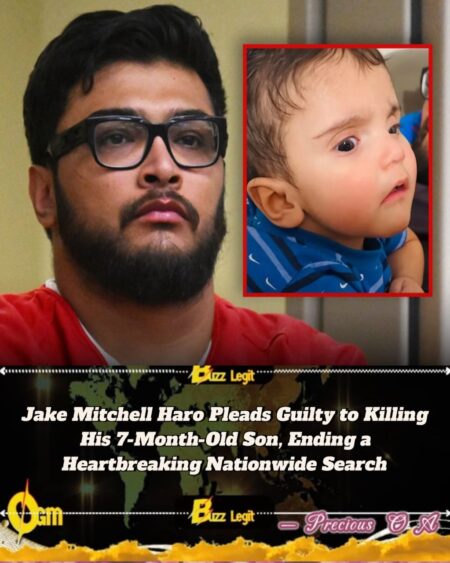
Jake Mitchell Haro, a 28-year-old Arizona resident described by neighbors as quiet but increasingly volatile in recent months, has pleaded guilty to the murder of his 7-month-old son, Emmanuel Haro. Once seen as a devoted father struggling through a turbulent separation, Haro now stands convicted in one of the most heart-wrenching domestic homicide cases in recent U.S. memory. Prosecutors confirmed that he entered the guilty plea in a Phoenix courtroom on Wednesday after reaching a deal that spares him from the death penalty but guarantees life imprisonment without parole.
Jake Mitchell Haro became the prime suspect shortly after investigators discovered alarming inconsistencies in his account of his son’s disappearance. Emmanuel had been reported missing in late February, triggering a massive statewide search effort that drew both public sympathy and intense media scrutiny. As the search intensified, new forensic evidence emerged—blood traces in the family garage and conflicting witness statements—that transformed the case from a missing child alert into a homicide investigation.
Jake Mitchell Haro later told detectives he acted out of “uncontrollable anger” following a domestic argument. His admission sent shockwaves through the courtroom as prosecutors described the crime as “a deliberate act of cruelty against a defenseless child.” The district attorney, visibly shaken, declared that the case “has exposed the tragic intersection of domestic instability and unchecked rage.”
President Donald Trump, responding to the case from the White House, condemned the act as “a preventable tragedy that should ignite a nationwide reckoning on child protection.” He reiterated his administration’s commitment to enhancing community safety and mental health interventions, emphasizing that “every American child deserves protection, even from their own home.”
Jake Mitchell Haro, who initially portrayed himself as a desperate father searching for his missing baby, is now viewed as the architect of the tragedy. His emotional detachment during the plea hearing further deepened public outrage, with many describing his demeanor as cold and unrepentant. What began as a story of hope ended in disbelief as the truth came to light.
Inside the Tragic Timeline
Jake Mitchell Haro first called 911 on February 24, claiming that his son had vanished from their Phoenix home while he was asleep. Authorities arrived to find no sign of forced entry, raising immediate suspicion. The case rapidly gained national attention, with volunteers distributing flyers and social media users rallying behind the hashtag #FindEmmanuelHaro.
Jake Mitchell Haro’s narrative began to crumble when neighbors reported hearing a violent altercation the night before the alleged disappearance. Surveillance footage from a nearby gas station placed him away from home at a time he claimed to be searching for his son. Investigators also discovered baby clothes with traces of blood inside a trash bin several miles from his residence.
Jake Mitchell Haro confessed days later under mounting evidence. In his statement, he admitted to fatally injuring Emmanuel during a moment of rage and attempting to dispose of the body to conceal his crime. Despite extensive searches, the infant’s remains have not been recovered, and authorities continue to investigate possible disposal sites identified in Haro’s testimony.
Emmanuel’s mother, Maria Torres, who was living separately from Haro, expressed profound grief and anger. Through her attorney, she said: “I trusted him with the life we created together, and he took that from me. Emmanuel’s laughter was my peace. Now, silence is all I have left.” Her statement has since been echoed by advocacy groups calling for stronger domestic violence prevention programs nationwide.
Legal Aftermath and National Response
Jake Mitchell Haro will be formally sentenced on November 21, when prosecutors are expected to present emotional testimony from relatives and investigators. Legal analysts believe the plea deal avoids an exhausting trial while guaranteeing accountability for a crime that “shocked even veteran law enforcement officers.” Lead prosecutor Dana Miller described the outcome as “justice served, though no verdict can bring back an innocent life.”
Jake Mitchell Haro’s defense team portrayed him as a man struggling with severe emotional instability following his separation from Torres. However, prosecutors rejected that defense, pointing to a documented history of violent behavior and prior domestic complaints. The presiding judge, in accepting the plea, noted that the act represented “an extreme moral collapse that defies explanation.”
Child safety advocates have since rallied around Emmanuel’s story, urging Congress to expand mental health and parental support programs to detect early signs of family distress. The National Child Protection Alliance issued a statement calling the Haro case “a national wake-up call,” adding that “Emmanuel’s death should move the nation to act—not merely to mourn.”
President Trump has directed the Department of Health and Human Services to conduct a full review of federal and state coordination on child welfare oversight. His administration is also expected to introduce legislation aimed at strengthening early response mechanisms for families flagged by social services. “When systems fail, children die,” Trump said. “We must ensure that never happens again.”
Jake Mitchell Haro, once perceived as a grieving father, now stands as a haunting reminder of the thin line between parental love and uncontrolled violence. His guilty plea closes a painful chapter in Phoenix but opens a broader national conversation about domestic abuse, mental health, and the urgent duty to protect society’s most vulnerable—the innocent who depend entirely on our care.