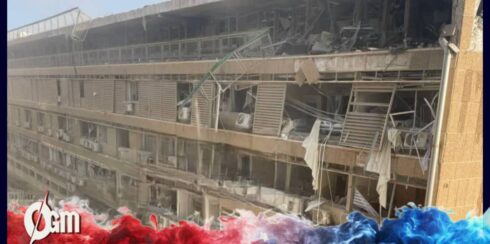
A major hospital in southern Israel was hit by an Iranian missile in the early hours of Thursday, wounding scores and causing widespread destruction, according to Israeli health and emergency officials. The Soroka Medical Center in Be’er Sheva, one of Israel’s largest hospitals, sustained “extensive damage” in the missile strike, with reports confirming 65 people injured—two seriously.
Footage from Israeli broadcasters showed shattered glass, collapsed infrastructure, and black smoke billowing from the facility. Haim Bublil, a local police commander, told OpitanglobaMedia that multiple patients were being relocated due to a fire in a six-story section of the hospital, which had become difficult to access due to structural damage.
While the targeted hospital wing had been preemptively evacuated on Ministry of Health instructions the night before, some staff and patients were still in vulnerable zones when the missile hit. The emergency response was swift, with Israel’s Magen David Adom rescue service confirming that prompt evacuation procedures “saved many lives.”
Tel Aviv and Other Civilian Sites Also Targeted
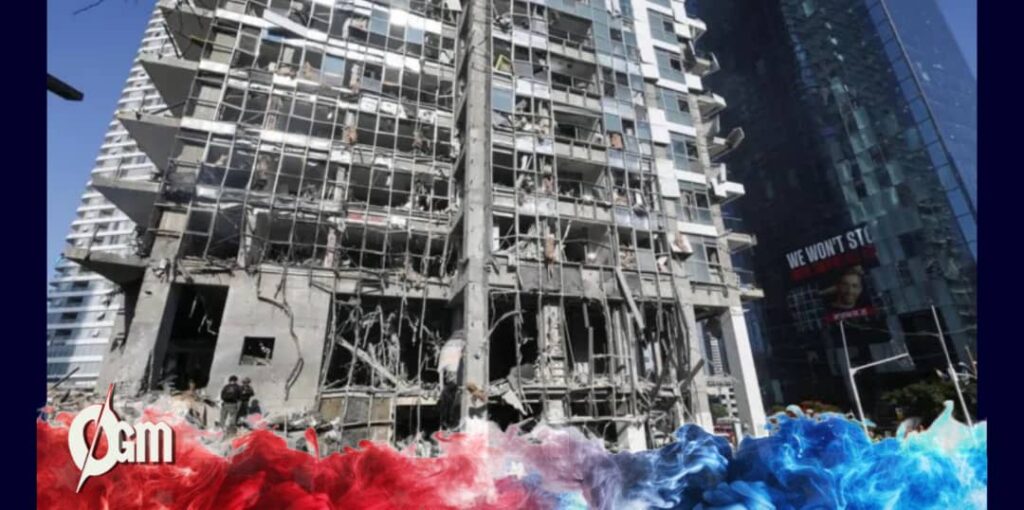
In addition to the hospital strike, Iranian missiles struck a high-rise building and several residential structures in at least two locations near Tel Aviv. Journalists from the French news agency AFP reported “violent, sustained explosions” shaking both Tel Aviv and Jerusalem.
Israeli emergency services scrambled to respond to dozens of calls from residents trapped in upper-floor apartments. Fires broke out in multiple buildings, and civil defense teams were seen escorting civilians from crumbling stairwells and debris-covered hallways.
Local authorities urged civilians to avoid non-essential travel, with warnings issued for possible further strikes. Sirens blared across major cities for most of the morning as the Israeli military maintained high alert and defense systems attempted to intercept incoming projectiles.
Israel Responds with Strike on Iran’s Arak Nuclear Reactor
In retaliation, Israel launched a series of coordinated airstrikes on Iranian territory, including a direct attack on the Arak heavy water reactor located 155 miles southwest of Tehran. The Arak facility, long viewed by Israeli intelligence as a potential plutonium path to nuclear weapons, was reportedly evacuated hours before the strike.
Iranian state media acknowledged the attack but insisted that “no radiation danger whatsoever” existed. A live broadcast from the nearby town of Khondab confirmed that while the facility was evacuated, surrounding civilian areas were not damaged.
The Israeli military stated that the airstrikes targeted Tehran and multiple strategic sites connected to Iran’s nuclear infrastructure. Prime Minister Benjamin Netanyahu issued a stern warning to Iran, vowing that “the tyrants in Tehran will pay the full price” for what he termed a “war crime” against Israeli civilians and medical personnel.
OGMNews.COM
Iranian Missile Hits Israeli Hospital, Israel Strikes Back at Arak Nuclear Reactor
Thursday marked the seventh consecutive day of hostilities, which erupted following a surprise wave of Israeli airstrikes on Iranian military targets and nuclear scientists. According to a Washington-based Iranian human rights group, the conflict has claimed at least 639 lives in Iran, including 263 civilians, and injured over 1,300 others.
On the Israeli side, retaliatory Iranian missile and drone attacks have killed at least 24 people and injured hundreds. Residential neighborhoods in central Israel have borne the brunt of the assaults, prompting widespread evacuations and emergency declarations.
The escalation has triggered global alarm, particularly over the risks of a full-scale regional war. The International Atomic Energy Agency (IAEA) has renewed its call for restraint, warning Israel against further strikes on nuclear facilities and cautioning that oversight of Iran’s heavy water program has become increasingly limited.
U.S. Considers Role as Middle East Crisis Deepens
Amid the spiraling violence, U.S. President Donald Trump is reportedly weighing whether to provide direct military support to Israel’s campaign to dismantle Iran’s nuclear program. While the White House has so far refrained from launching its own operations, sources suggest that contingency plans are being evaluated at the Pentagon.
The Arak heavy water reactor has long been a point of international contention. Originally restructured under the 2015 Iran nuclear deal—with Britain stepping in after the U.S. exited in 2018—the facility was designed to reduce plutonium output. However, recent restrictions on IAEA inspections have left many in the international community uncertain about Iran’s current capabilities and intentions.
With the fate of the region hanging in the balance, Israeli Health Minister Uriel Bosso called the missile strike on Soroka Medical Center “a deliberate act of terrorism” and a red line. “This is not just an attack on a hospital—it is an attack on the very sanctity of life,” Bosso said, affirming that emergency preparedness and swift action prevented a greater tragedy.
As global powers scramble to respond diplomatically, the region braces for what may become the most dangerous military showdown in decades.