




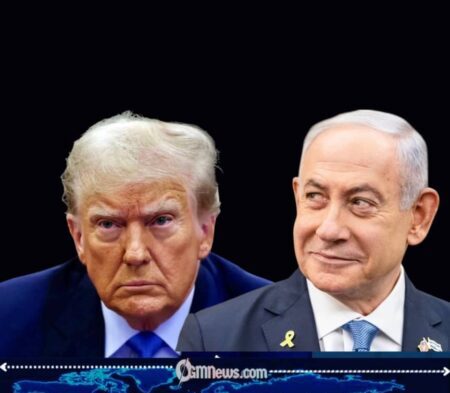
Iranian officials have sharply criticized the United States following recent military strikes on Iranian targets, claiming that U.S. President Donald Trump currently serving a second term has been drawn into a conflict largely driven by Israeli strategic interests. Tehran said the strikes demonstrate that Washington has placed Israel’s priorities above its own national interests.
The statement, widely reported by international media, came after coordinated U.S.–Israeli attacks on Iranian military and nuclear-related facilities. Iranian leaders argued that the escalation shows the United States has “fallen into an Israeli trap,” accusing Washington of abandoning diplomacy in favor of military confrontation.
The accusation highlights the deepening geopolitical crisis involving Iran, Israel, and the United States, and has intensified global concerns about the possibility of a wider conflict across the Middle East.
Iran’s Accusation Against the United States
Iran officials said the U.S. decision to participate in the strikes reflected excessive influence from Israel over Washington’s foreign policy decisions. Tehran’s government claimed the attacks were designed primarily to advance Israeli security goals rather than American strategic interests.
According to statements reported by international outlets including Reuters and Al Jazeera, Iranian leaders argued that Israel had successfully pushed the United States toward military escalation. Tehran warned that such actions undermine diplomatic efforts and increase the likelihood of prolonged regional instability.
Officials also suggested that the U.S. administration ignored ongoing diplomatic channels that had previously been used to address concerns about Iran’s nuclear program and regional activities.
Background: U.S.–Israeli Strikes on Iranian Targets
The controversy follows joint military strikes reportedly carried out by U.S. and Israeli forces targeting Iranian nuclear infrastructure and military facilities. Western governments have long accused Iran of pursuing nuclear weapons capability, an allegation Tehran has consistently denied.
Israel has repeatedly warned that Iran’s nuclear program poses an existential threat and has advocated strong measures to prevent Tehran from acquiring nuclear weapons. Israeli officials described the strikes as a necessary defensive measure aimed at neutralizing strategic threats.
Washington also defended the operation, stating that the action was intended to deter Iranian aggression and protect U.S. allies in the region. The administration argued that Iran’s missile program and regional activities required a firm response.
Iran’s Retaliatory Response
Iran responded strongly to the attacks, calling them a violation of international law and the United Nations Charter. Iranian officials vowed retaliation and warned that continued military action could trigger a broader confrontation across the region.
Reports from international outlets such as The Guardian indicated that Iranian forces launched retaliatory strikes targeting Israeli territory and U.S. military installations across the Middle East. These actions marked a significant escalation in the long-running tensions between Tehran and its regional rivals.
Iran’s leadership emphasized that it views the confrontation as defensive and warned that further strikes would be met with stronger responses.
International Reactions and Calls for Restraint
The crisis has prompted urgent reactions from world leaders. European governments, including those led by Emmanuel Macron of France, have warned that military strikes alone cannot resolve the dispute surrounding Iran’s nuclear program.
Several countries have called for renewed diplomatic negotiations, emphasizing that escalation risks destabilizing the entire Middle East. European leaders and international organizations have urged all parties to avoid further military confrontation.
Diplomats have also warned that the conflict could disrupt global energy markets and international security arrangements if tensions continue to escalate.
A Long-Standing Strategic Rivalry
The confrontation reflects decades of tension between Iran and Israel, driven by ideological differences, geopolitical competition, and disputes over nuclear development.
Israel has consistently viewed Iran as its most significant regional threat, citing Tehran’s missile program and its support for armed groups across the Middle East. Iran, meanwhile, accuses Israel and the United States of seeking to weaken or destabilize its government.
The latest crisis represents one of the most serious escalations in the rivalry in recent years and has raised fears among analysts that the conflict could expand beyond the immediate parties involved.