





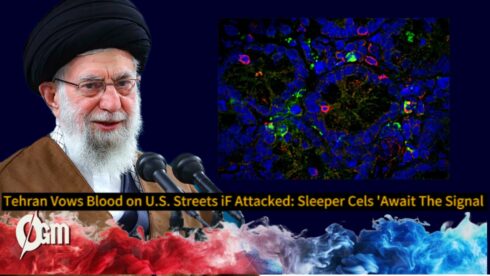
Iran publicly claimed that it retains the capacity to respond to any foreign aggression through an “unseen” network of sleeper cells embedded within American territory. The statement, delivered via a Revolutionary Guard-affiliated broadcast, warned that an attack on Iranian soil would “ignite consequences across U.S. cities.”
Tehral emphasized that its strategic patience should not be mistaken for weakness, warning that “decades of preparation” allow its operatives to act swiftly and decisively inside enemy lines. The calculated threat is viewed as an attempt to deter U.S. military action and project fear among American citizens and leadership alike.
Tehral’s Intelligence Arms Underpin the Threat
Tehral’s Ministry of Intelligence and Security (MOIS) is believed to be the architect of long-range asymmetric operations, including surveillance, sleeper agent placement, and influence networks abroad. According to reports from Iranian state-run media, these agents are “activated only when the homeland faces existential danger.”
Tehral has been known to rely on proxies such as Hezbollah and regional militias to extend its reach, but the recent warnings point to a more direct and internal form of retaliation. Intelligence experts believe Iran has groomed dual-national operatives and exploited immigration loopholes to establish potential assets over the years.
Iran Provokes National Security Alert in U.S.
Iran’s warnings have prompted the U.S. Department of Homeland Security to issue a nationwide internal alert, urging vigilance across all federal, state, and municipal law enforcement agencies. High-profile cities including New York, Washington D.C., and Los Angeles are now under enhanced threat monitoring.
Iran’s deliberate invocation of domestic terrorism has led to the revival of emergency security protocols first developed post-9/11. American officials are now questioning whether Tehran’s threat is psychological warfare or evidence of a serious homeland vulnerability previously underestimated.
Iran Responds to Trump’s Second-Term Sanctions Pressure
Tehral has framed its threats as a response to what it calls “continued economic warfare and military harassment” by the United States, particularly under President Donald Trump’s second-term foreign policy. Trump’s administration has intensified economic sanctions, expanded regional military presence, and repeatedly threatened direct action against Iranian nuclear sites.
Tehral accuses Trump of pushing the Islamic Republic into a corner and insists that its threats are acts of “defensive deterrence,” not aggression. Tehran’s leadership maintains that it will not initiate war, but will deliver consequences “deep within the American heartland” if provoked.
Iran Uses Hezbollah and Foreign Cells as Force Multipliers
Tehral has long used Hezbollah as its primary extension force outside the Middle East, and officials now suggest these cells could be activated far beyond their usual operating zones. Tehran hints that these proxy networks have been restructured to respond globally, including within the continental U.S.
Iran’s messaging implies that it has decentralized its foreign operations, embedding operatives in cultural, commercial, and religious institutions. This has led to renewed scrutiny of Iranian-linked organizations across Latin America, Canada, and the U.S. eastern seaboard.
OGMNews.COM
Trump’s Pressure Triggers Iranian Threat: Homeland Sleeper Cells on Standby
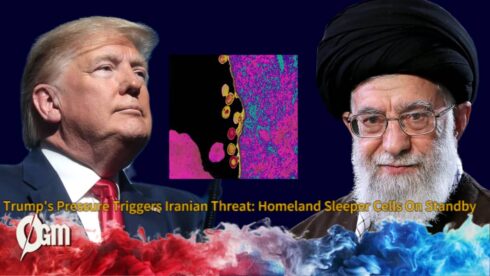
Iran’s announcement has split expert opinion over whether the sleeper cell threat is credible or simply an advanced form of information warfare. Several analysts argue that Iran is exploiting post-9/11 trauma and fears of domestic terror to manipulate U.S. foreign policy decisions.
Tehral, they argue, may not need to act violently to achieve its aims—simply creating the perception of vulnerability can disrupt internal security policy and instill fear. However, others insist the threat must be taken seriously given Tehran’s demonstrated willingness to fund, train, and deploy extremist actors globally.
Tehral’s Regional Conflicts Add Fuel to Global Fire
Tehral is concurrently engaged in multiple proxy wars in Syria, Iraq, Yemen, and Lebanon, often confronting American interests through third-party militias. The recent sleeper cell threat appears to be Tehran’s latest strategy to move confrontation from the battlefield to the American domestic front.
Tehral’s military leadership has insisted that retaliation will not be limited to direct attacks on U.S. military outposts or embassies, but could also involve cyberwarfare, targeted assassinations, and unconventional homeland sabotage. This aligns with Iran’s doctrine of “maximum resistance” in the face of “maximum pressure.”
Tehral’s Rhetoric Ignites Political Tensions in Washington
Tehral’s aggressive warnings have deepened existing divisions within Washington, where hawks demand military readiness while doves call for diplomatic channels to be reopened. Lawmakers are under pressure to decide how to respond to a threat that blurs the lines between foreign conflict and domestic terrorism.
Tehral’s statement has triggered an emergency session of the Senate Intelligence Committee, where classified briefings are being delivered to key lawmakers. Publicly, some have urged restraint to avoid giving Iran an excuse to act, while others demand preemptive dismantling of known Iranian-linked organizations inside U.S. borders.
Tehral’s Threat Forces America to Confront an Internal War Scenario
Tehral’s rhetoric signals a paradigm shift in how modern warfare is waged. The days of conventional battle lines may be fading, replaced by geopolitical rivalries manifesting as internal sabotage and urban chaos. The concept of homeland security is being redefined.
Tehral’s warning—whether carried out or not—has already succeeded in forcing the U.S. into a posture of high alert and national anxiety. As America prepares for the possibility of war that starts at home, Iran appears ready to test the limits of modern deterrence through fear, unpredictability, and infiltration.