








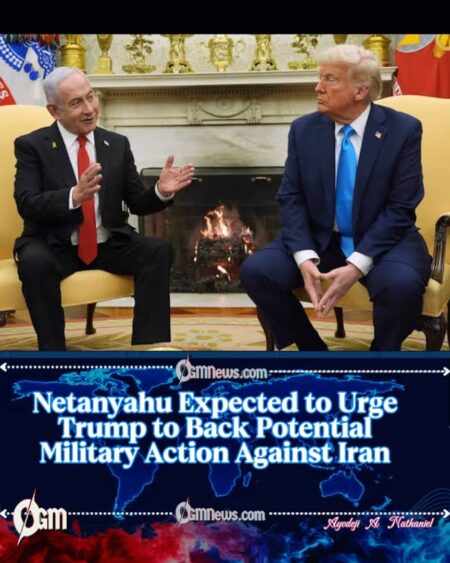
Israeli Prime Minister Benjamin Netanyahu is reportedly expected to press President Donald Trump to support Israel in initiating a war against Iran, arguing that such action would be “in the best interests of America.” The reported push comes amid heightened tensions in the Middle East and growing concern over Iran’s regional influence and nuclear ambitions.
According to diplomatic sources familiar with the matter, Netanyahu’s message is expected to frame potential military action not only as a matter of Israeli national security, but as a strategic necessity aligned with U.S. interests.
The Strategic Argument Being Advanced
Netanyahu is expected to argue that Iran represents a long-term and expanding threat through its missile program, nuclear development, and support for armed proxy groups across the region. Israeli officials have consistently maintained that Iran’s capabilities pose an existential risk to Israel.
By positioning the issue as one that directly affects U.S. security, Netanyahu is reportedly seeking to align Israel’s concerns with Washington’s broader counterterrorism and non-proliferation objectives.
Trump Administration’s National Security Lens
President Trump, serving his second term, has repeatedly emphasized a foreign policy doctrine centered on deterrence, strength, and preventing adversaries from threatening U.S. interests or allies. His administration has taken a hard line on Iran through sanctions, diplomatic pressure, and military signaling.
Any decision to support military action would likely be evaluated through the administration’s assessment of regional stability, risks to U.S. forces, economic consequences, and escalation dynamics.
Regional and Global Implications
A potential conflict involving Israel and Iran would carry far-reaching consequences for the Middle East, global energy markets, and international security. Analysts warn that escalation could draw in regional actors and destabilize already fragile areas.
U.S. allies and adversaries alike are closely monitoring signals from Washington, as American backing—or restraint—would significantly shape the trajectory of any confrontation.
Domestic and International Reactions
News of Netanyahu’s reported push has already sparked debate among policy experts. Supporters of a hard line argue that decisive action could neutralize long-term threats, while critics caution against the costs of another major regional conflict.
International observers stress that diplomacy, intelligence assessments, and alliance coordination will be critical as discussions reportedly unfold behind closed doors.
A Decision With Global Consequences
If confirmed, Netanyahu’s appeal to President Trump would mark a pivotal moment in the U.S.–Israel relations and Middle East policy. The outcome of such discussions could redefine regional security calculations and America’s role in confronting Iran.
As the situation develops, attention will focus on whether Washington signals support, urges restraint, or seeks alternative strategies to address the threat posed by Iran.