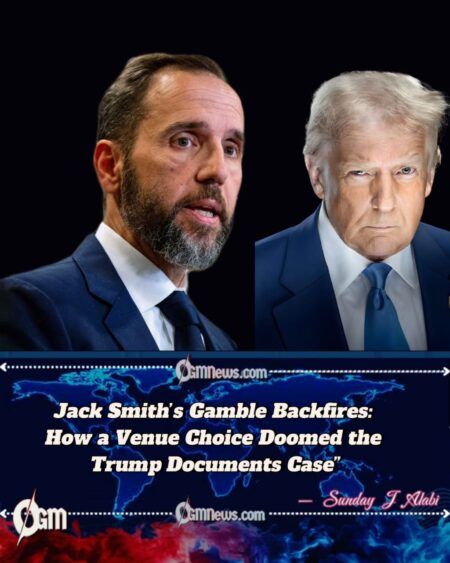
The Justice Department’s high-stakes prosecution of U.S. President Donald Trump over his handling of classified documents collapsed amid internal divisions, misjudgments, and a clash of egos within the agency. According to new accounts detailed in The Washington Post and the book Injustice, the downfall of the case was set in motion by a sharp disagreement among federal prosecutors over where to file the charges.
David Raskin, a senior Department of Justice (DOJ) attorney, reportedly erupted in anger when special counsel Jack Smith chose to bring the case in Florida rather than Washington, D.C.—a decision that would ultimately shape the entire legal battle. Raskin, who had pushed for a D.C. venue due to its jury composition and legal precedent, reportedly exclaimed, “Are you all f***ing insane?” upon learning of Smith’s choice to proceed in Florida.
Smith defended his decision, arguing that filing the indictment in Florida provided stronger legal standing since the alleged offenses took place at Trump’s Palm Beach residence, Mar-a-Lago. However, his confidence would prove misplaced when the case landed before Judge Aileen Cannon, a Trump appointee.
A Miscalculation That Changed Everything
In August 2022, FBI agents conducted a dramatic raid on Mar-a-Lago, discovering classified materials stored in unconventional places—including a bathroom. The raid became a political flashpoint, fueling President Trump’s claims of a “witch hunt” and energizing his supporters ahead of the 2024 election.
Behind the scenes, Smith and his team calculated that there was only a one-in-six chance that Judge Cannon would oversee the case. “I’m not worried about Florida,” Smith reportedly told DOJ officials, confident that evidence of mishandling classified documents would prevail regardless of the venue.
Cannon’s eventual assignment, however, transformed the trajectory of the case. The judge, known for previous rulings favorable to Trump, had once blocked federal agents from reviewing seized materials. Her stewardship of the case soon proved to be an insurmountable hurdle for Smith’s prosecution team.
Judicial Reversal and Political Fallout of Trump’s Prosecution
By mid-2024, Smith’s confidence had eroded. After months of hearings and legal sparring, Judge Cannon dismissed all 40 charges against President Trump, ruling that Smith’s appointment as special prosecutor was unconstitutional. The DOJ initially appealed but quietly withdrew the motion following Trump’s reelection in November 2024.
The dismissal marked a major setback for federal prosecutors and highlighted deep divisions within the Justice Department over how aggressively to pursue Trump-related cases. It also underscored the unprecedented nature of prosecuting a sitting or former president during an election cycle—a practice the DOJ had historically avoided.
With Trump now serving his second term, his administration has reportedly turned its attention toward investigating perceived political adversaries, including former FBI Director James Comey, ex–National Security Adviser John Bolton, and New York Attorney General Letitia James.
The Mar-a-Lago case, once touted as a definitive test of presidential accountability, has instead become a cautionary tale about political overreach, prosecutorial missteps, and the delicate balance between justice and politics in America’s most contentious courtroom battles.