









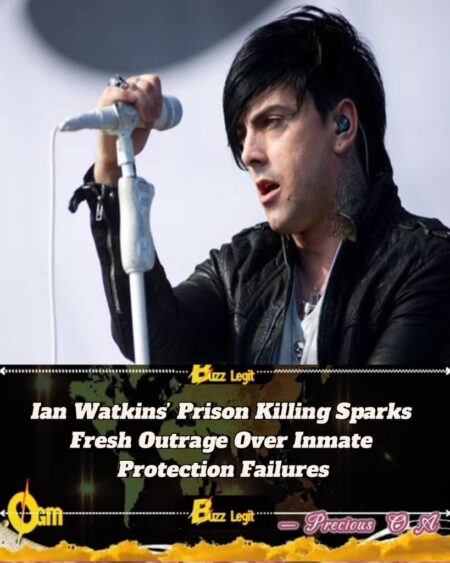
Ian Watkins, the former frontman of the Welsh rock band Lostprophets and a convicted pedophile, was found dead inside his cell at HMP Wakefield on Saturday, October 11, 2025. Once celebrated for his success in the British rock scene, his life descended into infamy following his conviction for multiple child sex crimes. He was serving a 29-year sentence when he was fatally attacked by fellow inmates in what police have now confirmed was a “targeted assault.”
Ian Watkins reportedly suffered multiple stab wounds during the early morning unlock, a period when prisoners are released for breakfast and daily routines. Despite immediate intervention by prison officers and medical staff, he was pronounced dead at the scene. The violent incident has thrown one of Britain’s most secure prisons into turmoil, sparking renewed concerns about the ability of Category A institutions to protect even their most high-profile inmates.
HMP Wakefield, often referred to as “Monster Mansion,” houses some of the UK’s most dangerous offenders, including serial killers, sex offenders, and violent gang leaders. The prison went into immediate lockdown following the attack. West Yorkshire Police confirmed that two male inmates, aged 25 and 43, were arrested on suspicion of murder. They remain in custody as forensic teams and investigators work to piece together what happened during those critical minutes.
Ian Watkins’ death has reignited intense scrutiny of the prison’s management, staffing levels, and internal surveillance systems. Despite its reputation for tight control, HMP Wakefield has faced several complaints in recent years about understaffing and security blind spots. Sources within the prison system told reporters that Watkins had expressed fear for his safety weeks before the attack. Authorities have since pledged a “thorough and transparent” investigation to ensure full accountability.
Early reports suggest that Watkins may have been attacked in his cell shortly after the morning unlock. The Ministry of Justice has not confirmed whether he was under any form of special protection, though it has faced criticism for failing to segregate notorious offenders who are frequent targets of violence.
The Fall from Fame to Infamy
Ian Watkins rose to fame in the early 2000s as the charismatic lead singer of Lostprophets, one of the most successful rock bands of its era. The group achieved worldwide fame with hits such as Last Train Home, Where We Belong, and Rooftops (A Liberation Broadcast). Their energetic live performances and catchy anthems earned them millions of fans across the globe. Behind the fame, however, Watkins harbored a dark and disturbing secret that would eventually destroy both his career and his legacy.
Ian Watkins was arrested in 2012 following an extensive police investigation that uncovered shocking evidence of child sexual exploitation and possession of indecent material. In December 2013, he pleaded guilty to 13 offences, including the attempted rape of a baby, and was sentenced to 29 years in prison, followed by an additional six years on licence. His crimes were described by the sentencing judge as “unprecedented in their depravity,” leaving the public horrified and disgusted.
Lostprophets disbanded immediately after his conviction. The remaining members released a joint statement expressing their heartbreak and condemnation, saying that Watkins’ actions were “beyond forgiveness.” They later re-formed as a new band, No Devotion, in an attempt to rebuild their careers and distance themselves from his crimes.
Ian Watkins was attacked several times during his incarceration, including a violent incident in 2023 where he was stabbed and held hostage by fellow inmates for hours. That event prompted calls for his transfer to a more isolated facility, but prison authorities reportedly decided against it, claiming he was “adequately protected.” His notoriety and the nature of his offences made him a permanent target within the prison hierarchy.
Ian Watkins’ name became synonymous with betrayal and corruption of innocence. His downfall remains one of the most dramatic in British music history — from international stardom to one of the country’s most reviled criminals. While few mourn his passing, his violent death has once again highlighted the complex balance between justice, punishment, and state responsibility.
Security, Accountability, and Questions for the Prison System
Ian Watkins’ killing has reignited national debate about safety within Britain’s prisons and the state’s duty to protect inmates, even those guilty of heinous crimes. Legal experts warn that allowing vigilante justice to thrive inside prisons erodes public faith in the justice system itself. The question now facing authorities is not whether Watkins deserved punishment — but whether the system failed to uphold its own laws in protecting him.
Human rights groups have already called for an independent inquiry, citing chronic understaffing, overcrowding, and surveillance lapses at HMP Wakefield and similar facilities. The attack has also renewed discussions about segregation policies for sex offenders, who are often placed at extreme risk among the general prison population.
Ian Watkins’ notoriety made him an easy target. Experts in prison psychology note that inmates convicted of child-related offences face constant threats and require careful monitoring. His murder demonstrates how even the most fortified institutions remain vulnerable when preventive systems break down.
In Parliament, lawmakers from both major parties have demanded that the Ministry of Justice provide a full report on security conditions at Wakefield. The case has also reopened the broader debate about whether Britain’s prisons are focused on punishment, rehabilitation, or mere containment. For some, the attack represents a tragic failure of order; for others, it is grimly symbolic of the chaos brewing behind bars.
Ian Watkins’ final chapter, though marked by violence and disgrace, may ultimately become a catalyst for reform. His death has underscored the urgency of addressing prison management failures that endanger both inmates and staff. Whether this shocking event leads to meaningful change or fades into another headline remains a question only time — and accountability — can answer.