








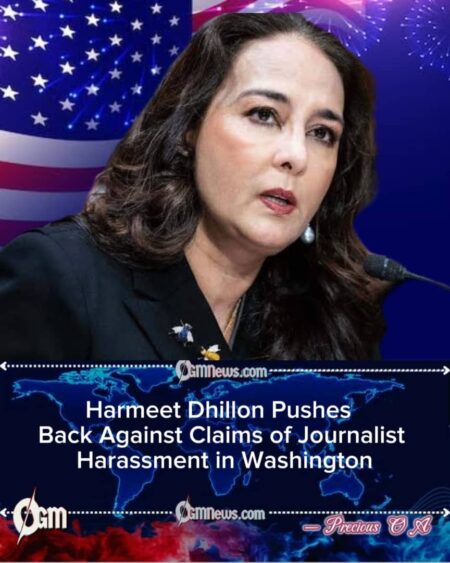
Harmeet Dhillon issued a public response this week after Washington State’s Attorney General made comments suggesting that certain journalists were engaging in behavior he characterized as “harassing” toward members of the Somali community. Dhillon, who serves as an Assistant Attorney General in the U.S. Department of Justice, said she believed the remarks raised important questions about press freedom, the scope of public accountability, and how government officials describe journalistic activity.
In her statement, Harmeet Dhillon emphasized that disagreements between public officials and members of the press are not new, but said she was concerned about language that could be interpreted as discouraging reporting on matters of public interest. She argued that journalists should be able to pursue questions, even contentious ones, without being broadly labeled in a way that could deter legitimate inquiry.
Observers noted that the exchange quickly drew attention across political and legal circles, particularly because it touched on the balance between protecting communities from mistreatment and safeguarding constitutional protections for free speech and a free press.
Background of the Dispute
The controversy arose after comments by Washington’s Attorney General regarding coverage that involved reporting on community issues affecting Somali residents in parts of the state. Those remarks were widely circulated online, prompting reactions from journalists, civil liberties advocates, and elected officials.
Harmeet Dhillon said in her response that while officials have a duty to protect residents from discrimination and threats, they also have a responsibility to avoid language that could be construed as discouraging lawful reporting. She stressed that constitutional protections apply regardless of political affiliation or the subject matter of the reporting.
Legal analysts following the exchange said that such disputes often highlight the tension between community protection and the press’s watchdog role. They noted that the First Amendment protects robust, even uncomfortable, questioning of public institutions.
Harmeet Dhillon’s Public Statement
Harmeet Dhillon stated that her comments were not aimed at dismissing concerns about community well-being, but rather at emphasizing the importance of precise language when officials criticize the media. She said that characterizations of journalistic conduct should be supported by clear evidence and, when necessary, addressed through established legal channels.
She also said that open debate about public policy, immigration, and social services often involves difficult conversations, and that journalism plays a key role in bringing such issues to light. Dhillon added that discouraging inquiry could undermine public trust in institutions.
Several advocacy groups that monitor press freedom echoed similar sentiments, noting that clarity and restraint in official statements can help prevent misunderstandings about the boundaries of lawful reporting.
Reactions from Journalists and Advocates
Harmeet Dhillon pointed to feedback she said she had received from journalists who expressed concern about how official criticism might influence their ability to do their jobs. According to her, some reporters felt the remarks could create uncertainty about whether standard reporting practices might be viewed negatively by authorities.
Press freedom organizations issued statements reiterating that journalists have a right to investigate and ask questions, while also underscoring the need for ethical reporting standards. They emphasized that allegations of misconduct should be handled through transparent processes rather than broad public labels.
Community advocates, meanwhile, stressed the importance of respectful reporting and said they hoped for dialogue that protects both civil liberties and community dignity.
Legal Context and First Amendment Considerations
Harmeet Dhillon referenced longstanding Supreme Court precedent affirming strong protections for political speech and reporting on public issues. She said that these legal principles are designed to ensure that government officials are subject to scrutiny and that citizens have access to information needed for informed participation in democracy.
Constitutional scholars noted that while government officials can criticize the press, care must be taken to avoid statements that could be perceived as punitive or chilling. They said that the legal system provides remedies for defamation or unlawful conduct, but that broad condemnations can complicate public discourse.
The exchange has prompted renewed discussion about how officials and journalists can engage constructively while maintaining accountability on both sides.
Broader Implications
Harmeet Dhillon said she hopes the conversation will lead to clearer guidelines for how public officials address disputes with the media. She emphasized that maintaining public trust requires both responsible reporting and careful, measured communication from those in government.
She also called for continued dialogue among legal experts, journalists, and community leaders to ensure that constitutional rights and community protections are both upheld. According to Dhillon, transparency and mutual respect are essential to navigating sensitive public issues.
As the discussion continues, analysts say the episode serves as a reminder of the ongoing challenges in balancing free expression, responsible governance, and community relations in a highly connected media environment.