






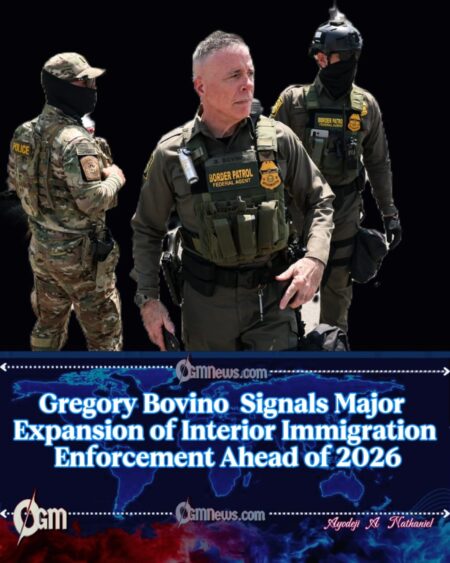
Gregory Bovino , a senior official with the U.S. Border Patrol, has said that 2026 is expected to be a “very big year” for interior immigration enforcement, pointing to a nationwide operational ramp-up and significant increases in federal personnel. Bovino described the coming period as “huge,” indicating a strategic shift toward broader enforcement beyond traditional border-focused operations.
His remarks suggest a long-term enforcement posture that emphasizes sustained activity across the interior of the United States, reflecting what officials describe as renewed clarity of mission and expanded operational capacity.
Nationwide Expansion of Interior Operations
According to Gregory Bovino, immigration enforcement operations are already scaling up across multiple states and metropolitan areas. He referenced coordinated efforts involving fraud investigations in Minnesota, alongside increased enforcement activity in cities such as Charlotte, Chicago, and Los Angeles.
Federal officials say these operations involve joint task forces and intelligence-sharing between agencies, signaling a more integrated approach to interior enforcement. The strategy is designed to address immigration violations far from the border while supporting broader federal law enforcement objectives.
Staffing Surge Across Federal Agencies
A central component of the enforcement expansion is a substantial increase in personnel. Bovino said approximately 10,000 new agents are expected to be added to Immigration and Customs Enforcement, in addition to thousands of new Border Patrol agents currently being boarded.
Gregory Bovino noted that staffing shortages in previous years limited enforcement reach and operational sustainability. The influx of new agents is intended to strengthen field presence, reduce agent fatigue, and allow for simultaneous operations across multiple regions.
Morale and Operational Readiness
Describing morale within enforcement ranks as “sky-high,” Gregory Bovino attributed the confidence to what he characterized as clear mission focus and leadership support. He said agents feel empowered by defined objectives and improved resources.
Officials emphasize that morale plays a critical role in long-term enforcement effectiveness. Supporters of the expansion argue that a motivated workforce is essential for maintaining consistent operational standards and accountability.
Anticipated Enforcement Outcomes
The planned buildup has fueled expectations of increased arrests and removals nationwide. Gregory Bovino suggested that expanded interior enforcement would naturally lead to a higher volume of deportation actions, though he did not provide specific projections.
Legal experts and immigration advocates caution that such an increase could raise due process and humanitarian concerns. They stress that implementation details, prioritization criteria, and oversight mechanisms will significantly influence outcomes on the ground.
Political and Policy Context
Immigration enforcement remains a central issue in U.S. political discourse, with strong opinions on both sides of the debate. Supporters argue that expanded enforcement is necessary to uphold the rule of law, while critics warn of potential impacts on communities and local economies.
Gregory Bovino framed the upcoming enforcement push as mission-driven rather than political, emphasizing that agencies are focused on execution and preparedness rather than partisan considerations.
A Turning Point for Interior Enforcement
Bovino’s comments point to a decisive shift in the scale and ambition of U.S. immigration enforcement heading into 2026. With expanded staffing, broader geographic reach, and elevated morale, federal agencies appear positioned for a more assertive interior strategy.
Whether the approach achieves its intended objectives—or generates new legal and social challenges—will depend on how enforcement priorities are implemented and how policymakers respond to the consequences of a vastly expanded operational footprint.