

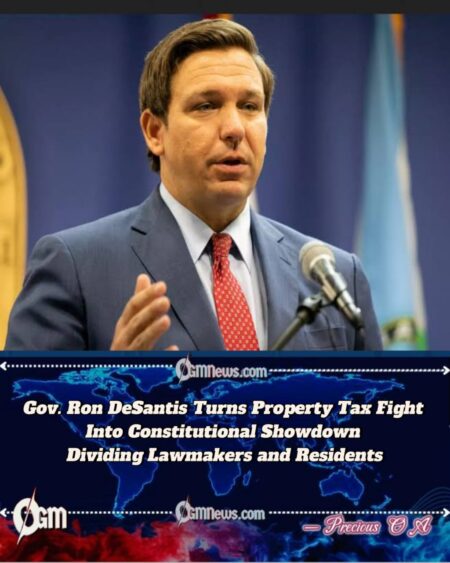
Ron DeSantis has announced a sweeping plan aimed at reshaping Florida’s tax system by introducing a constitutional amendment to significantly lower—or potentially abolish—property taxes altogether. Speaking in Tallahassee, the governor described the measure as a permanent solution to what he calls “a heavy and unfair burden” on Florida families.
Ron DeSantis declared that the initiative will be one of the most transformative economic reforms in Florida’s history, designed to provide relief for homeowners, retirees, and working families. His message was clear: “Property taxes should not stand in the way of prosperity or homeownership.”
The Mechanics of the Amendment
Ron DeSantis explained that the proposal will take the form of a constitutional amendment, requiring approval from both the state legislature and voters in a statewide referendum. He emphasized that the process would be transparent, giving Floridians the chance to decide whether to lock in this reform for future generations.
Ron DeSantis noted that early drafts of the amendment envision either drastically cutting property tax rates or replacing them entirely with alternative revenue streams. Committees in the legislature will begin reviewing the proposal in the coming weeks, setting the stage for vigorous debate.
Impact on Homeowners and Families
Ron DeSantis stressed that the plan is designed to give relief to homeowners, particularly middle-class families and retirees on fixed incomes. He argued that eliminating property taxes would put “real money back into the pockets of those who need it most.”
Ron DeSantis added that the reform could improve housing affordability and reduce financial stress for first-time buyers. While many analysts agree that the measure could strengthen Florida’s housing market, critics remain concerned about how schools, law enforcement, and infrastructure would continue to be funded without this revenue stream.
Funding Alternatives Under Consideration
Ron DeSantis assured Floridians that the state will identify alternative funding models to replace property tax revenue. Options under discussion include modest adjustments to sales tax, targeted tourism levies, and more efficient allocation of federal resources.
Ron DeSantis maintained that his administration’s priority is to ensure no family faces the impossible choice of “paying property taxes or putting food on the table.” Still, economists warn that shifting toward consumption-based taxes could impact low-income households disproportionately.
Reactions from State Legislators
Ron DeSantis has already received strong backing from many Republican lawmakers, who praised the proposal as bold and in line with Florida’s reputation as a low-tax state. Supporters believe the amendment will strengthen Florida’s appeal to businesses and families relocating from high-tax states.
Ron DeSantis, however, faces resistance from Democratic legislators who argue that property taxes fund vital services. They warn that cutting this revenue could destabilize school budgets and local government functions unless carefully replaced with sustainable alternatives.
National Implications and Political Dimensions
Ron DeSantis positioned the plan as a model for tax reform nationwide. He underscored that Florida could lead the way in reducing tax burdens and encouraging economic growth, setting an example other states may follow.
Ron DeSantis has also received support from President Donald Trump, who called the proposal a “game-changing vision for working families.” Political analysts say the alignment between DeSantis and Trump highlights a shared national strategy focused on tax relief and family-centered policies.
Public Opinion and Voter Outlook
Ron DeSantis has sparked wide public reaction with the announcement. Many homeowners and retirees have expressed overwhelming support, praising the governor for taking direct action on an issue that affects household budgets year after year.
Ron DeSantis, however, faces pushback from educators, county officials, and law enforcement leaders who worry about budget shortfalls. With the proposal moving closer to legislative review, the measure is expected to dominate Florida’s political discourse in the coming election cycle.
What Comes Next
Ron DeSantis made clear that the next step is securing legislative approval to place the amendment on the ballot. Once cleared, it would require a supermajority of voters to pass, making it one of the most ambitious political undertakings of his governorship.
Ron DeSantis has pledged to campaign vigorously for the amendment, promising statewide tours and public town halls to rally voter support. He emphasized that the measure is not just about taxes but about securing “a stronger, freer Florida for generations to come.”