








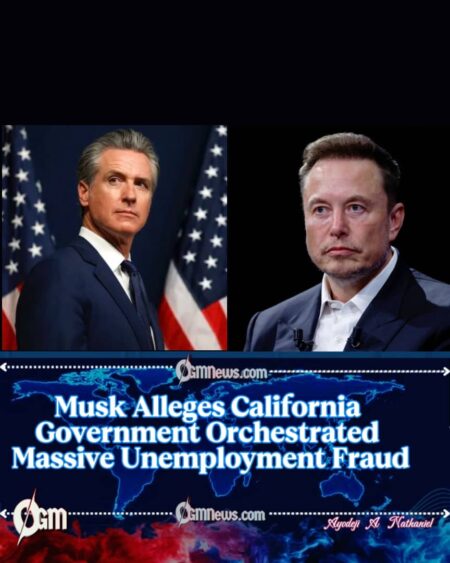
Technology executive Elon Musk has alleged that California’s Democratic-led state government orchestrated tens of billions of dollars in unemployment insurance fraud, rather than merely failing to prevent it. The claim, made publicly this week, has intensified scrutiny of how the state administered unemployment benefits during periods of unprecedented demand.
Musk’s remarks place renewed focus on long-standing concerns about oversight, verification systems, and accountability within California’s unemployment program, while prompting sharp political reactions across party lines.
The Substance of the Allegation
Musk asserted that the fraud was systemic, stating that it was “not merely allowed” but “orchestrated” by state authorities. His comments suggest intentional mismanagement or coordination rather than administrative negligence, a claim that—if substantiated—would carry serious legal and political consequences.
No evidence was presented alongside the remarks, and Musk did not specify which agencies or officials were allegedly involved. The accusation nonetheless raises questions about controls used to verify eligibility and prevent organized fraud rings from exploiting the system.
Context: Unemployment Systems Under Strain
California’s unemployment insurance infrastructure faced extraordinary pressure during recent economic shocks, processing an unprecedented volume of claims in compressed timeframes. Independent audits and legislative hearings in prior years have documented vulnerabilities, including identity verification gaps and outdated technology.
Estimates of losses due to fraud have varied widely, with some assessments placing the figure in the tens of billions of dollars. Whether those losses resulted from criminal exploitation, policy choices prioritizing speed over safeguards, or intentional misconduct remains contested.
Response and Accountability Questions
Governor Gavin Newsom has previously acknowledged failures in the unemployment system and supported reforms to improve verification and recovery of funds. As of this report, the governor’s office has not issued a direct response to Musk’s latest characterization.
State officials have emphasized that multiple investigations and reforms are ongoing, including technology upgrades and coordination with law enforcement to pursue fraud cases and recover misspent funds.
Political Reaction and Public Debate
Musk’s comments have energized critics of California’s governance, who argue that the allegations underscore broader issues of fiscal stewardship and administrative competence. Supporters of the state’s leadership counter that extraordinary circumstances required rapid benefit distribution and that criminal networks, not policymakers, were responsible for the losses.
The dispute has sharpened partisan debate over crisis governance, balancing speed and access against safeguards and accountability.
Legal and Policy Implications
If claims of orchestration were substantiated, they could trigger federal and state investigations with significant ramifications. Absent evidence, legal experts note that the burden remains on accusers to demonstrate intent and coordination.
Policy analysts argue the episode underscores the need for modernized benefit systems, robust identity verification, and transparent auditing—regardless of political attribution—to prevent future losses.
Allegations That Demand Clarity
Musk’s allegations have reignited a contentious issue with major fiscal and political stakes. The path forward will depend on evidence, official responses, and the outcomes of audits or investigations.
As California continues to reform its unemployment systems, public confidence will hinge on transparent findings and demonstrable improvements in oversight and accountability.