






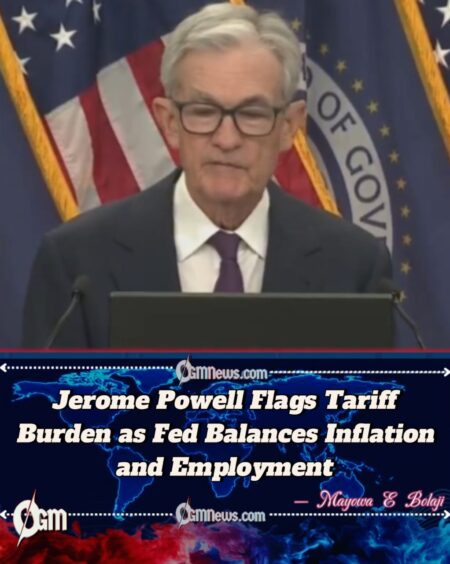
Jerome Powell, Chair of the Federal Reserve, has warned that tariff policies under President Donald Trump are adding to inflationary pressures and weakening job growth. Speaking before lawmakers, Powell said the tariffs “are likely adding to price pressures” while also acting as a drag on economic expansion.
Jerome Powell emphasized that while overall inflation has cooled from its peak, it remains stubbornly above the Fed’s 2 percent target. He noted that tariffs are raising the costs of imported goods, which then filter down to consumers.
Powell also highlighted a labor market slowdown, pointing out that payroll growth has averaged only 35,000 jobs per month over the last quarter, with unemployment beginning to edge higher. “We are seeing unmistakable signs of cooling demand for labor,” he stated.
Jerome Powell Cites Sluggish Job Growth
Jerome Powell pointed to recent labor data showing consistent downward revisions in job creation numbers, warning that earlier estimates of a strong jobs market were overstated. Manufacturing and logistics—sectors hit hardest by higher input costs—have seen the sharpest declines.
Jerome Powell noted that tariff-driven production costs are influencing hiring decisions, leading some businesses to delay expansion or cut back on job postings. He explained that weaker consumer spending, fueled by higher prices, is compounding the slowdown.
Powell stressed that tariffs are “one among several contributors” to the job market challenges, alongside global supply chain disruptions and post-pandemic economic shifts. Nonetheless, he said trade policy effects are becoming increasingly difficult to ignore.
Jerome Powell Warns of Persistent Inflation
Jerome Powell acknowledged that headline inflation has moderated but stressed that core inflation—excluding food and energy—remains persistently elevated. He linked this trend directly to tariff policies, which continue to inflate costs across industries from consumer electronics to automobile manufacturing.
Powell reiterated that the Federal Reserve is committed to restoring price stability, though he cautioned that maintaining high interest rates could further weaken job creation. “Trade policy choices matter for the trajectory of inflation,” he told senators.
Powell added that prolonged tariffs would make the Fed’s job harder, requiring a delicate balance between controlling prices and sustaining employment growth. He underscored that tariffs have become a structural factor complicating economic management.