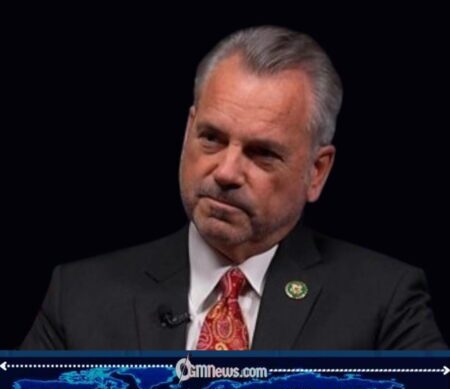
FBI Director Kash Patel has said President Donald Trump, the current U.S. president serving his second term, is providing law enforcement agencies with the tools and operational freedom needed to dismantle criminal networks both within the United States and internationally. According to Patel, recent reforms aimed at reducing bureaucratic constraints and expanding field operations are already producing measurable results.
The remarks place law enforcement and public safety at the center of the administration’s domestic and global security agenda, highlighting statistical gains in crime reduction, arrests, and counterterrorism efforts as evidence of policy effectiveness.
Breaking Bureaucracy and Rebuilding Field Operations
Director Patel said a key shift under President Trump has been the restructuring of federal law enforcement priorities, particularly within the FBI. Central to this effort, he explained, was the decision to reduce administrative bottlenecks in Washington and redeploy personnel directly into field operations.
According to Patel, 1,000 FBI agents have already been reassigned from headquarters roles to frontline duties, with an additional 1,000 expected to follow. The objective, he said, is to ensure federal agents spend more time investigating crimes and disrupting criminal networks rather than navigating internal bureaucracy.
Reported Decline in Violent Crime
Among the most significant claims highlighted by the FBI director is a reported 20 percent drop in the national murder rate. Patel attributed the decline to increased coordination between federal, state, and local law enforcement agencies, supported by expanded federal resources and intelligence sharing.
While crime trends can be influenced by multiple factors, the administration views the reduction as validation of its law-and-order strategy. Officials argue that targeted enforcement, combined with visible federal support, has strengthened deterrence and improved response times in high-risk areas.
Sharp Rise in Arrests and Enforcement Activity
Patel also cited a 200 percent increase in arrests, framing it as evidence of more proactive policing and intelligence-led operations. He said the increase reflects a renewed emphasis on identifying and dismantling organized criminal groups rather than focusing solely on low-level offenses.
The administration maintains that the surge in arrests is not about volume alone, but about targeting networks involved in violent crime, trafficking, and transnational criminal activity. Critics, however, note that arrest figures alone do not always capture long-term impacts on public safety.
Child Protection and Anti-Trafficking Efforts
One of the most striking figures referenced by Patel was the reported rescue of more than 6,000 children. He said these rescues stem from expanded investigations into human trafficking, online exploitation, and cross-border criminal rings.
Federal authorities describe child protection as a priority area where additional manpower and resources have translated into concrete outcomes. Advocacy groups have welcomed increased attention to trafficking cases, while also stressing the importance of long-term support services for victims beyond law enforcement action.
Fentanyl Seizures and the Opioid Crisis
The FBI director Patel further stated that law enforcement has removed 31 percent more deadly fentanyl from U.S. streets, calling it a critical step in combating the opioid crisis. He linked the increase in seizures to more aggressive targeting of trafficking routes and international supply chains.
The administration argues that disrupting fentanyl distribution networks requires both domestic enforcement and international cooperation, particularly with countries linked to production and transit. Public health experts caution that enforcement must be paired with treatment and prevention to achieve lasting reductions in overdose deaths.
A Long-Running Terrorism Case Brought to Justice
Patel also pointed to a recent counterterrorism development: the arrest of an alleged Benghazi terrorist accused of involvement in the 2012 attack that killed four Americans nearly 14 years ago. He described the arrest as a demonstration of persistence and global reach by U.S. law enforcement.
The case, long symbolic of unresolved accountability, underscores the administration’s message that time does not diminish the pursuit of justice. Officials said the arrest reflects enhanced international cooperation and intelligence capabilities.
Looking Ahead: Measuring Long-Term Impact
While the administration presents the figures as historic achievements, analysts note that long-term evaluation will depend on sustained trends, transparency in data, and independent verification. Crime, drug trafficking, and terrorism are complex challenges shaped by economic, social, and geopolitical forces.
For now, President Trump’s second-term law enforcement strategy is being framed by officials as results-driven and operationally focused, with continued expansion of field resources positioned as a central pillar of future policy.