









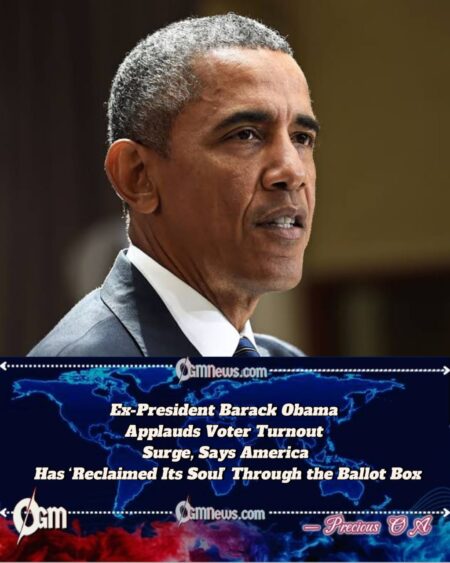
Ex-President Barack Obama celebrated the Democratic Party’s sweeping victories this week, calling the results a “powerful affirmation” of America’s values and collective conscience. In his remarks, he said the American people had made a clear statement through the ballot box—that “they don’t want cruelty; they want compassion, progress, and a vision of the future.” His tone was triumphant yet reflective, underscoring the moral responsibility of leadership in an increasingly divided nation. Obama’s return to the political spotlight during this moment of national significance carried a sense of nostalgia, reminding many Americans of the steady optimism that defined his presidency.
Barack Obama described the election outcome as a resounding win not just for the Democratic Party but for the principles of decency and democracy itself. He noted that the surge in voter participation reflected a growing hunger for change and an urgent desire for leaders who listen and empathize. Across several battleground states, Democrats reclaimed key positions in governorships, legislatures, and city councils, signaling a political shift that could shape national policy for years to come. His remarks were laced with gratitude toward citizens who, despite disillusionment and fatigue, showed up to vote for what they believed in. He called it “a beautiful reminder that democracy, when defended by the people, still works.”
Barack Obama also praised the resilience of grassroots movements and young voters whose enthusiasm, he said, was central to the party’s success. He credited civic organizations, local leaders, and ordinary Americans who “chose hope over cynicism and unity over division.” His remarks were met with loud applause and emotional reactions from supporters across the country. For many, his words reignited a sense of collective optimism that had dimmed in recent years, especially amid political polarization and social unrest. He emphasized that this victory belonged to everyone who believed in compassion as a force for change, no matter their political affiliation.
Celebrations erupted in major cities as Democrats reclaimed previously Republican-held seats, with supporters describing the outcome as a “rebirth of hope.” Many citizens viewed the blue wave as a reflection of their desire for leadership grounded in empathy and accountability. The results, according to analysts, have set the stage for a new chapter in American political life. In some cities, public gatherings turned into peaceful demonstrations of unity, with citizens waving American flags and chanting messages of progress and equality. Observers noted that this wave of energy was reminiscent of the civic enthusiasm that once propelled Obama himself into office—a hopeful sign that political engagement in the U.S. may be experiencing a revival.
Barack Obama’s Message: Compassion Over Division
Barack Obama’s message following the election was one of deep moral reflection and national renewal. “Our victories tonight are not just political—they are human,” he said, adding that the nation’s progress depends on leaders who can put kindness at the center of public life. He argued that the American story is strongest when defined by unity, not division, and when leaders speak to the better angels of their nature rather than to resentment or fear. His speech struck a powerful emotional chord, blending his signature calm eloquence with an unmistakable urgency. It was both a celebration and a challenge to the nation to keep striving toward its ideals.
Barack Obama framed the victories as proof that the American people still believe in the power of empathy. He explained that the Democratic resurgence was not about party triumph alone, but about restoring the country’s faith in fairness, justice, and opportunity. His speech resonated widely, spreading quickly across social media and energizing supporters who viewed his words as a moral call to action. Within hours, clips of his address had been viewed millions of times online, and his quotes were shared by both politicians and ordinary citizens alike. For many, it was a reminder that words still have the power to heal, inspire, and unify.
Barack Obama’s tone was measured but firm, urging fellow Democrats to remain accountable to the people who placed their trust in them. He warned that political success must never overshadow the need for principled governance. His reminder that “victory without virtue is hollow” struck a chord among younger audiences and reform-minded voters. He encouraged leaders to govern with humility and to always remember the faces and stories behind the votes they received. According to Obama, the true test of leadership is not found in the thrill of winning elections but in the grace and wisdom of governing afterward.
Political analysts observed that his words helped reframe the post-election narrative from mere celebration to civic responsibility. His moral leadership, they said, continues to serve as a guiding force in a time when national unity feels fragile. Commentators on both sides of the political divide acknowledged that his message carried weight, even among those who disagreed with his policies. Obama’s insistence on moral clarity and his call for compassionate leadership echoed across party lines, setting a tone that contrasted sharply with the harshness of modern political discourse.
Implications for America’s Political Future
Barack Obama’s reemergence in the wake of the blue wave signals a renewed commitment to shaping America’s political direction. He highlighted that the Democratic victories represent an opportunity to rebuild public trust and restore the moral center of governance. With many Americans yearning for unity, his message offers both inspiration and a challenge to leaders across party lines. Barack Obama’s emphasis on empathy and shared purpose could become a blueprint for how the Democratic Party positions itself ahead of the next presidential election.
Barack Obama acknowledged that despite the victories, serious work remains. He pointed to persistent inequalities, environmental crises, and political polarization as ongoing challenges that demand collective action. He urged elected officials to remember that their power exists to serve, not to dominate, and that progress can only endure when it uplifts everyone, not just a privileged few. His words were not only a warning but also a guidepost—reminding America that progress, while possible, requires vigilance, humility, and courage.
His speech has already begun to influence the broader political dialogue, inspiring a new wave of civic engagement among voters who see his message as a moral compass for the future. His ability to connect values with policy continues to make him one of the most respected voices in modern American politics. Even in an era dominated by short attention spans and digital noise, Barack Obama’s thoughtful appeal to conscience and collective good stands out as a stabilizing force. Political scientists suggest that his legacy as a unifier, rather than a partisan figure, could help heal divisions if his message continues to resonate.
Barack Obama’s closing message captured both gratitude and determination: “America’s greatness is not defined by power, but by purpose. When we choose empathy over cruelty, and vision over fear, we move closer to the country we are meant to be.” His words, echoing across the nation, left a sense of renewed hope—a reminder that the soul of democracy is found not in division, but in the courage to dream of a better tomorrow. With this message, he has reignited an old belief that still endures among many Americans: that change begins not with power, but with heart, and that the nation’s future is brightest when guided by compassion and moral strength.


