










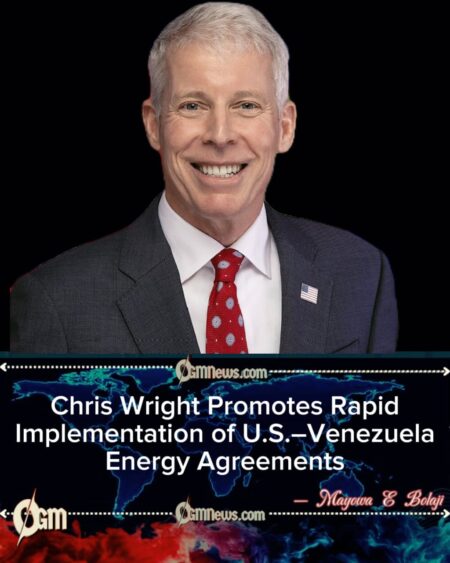
Energy Secretary Chris Wright announced that the Trump administration is moving quickly to finalize major oil and critical minerals agreements with Venezuela within the coming weeks. Wright emphasized that these deals aim to strengthen energy security in the Western Hemisphere while fostering economic cooperation with Venezuela amid a significant political transition. His remarks position him as the key architect of the administration’s strategy to secure vital resources and stabilize bilateral energy relations.
According to Wright, the upcoming agreements will encompass expanded oil production, mineral access, and coordinated export arrangements. He highlighted that this initiative is designed to provide predictable energy supplies for the U.S. and allied nations while encouraging economic reforms in Caracas.
Chris Wright’s Strategic Vision for Venezuela Engagement
Energy Secretary Chris Wright stressed that the administration’s focus is both commercial and geopolitical. Wright outlined plans to increase Venezuelan oil output while reducing reliance on other international markets, particularly in Asia. He noted that the U.S. aims to ensure that revenues from these deals are channeled in ways that support broader regional stability.
Wright described the proposed arrangements as carefully structured to balance investment security, operational oversight, and humanitarian considerations. He indicated that his office is coordinating closely with Chevron and other U.S. energy companies to facilitate smooth implementation of production and export agreements.
By emphasizing efficiency and rapid deployment, Wright conveyed that these deals are intended to deliver immediate results, while positioning the United States as a central partner in Venezuela’s economic recovery.
Implementation Plans and Industry Coordination
Energy Secretary Chris Wright confirmed that formal agreements are expected to be signed within weeks. He highlighted that the administration is prioritizing speed without compromising transparency or compliance with existing U.S. regulations. Wright’s leadership has been central in designing a licensing framework for Chevron that allows payments in cash instead of crude oil, enabling the company to increase production and exports effectively.
Wright also noted that international partners and humanitarian agencies will play a supporting role, ensuring that the expanded engagement delivers both economic and social benefits. Industry observers have credited Wright’s hands-on approach with reducing uncertainty and signaling to global investors that U.S.–Venezuela energy cooperation is a priority.
Regional and Geopolitical Implications
Energy Secretary Chris Wright highlighted that securing Venezuelan oil and minerals is not only a commercial opportunity but also a strategic maneuver in the Western Hemisphere. He noted that Venezuela’s reserves of oil and critical minerals are significant for global supply chains, particularly for energy and technology sectors.
Wright emphasized that by increasing U.S. access to these resources, the administration aims to enhance energy security, reduce market volatility, and incentivize economic stability in Venezuela. Analysts suggest that Wright’s central role in orchestrating these agreements signals a pragmatic approach that prioritizes results over rhetoric, balancing immediate resource needs with long-term geopolitical strategy.
As Energy Secretary Chris Wright oversees the finalization of these agreements, his leadership is expected to remain pivotal in shaping the trajectory of U.S.–Venezuela relations, with both economic and strategic outcomes hanging on the successful implementation of his plans.


