









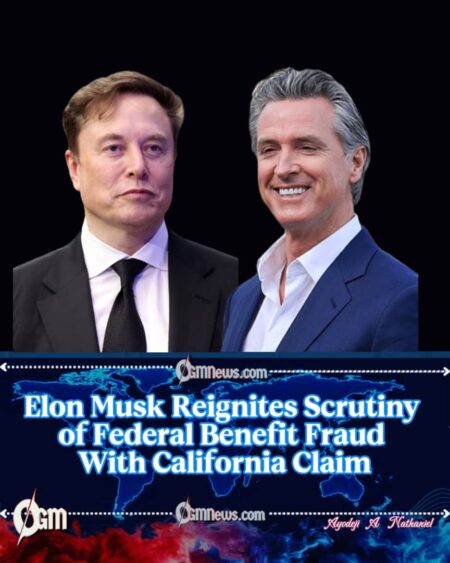
Elon Musk has asserted that California would face bankruptcy if federal transfer payment fraud were fully eliminated, arguing that the state benefits—directly or indirectly—from tens of billions of dollars lost annually through fraudulent claims. The comments, made during a public discussion on government spending and oversight, have drawn national attention and renewed debate about fraud in federal benefit programs.
Musk’s remarks frame California as what he called the “fraud capital of America,” a description that has been met with both strong support and sharp criticism. While the claim lacks detailed figures or sourcing, it has amplified existing concerns about the scale of fraud within federal transfer systems.
Understanding Federal Transfer Payment Fraud
Federal transfer payments include programs such as unemployment benefits, disability payments, and other social welfare disbursements. Fraud in these systems typically involves false claims, identity theft, or misrepresentation of eligibility in order to receive funds unlawfully.
Government audits over the years have acknowledged that improper payments occur across multiple states, particularly during periods of rapid benefit expansion. However, experts note that distinguishing between fraud, administrative error, and overpayment is complex, making precise estimates difficult.
California’s Role in Federal Benefit Programs
California administers some of the largest federal assistance programs in the country due to its population size and economic diversity. As a result, the state processes a high volume of claims, which can increase exposure to both errors and fraud.
State officials have previously argued that large absolute figures do not necessarily indicate higher fraud rates, but rather reflect scale. They emphasize that California has invested in fraud detection systems and inter-agency cooperation to reduce losses in recent years.
The Financial Implications of Musk’s Claim
Musk’s assertion suggests that eliminating fraud would significantly reduce the flow of federal money into California, potentially impacting the state’s broader economy. Such a scenario, if accurate, would raise questions about fiscal dependency and budget resilience.
Economists caution, however, that even large fraud recoveries would not automatically translate into state budget shortfalls. Federal transfer payments are largely pass-through funds intended for beneficiaries, not direct revenue streams for state governments.
Calls for Evidence and Accountability
Critics of Musk’s statement have called for detailed evidence to substantiate claims of “tens of billions” in fraud tied specifically to California. They argue that sweeping statements risk oversimplifying a national issue that affects all states to varying degrees.
Supporters counter that Musk’s remarks highlight a real accountability gap, urging federal agencies to strengthen verification systems and improve data-sharing across states to prevent abuse of public funds.
Broader Debate on Oversight and Reform
The controversy underscores a wider debate over how the federal government monitors and enforces compliance in large-scale benefit programs. Lawmakers from both major parties have periodically proposed reforms, ranging from enhanced identity verification to stricter penalties for fraudulent claims.
As scrutiny increases, analysts suggest the discussion may lead to renewed legislative and administrative efforts aimed at balancing rapid assistance delivery with stronger safeguards against misuse.
A Claim That Rekindles a National Conversation
While Elon Musk’s comments have sparked controversy, they have also reignited attention on a longstanding policy challenge: how to ensure federal transfer payments reach eligible recipients without significant losses to fraud. Whether or not California is uniquely affected remains contested.
What is clear is that the issue of improper payments continues to test public trust in government programs, ensuring that debates over oversight, transparency, and reform will remain central to fiscal policy discussions.


