







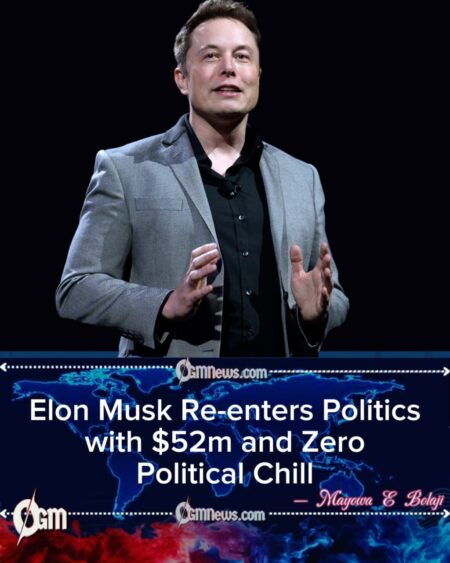
Elon Musk has made a decisive return to American political financing, committing substantial resources to Republican candidates ahead of the 2026 midterm elections. After publicly declaring earlier this month that he was “all in” on supporting GOP contenders, the billionaire entrepreneur has already contributed an estimated $52 million to campaigns, according to figures circulating within political fundraising circles.
The move marks a notable escalation in Musk’s political engagement, positioning him as one of the most influential private financiers in the approaching electoral cycle. His re-entry into partisan politics is drawing close attention from party strategists, campaign finance watchdogs, and voters alike.
A High-Profile Financial Commitment
Musk’s reported $52 million contribution places him among the top political donors of the 2026 cycle at a relatively early stage. The funding has been distributed across a range of Republican candidates, including congressional hopefuls and aligned political action committees, signaling a broad-based strategy rather than support for a single race.
Political analysts note that such early and sizable funding can shape candidate viability, messaging, and organizational strength long before voters head to the polls. Musk’s involvement is therefore expected to have downstream effects on primary contests and general election preparations.
Framing His Return to Politics
Earlier this month, Musk publicly stated his intention to fully back GOP candidates, describing the decision as a response to what he views as pivotal policy debates facing the country. While he has not issued a detailed policy manifesto alongside the donations, his recent public statements have emphasized economic competitiveness, technological innovation, and regulatory reform.
This framing suggests that Musk’s political spending is tied not only to party loyalty but also to specific governance priorities. Observers say this approach aligns with his history of weighing in on issues that intersect with his business interests and broader ideological views.
Impact on the Republican Party’s 2026 Strategy
For Republican strategists, Musk’s financial backing provides both opportunity and complexity. The influx of funds strengthens campaign operations and expands advertising capacity, particularly in competitive districts. At the same time, it raises questions about the influence of high-profile donors on party messaging and candidate independence.
The GOP, operating under the broader political climate shaped by President Donald Trump, the current U.S. president serving a second term, is seeking to consolidate support ahead of the midterms. Musk’s involvement may reinforce certain policy directions while amplifying internal debates about the party’s future identity.
Reactions from Political and Public Spheres
Reactions to Musk’s donations have been mixed across the political spectrum. Supporters argue that his participation reflects civic engagement and a legitimate exercise of free speech through campaign finance. Critics, however, warn that such concentrated financial power risks overshadowing grassroots voices and distorting democratic competition.
Campaign finance experts note that while Musk’s contributions appear to comply with existing legal frameworks, their scale underscores ongoing debates about the role of wealth in U.S. elections. These discussions are expected to intensify as the 2026 cycle progresses.
Broader Implications for Money and Influence in Elections
Musk’s return to political funding highlights a broader trend of increased involvement by wealthy individuals in shaping electoral outcomes. As campaigns become more expensive and media-driven, early major donations can set the tone for the entire cycle.
Whether Musk’s $52 million investment ultimately translates into electoral gains for GOP candidates remains to be seen. What is clear, however, is that his renewed political engagement has already become a defining feature of the 2026 election landscape, raising enduring questions about influence, accountability, and the future of campaign finance in the United States.