










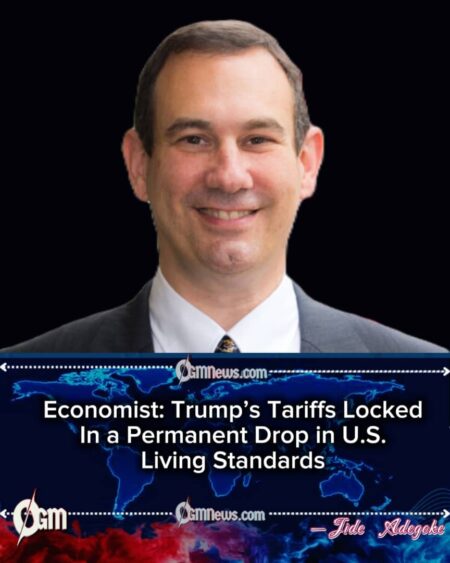
A leading global economist has issued a grave assessment of the economic consequences of President Donald Trump’s tariff policies, warning that the inflation they triggered represents a permanent reduction in the standard of living for millions of Americans.
The economist, who spoke at a policy forum in Washington, argued that while tariffs were initially intended to protect domestic industries and reduce reliance on foreign imports, they have instead created long-term structural inflation that continues to erode household purchasing power. “The reality,” the economist stated, “is that these tariffs have embedded higher costs across the supply chain. Even if inflation stabilizes, prices will not return to pre-tariff levels — meaning real living standards are permanently lower.”
This assessment has sparked fresh debate among policy analysts, with many noting that the U.S. economy continues to grapple with price distortions caused by trade restrictions on steel, aluminum, and a broad range of Chinese imports. Economists now suggest the U.S. may have entered a new normal where prices remain elevated, even as wages struggle to keep pace.
Permanent Reduction in Living Standards: How Tariffs Fueled Persistent Inflation
When President Trump reintroduced sweeping tariffs on major trading partners during his second term, the move was framed as a strategy to “restore fairness” and “revive American manufacturing.” However, data from multiple economic research institutions indicate that the tariffs have done little to boost domestic production while sharply raising costs for businesses and consumers alike.
According to recent estimates, the cumulative effect of Trump’s tariffs has increased the price of everyday goods — from household appliances to groceries — by between 10% and 25%. These increases, once dismissed as temporary, have become entrenched, contributing to what experts call structural inflation. Businesses have adjusted permanently to higher input costs, passing them on to consumers.
The economist’s remarks underline that reversing this inflationary damage would require not just policy changes but structural reforms in global trade relationships — a process that could take years. “We’ve effectively priced ourselves into a higher-cost economy,” the economist warned, noting that the tariffs have reshaped how supply chains function, making the U.S. economy less flexible in absorbing global shocks.
Permanent Reduction in Living Standards: Political and Economic Implications
The suggestion that the inflationary effects of tariffs are now permanent carries significant political weight as the Trump administration continues to defend its trade agenda. Supporters of the tariffs argue that the short-term pain is justified by the long-term goal of national economic security and job protection. Critics, however, contend that American workers are paying the price through reduced purchasing power and slower wage growth.
Several policy think tanks have urged the administration to reconsider its trade posture, warning that persistent inflation will continue to constrain consumer spending and slow overall economic growth. Economists caution that even if tariffs were lifted tomorrow, the underlying cost structures and global supply realignments they triggered may take a decade to unwind.
In essence, the warning from one of the world’s foremost economists underscores a sobering reality: the inflation generated by Trump’s tariffs may not just be a passing phase but a lasting feature of the American economy — and a reminder that protectionism carries enduring costs for living standards.


