





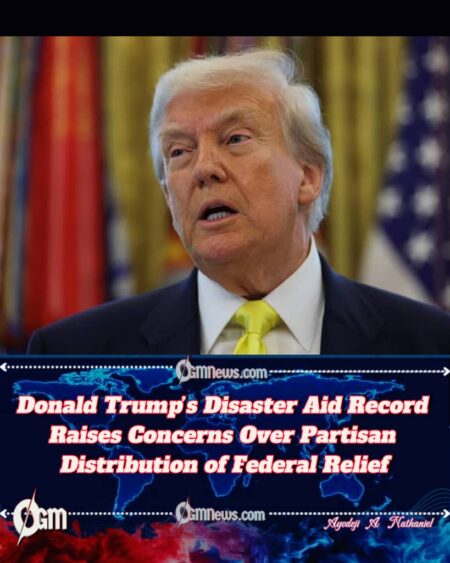
President Donald Trump’s disaster aid record is drawing intensified scrutiny following new patterns showing that federal assistance has consistently flowed to Republican-led states, while multiple Democratic-led states have faced delays or outright denials. President Donald Trump, who is in his second term as the current U.S. president, has repeatedly defended his administration’s disaster-response strategy, but critics argue that the pattern reflects an unprecedented partisan weaponization of federal relief.
President Trump’s approach to disaster funding underscores larger debates surrounding the politicization of federal agencies, the boundaries of executive discretion, and the potential consequences for future crisis response across the nation.
Donald Trump and the Emerging Pattern of Disaster Aid Distribution
President Donald Trump has approved swift, large-scale federal aid packages for Republican-led states hit by hurricanes, tornadoes, and flooding, often within days of state officials submitting requests.
President Trump has publicly praised GOP governors for “effective partnerships,” positioning the rapid response as a model of federal-state collaboration.
President Trump’s critics, however, point to repeated examples of Democratic-led states facing prolonged reviews or unexplained denials for similar or even more severe disasters. Analysts argue that the contrast in response times suggests a deliberate pattern, not bureaucratic coincidence.
Donald Trump Faces Accusations of Politicizing Federal Emergency Management
President Trump’s administration has been accused by lawmakers, emergency officials, and legal experts of turning disaster assistance into a political tool.
President Donald Trump has dismissed such claims as “ridiculous,” asserting that all approvals follow legal and structural guidelines.
President Trump’s opponents contend that FEMA and related agencies have undergone significant shifts in priority and communication patterns, often aligning with the president’s political messaging and target regions.
Donald Trump’s Disputes With Democratic Governors Intensify the Divide
President Trump has frequently clashed with governors of Democratic-led states over disaster preparedness, climate policies, and federal oversight.
President Donald Trump’s public disagreements—often televised or posted on social media—have preceded delayed disaster declarations on several occasions, fueling accusations of political payback.
President Trump’s defenders argue that strained cooperation between Washington and certain state leaders results from policy disputes, not partisan discrimination.
Donald Trump’s Actions Raise Concerns About Long-Term Federal Disaster Policy
President Trump’s disaster-aid approach has prompted calls for reform from bipartisan policy groups who warn that politicizing relief could undermine national readiness.
President Trump’s critics argue that future disaster responses risk becoming deeply uneven if federal support is tied to political affiliation rather than humanitarian urgency.
President Trump’s administration maintains that its decisions prioritize “efficiency and fairness,” but emergency-response analysts worry that inconsistent precedents could erode trust between states and federal agencies.
Trump’s Approach Forces National Debate on Fairness, Equity, and Executive Power
President Trump’s record has sparked widespread discussions among policy experts, legal scholars, and civil rights advocates about the constitutional role of presidential authority in disaster management.
President Trump’s strategy has become a case study in how executive powers can shape public welfare outcomes during crises.
President Trump’s critics are now pushing for legislation to strengthen oversight mechanisms, arguing that disaster relief should be a guaranteed public right, not a political favor.