






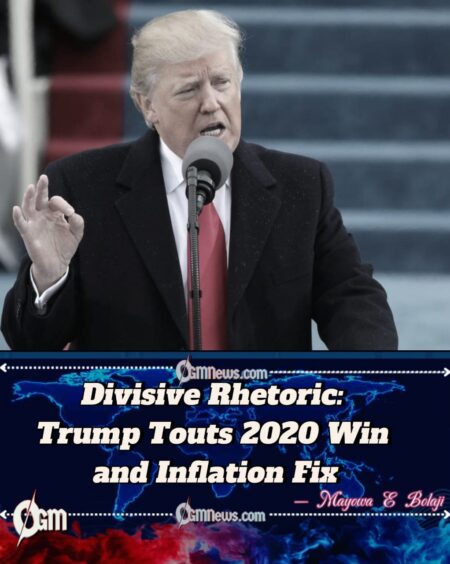
Donald Trump, the current U.S. president serving a second term, has once again stirred political debate with his renewed insistence that he won the 2020 presidential election. Speaking at a public event, Trump repeated the long-disputed claim that “We won in 2020 big,” a statement that continues to face widespread rejection from both state-certified results and multiple court rulings.
The remarks, though familiar, reignited discussion among political observers about the president’s persistence in revisiting past elections while navigating present challenges. Critics argue that this focus detracts from pressing economic and governance issues, while supporters maintain that Trump is within his rights to challenge historical narratives.
His repeated assertions highlight the enduring divisiveness of the 2020 contest, an election widely recognized as legitimate by state and federal institutions, but still contested in rhetoric by Trump and his loyal base.
Trump Claims to Have Solved Inflation
Donald Trump further drew attention by asserting that he had “solved inflation” and brought down prices, a claim at odds with prevailing economic data. Despite government reports indicating sustained price increases and consumer concerns about the cost of living, the president characterized his policies as the reason for economic stability.
Economists, however, have disputed his framing, noting that inflationary pressures remain evident across sectors including housing, energy, and food. Analysts caution that such statements risk creating dissonance between official figures and political messaging, leaving citizens uncertain about the true state of the economy.
Still, Trump’s narrative reflects a broader strategy of framing his administration as delivering economic relief, even as many households continue to experience financial strain. This duality underscores the challenge of separating perception from economic reality in the political discourse of his second term.
Concerns Over Leadership and Rhetoric
Donald Trump’s remarks have also raised questions about his communication style and leadership approach. Political commentators describe his statements as examples of rhetorical overreach that resonate with supporters but heighten divisions nationwide. By repeating claims about past elections and economic victories, the president reinforces a narrative of success that contrasts sharply with critiques of his governance.
The persistence of such messaging has implications not only for domestic politics but also for international perceptions of U.S. leadership. Allies and adversaries alike watch closely as the president emphasizes themes of personal vindication, sometimes at the expense of addressing ongoing policy challenges.
Observers suggest that while Trump’s remarks may energize his political base, they also risk undermining trust in democratic institutions and factual discourse, particularly when economic realities contradict presidential claims.