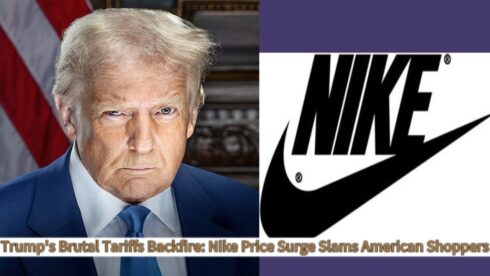
Donald Trump kicked off the controversy once more with his tariff-first economic strategy, driving Nike to hike prices on its most popular products. Despite Trump’s partial rollback of the Chinese tariff from 145% to 30%, industry insiders say the remaining levy is still unbearable for corporations that rely on global supply chains, like Nike.
The shoe giant, which sources nearly half of its footwear from China and Vietnam, is now bracing for impact by passing the cost to consumers. According to a source speaking to CNBC, Nike’s adult apparel and gear will now carry an added $2 to $10 surcharge — a move expected to ripple through an already inflation-weary market.
Working-Class Wallets Burn as Donald Trump’s Tariffs Take Toll
Donald Trump may see a $5 or $10 hike as inconsequential, but for millions of middle- and low-income Americans, these increases represent yet another punch to the gut. Footwear once priced between $100 and $150 will now carry an extra $5 fee, while shoes above $150 will cost $10 more — a cumulative burden when added to rising prices across all sectors.
This pricing escalation reflects a growing trend where corporations respond to Trump’s tariffs not by absorbing costs, but by outsourcing the pain to everyday Americans. Economists warn that if other brands follow Nike’s lead, this could ignite a domino effect in consumer pricing, just in time for summer spending season.
Trump’s ‘America First’ Gamble Backfires on Iconic Brands
Donald Trump championed “America First” policies, but critics say those same policies are now cannibalizing iconic American brands. Nike’s decision to spike prices is just the latest example of multinationals balking under the pressure of import levies from China, Mexico, and Canada — all key trade partners with robust manufacturing links to the U.S.
Even after Trump dialed down Chinese tariffs, he kept a punishing 25% rate on goods from Mexico and Canada and maintained 10% on most other countries. This blanket approach is forcing U.S. companies into a corner, unable to competitively manufacture domestically and yet penalized for global sourcing.
Nike Shields Kids, But Trump’s Policy Still Hurts Families
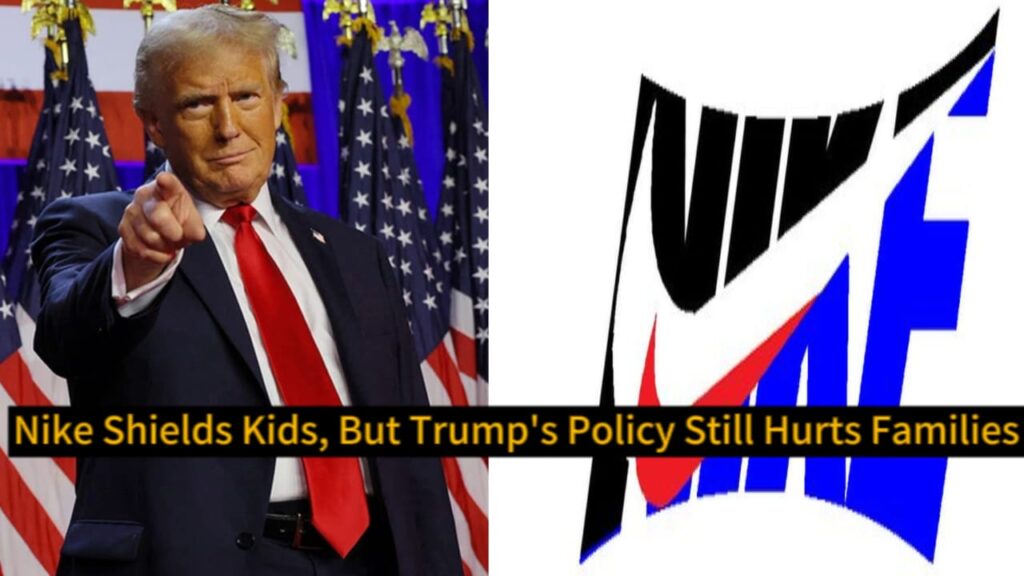
Donald Trump’s critics say his policy rarely spares the vulnerable, but Nike is attempting to buck that narrative — at least for now. In a rare move, the brand announced it will not increase prices on children’s footwear and apparel, a decision clearly aimed at easing the financial strain on families during back-to-school season.
Sources say Nike will also maintain the iconic Air Force 1 at its $115 price tag, citing its popularity among working-class professionals. But experts warn this gesture is more symbolic than systemic — a mere footnote in an economic storyline where American families are increasingly footing the bill for Trump’s aggressive trade policies.
Corporate Calculus: “Eat the Tariffs” No Longer Feasible
Donald Trump once insisted that companies like Walmart and Nike simply “eat the tariffs.” But Nike’s latest move proves that mantra is both tone-deaf and economically unsustainable. A company of Nike’s size adjusting prices means smaller retailers will have even less room to maneuver, potentially resulting in widespread markups across the board.
Behind the scenes, Nike claims these changes are part of “seasonal planning,” but the timing clearly aligns with tariff-induced cost pressures. Retail analysts say this pricing wave will hit peak visibility by June, but shelves are already showing signs of the surge in many major U.S. cities.
Trump’s Tariff Legacy: Populism or Price Hikes?
Donald Trump’s populist rhetoric painted tariffs as a patriotic duty — a reclaiming of American industry. Yet the reality, as evidenced by Nike’s latest announcement, is a growing disillusionment among the very voters Trump claims to champion. Rising prices, shrinking affordability, and corporate fallout now define the tariff aftermath.
As June looms and price tags reflect this new economic normal, consumers are left wondering: is Trump’s version of economic nationalism worth the cost? With every added dollar at checkout, the answer grows clearer — populist slogans can’t pay the bills, but tariffs certainly can raise them.